If you’ve already read part 1 of this story on Facebook, go here for Part 2!
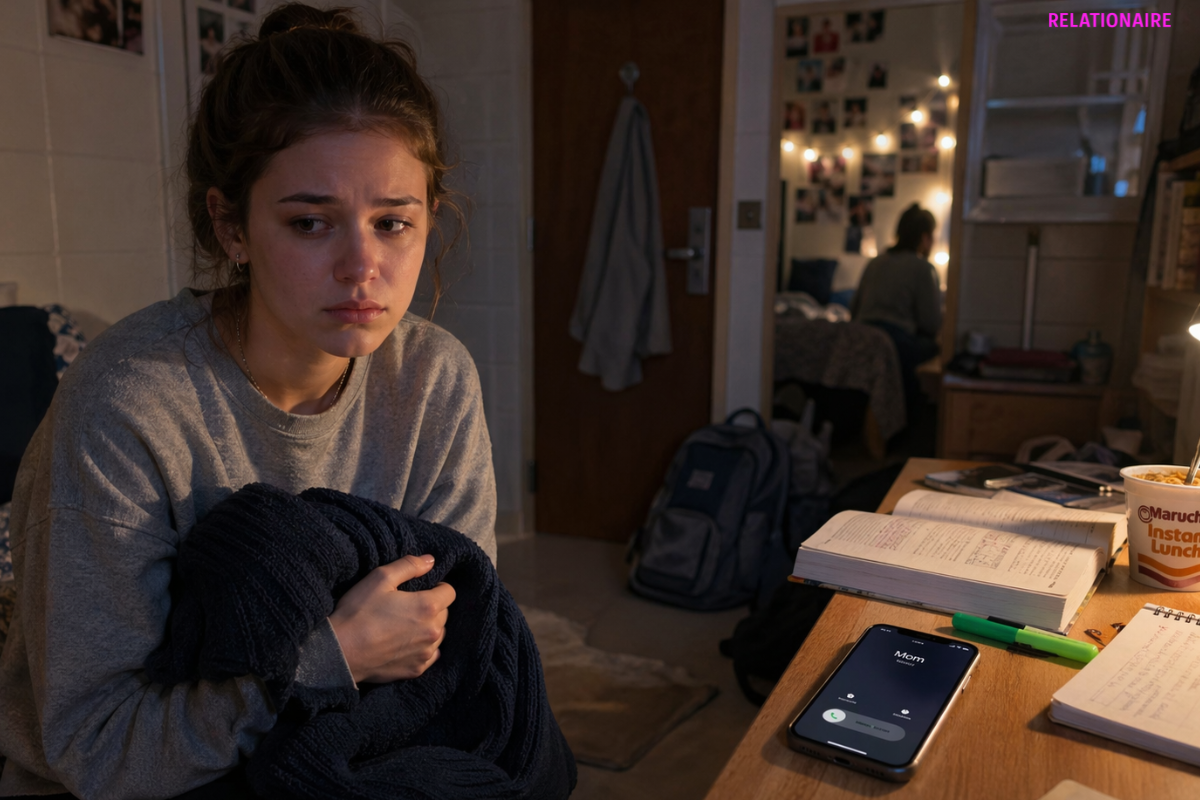
By the third missed call that week, Lena turned her phone face down and let it vibrate itself tired against the dorm desk.
Her roommate, Tasha, looked up from her biology notes. “You gonna get that?”
Lena didn’t even check the screen. She already knew the name glowing there.
Mom.
She pressed her lips together and kept highlighting a paragraph she hadn’t read.
“It’s fine,” she said. “If it matters, she’ll text.”
That was a lie they both understood.
Her mother never texted when she could call. And when she did text, it was never simple.
Did you eat?
You sound tired.
Don’t forget to wear a sweater at night.
I looked at your bank account and you’re spending too much on coffee.
I know you’re busy, but two minutes isn’t too much to ask from your own daughter.
It was always love, but lately it landed like pressure.
Lena knew that made her sound ungrateful.
Her mother had packed her entire life into black trash bags and cardboard boxes in August, driven six hours in a car with no air-conditioning, cried only once when they carried the mini-fridge up three flights of stairs, then stood in the dorm parking lot smoothing Lena’s hair like she was still ten.
“You call me if you need anything,” her mother had said.
Lena remembered the way she smiled when she said it. Brave. Bright. Like letting go was just another thing mothers knew how to do.
But once Lena got to school, every call felt like stepping backward into the version of herself she was trying to outgrow.
At home, she had been responsible Lena. Sensible Lena. The girl who remembered library books, helped with groceries, and kept the peace when bills were stacked on the counter and silence got too heavy.
Here, she wanted to be nineteen.
Not somebody’s whole emotional weather system.
Not the person who could hear, in one breath, whether the electric bill had come or whether her mother had skipped dinner again and said she “wasn’t hungry.”
So Lena started doing what felt easiest.
She answered less.
Then less than that.
Then not at all.
At first she told herself it was temporary. Midterms. Orientation events. New friends. Too much reading. Too little sleep.
But a week became two.
Her mother kept calling.
Sometimes once a day. Sometimes three.
Always around nine-thirty, just when Lena was trying to settle into the version of college she wanted—music in the hallway, somebody laughing two doors down, cheap ramen steaming on a desk, her own life finally beginning.
Every time the phone lit up, irritation rose fast and hot in her chest.
Not because she didn’t love her mother.
Because she did.
And because love, from her mother, had always come wrapped in worry so tight it was hard to breathe inside it.
The next Friday, Lena came back from class to find a padded envelope on her bed.
No return address written on the front, but she knew her mother’s blocky handwriting instantly.
Inside was a navy sweater Lena had left at home, washed, folded, and smelling faintly like the lavender detergent they used because it was the cheapest one that still smelled like something nice.
There was a sticky note on top.
Cold at night there. Don’t be stubborn. Love, Mom.
Tasha smiled when Lena read it.
“That’s sweet.”
Lena rolled her eyes, but not very hard. “It’s surveillance with fabric.”
Tasha laughed.
But later, when Lena pulled the sweater over her head because the dorm heat never worked right, she stood still for a second with her face half buried in the collar.
It smelled like home.
Like clean towels drying over chairs.
Like spaghetti sauce simmering too long because her mother always forgot the time when she was tired.
Like the old couch blanket they never threw away.
Lena sat on the edge of the bed and swallowed the sudden ache in her throat.
Then her phone buzzed again.
Mom calling.
She stared at it until it stopped.
A few seconds later, a voicemail notification appeared.
She didn’t open it.
“Seriously?” Tasha asked from across the room.
Lena shrugged, pulling off her shoes. “I know what it is.”
“How?”
“Because it’s always the same.” She dropped backward onto the mattress. “She’ll say she was just checking in, then ask if I’m eating, then somehow I’ll end up feeling like I abandoned her to go to college.”
Tasha was quiet.
Lena turned her head. “What?”
“Nothing. Just…” She looked back at her notes. “Maybe she misses you.”
Lena let out a dry laugh. “She missed me when I went to the grocery store without telling her.”
That wasn’t fair, and she knew it even as she said it.
Her mother wasn’t controlling in the cruel way people liked to talk about online. She wasn’t dramatic, or mean, or impossible.
She was just alone.
That was the problem Lena never said out loud, because it sounded too sharp.
It had been just the two of them since Lena was seven, after her father moved two states away and started a second family that looked, on social media, suspiciously well-rested.
Her mother never bad-mouthed him. Never once.
She just worked double shifts at the pharmacy, kept canned soup in the pantry, and figured out how to stretch everything.
Money. Time. Energy. Smiles.
Especially smiles.
Lena had grown up watching her mother come home with deep half-moons under her eyes and still ask about spelling tests and field trips and whether Lena’s sneakers were pinching her toes.
She used to think mothers were simply built stronger than other people.
Only later did she understand that some women were just given no choice.
That understanding should have made Lena more patient now.
Instead, it made her resentful in the ugliest way.
Because she knew exactly how much her mother had given.
And because of that, every unanswered call came with guilt attached.
By Sunday night, the voicemail still sat unheard.
Lena saw the little icon every time she unlocked her phone.
She ignored that too.
Classes got heavier. A paper was due. She picked up an extra shift at the campus café for book money. A boy from her sociology class asked her to get coffee, and for forty-five whole minutes she managed to feel like a normal girl with a normal life and no history trailing behind her.
Then she came back to the dorm and found another missed call.
And another voicemail.
Tasha looked at her from the desk chair.
“Are you fighting with her?”
“No.”
“Then what are you doing?”
Lena dropped her backpack harder than she meant to. “I’m trying to get some space.”
“From your mom?”
“From feeling responsible for everything.”
The room went still.
Tasha softened immediately. “Hey. I didn’t mean—”
“I know.”
Lena sat on the bed and rubbed both hands over her face.
It sounded bad when she said it out loud.
Worse because it was true.
For a while, neither of them spoke.
The hallway hummed with weekend noise. Somebody was blow-drying their hair in the communal bathroom. A door slammed. Somewhere below them, someone shouted and then started laughing.
Normal life.
Lena looked at the voicemail notification again.
Two unheard messages now.
Her stomach tightened, but pride was a stupid thing. Once you built enough silence, breaking it started to feel like losing.
So she didn’t listen.
Monday afternoon, she was halfway through icing a tray of stale muffins at the campus café when her phone buzzed in her apron pocket.
She almost ignored it.
Almost.
But then she saw a text from an unknown number.
Hi, this is Carol from your mom’s church. Please call me when you can. It’s about your mother.
The blood drained from her face so fast she had to grab the edge of the counter.
Her manager said something she didn’t hear.
Lena pulled off one glove with her teeth and typed back with shaking fingers.
Is she okay?
The dots appeared. Disappeared. Appeared again.
Nothing came.
Her phone slipped in her sweaty hand. She grabbed it, hit call on her mother’s contact, and listened to it ring.
Once.
Twice.
Then straight to voicemail.
Her chest turned cold.
She called again.
Voicemail.
Again.
Voicemail.
“Lena?” her manager said.
She barely heard him.
Tasha had once guessed her passcode while changing the music in the room, and apparently had never forgotten it. Because when Lena ran back to the dorm twenty minutes later, wild-eyed and breathless, she found her roommate sitting on the bed with Lena’s phone in her hand and the voicemail speaker still on.
The room was silent except for one sound.
Not her mother’s words.
Her mother trying, and failing, to stop crying before she spoke.
Lena froze in the doorway.
Tasha turned toward her slowly, face pale.
On the phone, after that broken inhale, her mother’s voice came thin and careful and heartbreakingly steady.
“Hi, baby. Don’t panic when you hear this. I’m okay right now. I just…”
She stopped.
Lena had never heard her mother sound like that in her life.
Then came the next sentence.
And it split the room open.
“I got some test results back today, and the doctor says it’s serious.”
Part 2
For one strange second after the voicemail ended, Lena noticed the stupidest thing in the room.
One of Tasha’s socks was hanging off the side of her desk drawer.
Pink.
Inside out.
Nothing important.
But later, when Lena tried to remember the moment everything tilted, that was what came back first. That sock. That quiet room. The cold rushing through her so fast it felt like falling.
Then everything else hit.
She lunged for the phone.
Her fingers shook so badly she almost dropped it.
The voicemail timer still glowed on the screen, but Tasha had paused before it could keep going. She must have heard enough to stop breathing too.
“There’s more,” Tasha whispered.
Lena couldn’t answer.
She pressed play.
Her mother took another unsteady breath. Then she spoke the way she always did when she was trying to hold someone else together.
Soft. Practical. Almost apologetic.
“Before you get upset, I’m okay right now. I drove myself home. Carol is here with me. She made tea I’m not drinking, because you know how I am about tea.” A tiny, broken laugh slipped out. “I didn’t want you hearing this from somebody else.”
Lena sat down hard on the bed.
The mattress dipped. Her knees stopped working.
On the voicemail, her mother was still talking.
“I know you’re busy. I know school is a lot. I know I’ve probably called too much.”
Probably.
The word cut deeper than if she’d said it plain.
“I kept thinking I should wait until I had more information. Or I should sound calmer. Or I should call when you weren’t in class. But I just… I wanted to hear your voice before I started sounding scared.”
Lena pressed a hand over her mouth.
Tasha reached for her shoulder, then stopped, like she wasn’t sure she’d be welcome there.
The message continued.
“The doctor says we need more tests, but they found something they’re very concerned about. I’m trying not to get ahead of myself. I am trying very hard.” Another shaky breath. “I didn’t call to upset you, honey. I called because I missed you. And because if this turns into something big, I don’t want our last few weeks to have been me leaving messages and you feeling annoyed.”
Lena made a sound then.
Not a word. Just pain.
Hot and humiliating.
Her mother had known.
Known Lena was pulling away. Known and still tried to sound gentle about it.
“I’m sorry,” her mother whispered in the voicemail, and that nearly finished her. “I’m sorry if I made you feel crowded. I just wanted to hear you while I still sounded like me.”
The message ended with practical details. Carol from church. An appointment Wednesday. A specialist in the city. A reminder not to drive at night if Lena was upset.
Even now, even inside fear, her mother was mothering.
Lena called again.
Voicemail.
Carol answered on the second try.
Her voice was kind in the way church women’s voices often are when they already know too much.
“She’s resting, sweetheart.”
“What happened?” Lena asked, though the answer was already clawing at her. “What is it? Where is she?”
“At home. She had some tests last week. Today they gave her more information than they’d hoped.”
“What does serious mean?”
There was a pause.
“It means they’re worried.”
Lena looked at the floorboards. At the navy sweater half folded on the chair. At her own shoes, still dusted white from the café flour.
“How long?” she whispered. “How long has she known?”
“About the tests? A little while.” Carol hesitated. “About how worried the doctors are? Today.”
A little while.
While Lena was ignoring calls.
While Lena was laughing at coffee with a boy from sociology.
While her mother was leaving sticky notes in packages and saying don’t be stubborn.
“I’m coming home.”
“You don’t need to make decisions this minute.”
“Yes, I do.”
Tasha was already grabbing Lena’s duffel bag from under the bed.
The bus ride home blurred into bad fluorescent lights, stale air, and the ugly theater of memory.
Lena saw every missed call lined up in her phone like accusations.
Every voicemail icon she had refused to touch.
Every time she had said later and meant not today and somehow believed there would always be another day.
She remembered the last real conversation they’d had—her mother asking if Lena had enough groceries, Lena snapping that she could handle feeding herself, her mother going quiet in that hurt way she tried to hide.
“Okay,” she had said. “I was just asking.”
Lena hadn’t called back to soften it.
Now she sat against the rattling bus window with her forehead pressed to cold glass, whispering, “Please be awake. Please be awake,” like a prayer she didn’t know how to improve.
Tasha came with her as far as the station downtown, carrying Lena’s bag and pretending not to notice when Lena started crying in little angry bursts she kept wiping away too fast.
“You don’t have to be okay yet,” Tasha said.
Lena laughed once, bitter and cracked. “That’s the problem. I thought she always would be.”
The house looked smaller than Lena remembered.
Same peeling white paint near the porch step. Same flowerpot with nothing in it because her mother loved the idea of gardening more than the time it required.
Carol’s sedan sat in the driveway.
When Lena opened the front door, she could smell Vicks, laundry soap, and tomato soup.
Home, reduced to essentials.
Her mother was on the couch under the brown blanket they’d had since Lena was ten.
Not collapsed.
Not dramatic.
Just smaller.
That was the worst part.
Smaller somehow, as if a hard piece of information had already taken up room inside her body.
She looked up when Lena came in, and for one awful second both of them simply stared.
Then Lena dropped her bag and crossed the room so fast she nearly tripped.
“I’m sorry,” she said before she even reached her. “I’m sorry, I’m sorry, I’m so sorry.”
Her mother’s face crumpled.
She held out both arms.
Lena went into them like she was young enough to fit there without effort.
Her mother smelled like cold cream and laundry and the same lavender detergent from the sweater.
“I didn’t want you coming home in a panic,” she said into Lena’s hair.
“That’s not your choice,” Lena cried.
It was almost rude, the way truth came out when fear stripped everything else.
Her mother gave a breath that might have been a laugh if it hadn’t been so tired.
Carol slipped quietly into the kitchen with Tasha.
The living room lamp glowed yellow. A medicine bottle sat on the side table beside a folded church bulletin. Lena noticed all of it at once and hated every object for existing in a world where this was happening.
She pulled back enough to look at her mother.
“Tell me everything.”
So her mother did.
The weeks of exhaustion she’d blamed on long shifts.
The pain she’d hidden.
The tests.
The doctor’s face when he said they needed to move quickly.
The specialist appointment in the city.
The words she still couldn’t quite say without looking down.
At one point Lena noticed her mother smoothing the edge of the blanket again and again with trembling fingers, as if keeping fabric neat might keep life from unraveling too far.
“Why didn’t you tell me sooner?” Lena asked, then hated herself the second it came out.
Her mother looked at her with stunned gentleness.
“I was trying to protect you.”
That was one truth.
The other sat between them, breathing.
Lena stared at the medicine bottle.
“No,” she said, voice breaking. “You were trying not to burden the daughter who stopped picking up the phone.”
Her mother’s eyes filled immediately.
“Lena—”
“No, don’t.” She stood up and walked two steps away, then turned back because there was nowhere to go. “Don’t make me feel better yet. Please.”
The words shocked them both.
In the kitchen, someone set down a spoon too carefully.
Lena wiped at her face with the heel of her hand.
“I thought you were doing what you always do. Worrying. Hovering. Making me feel guilty for leaving.” Her breath hitched. “And all this time you were calling because you were scared.”
Her mother didn’t speak.
She just watched her with that terrible, open love parents seem to have even when you least deserve it.
Lena sank into the armchair opposite the couch, exhausted all at once.
“I wanted one thing that was just mine,” she whispered. “And now I can’t stop thinking about all the times you probably looked at my name on your phone and knew I wasn’t going to answer.”
Her mother stared at the blanket in her lap.
Then, very quietly, she said, “I knew you were trying to become your own person. I just didn’t know how to stop missing you while you did it.”
That landed harder than any accusation could have.
Because that was the wound, really.
Not villain and victim. Not selfish daughter and sainted mother.
Just two women on opposite sides of letting go, both doing it badly.
The specialist appointment was Wednesday morning.
Tests first. Then consultation. Then decisions.
That night Lena slept on top of the covers in her childhood room with the lamp on and her phone in her hand. She didn’t trust the dark. She didn’t trust morning. She didn’t trust anything that moved time forward.
Around two a.m., she heard her mother coughing in the bathroom down the hall.
Lena stood outside the door, frozen.
She could hear the water running. Cabinets opening and closing. Her mother trying to be quiet.
Trying, even now, not to wake her.
Lena pressed her forehead to the wall and cried without sound.
By sunrise, she had already made one decision.
Before they ever reached the specialist’s office, before test results were explained, before anyone used careful words or optimistic ones, Lena opened her laptop at the kitchen table, logged into the college portal, and hovered over a form she had never imagined touching.
Request for emergency withdrawal.
Her mother came in wearing yesterday’s sweater, one hand braced against the doorway.
When she saw the screen, she stopped.
“Lena,” she said.
And from the way she said her name, the real fight was only just beginning.
Part 3
Her mother crossed the kitchen slowly, like even this conversation needed conserving energy for.
“No,” she said, not sharply but firmly. “Absolutely not.”
Lena looked up from the laptop.
The form still glowed between them.
Outside, a trash truck groaned at the curb. Inside, the coffee maker sputtered, forgotten. Everything ordinary sounded insulting.
“I’m not asking permission,” Lena said, though her voice shook halfway through.
Her mother pulled out the chair across from her and sat down carefully.
“You are not leaving school.”
“I’m not leaving forever.”
“You don’t know that.”
“Then I’ll go back next semester.”
“If treatment gets hard, next semester becomes next year. And then life happens.”
Lena almost laughed, because life had already happened. It was sitting right there in an old sweater with trembling hands.
“I’m not going to stay six hours away and pretend I can focus on lectures.”
Her mother leaned back, exhausted before the argument even found its legs.
“This is exactly why I didn’t want to tell you until I knew more.”
Lena stared at her.
The sentence hurt because it sounded so reasonable. So much like her mother. Always taking the weight first. Always deciding which truth might crush someone else and trying to carry it alone.
“Well, I know now,” Lena said. “So we deal with it now.”
“We deal with it without you throwing away everything you worked for.”
“Why does everyone keep calling it throwing away?” Lena snapped. “Why is staying with you somehow less important than a semester of gen ed classes?”
Her mother flinched.
Lena saw it and hated herself instantly.
But fear had made everything too raw to touch gently.
“I’m sorry,” she whispered, pressing both palms into her eyes. “I’m sorry. I just…”
Her mother finished for her.
“You’re scared.”
Lena dropped her hands.
“Yes.”
There it was. Small and plain and impossible to argue with.
Her mother looked tired enough to dissolve.
“So am I,” she said.
Silence settled over the kitchen table.
For the first time since Lena had come home, neither of them tried to manage the other one’s feelings. They just sat there with fear between them like a third person.
Then her mother reached into the pocket of her cardigan and pulled out a folded paper.
“I was going to give this to you at Thanksgiving,” she said.
Lena took it.
It wasn’t a letter exactly. More like a list written on the back of a grocery receipt in her mother’s handwriting.
The paper was worn soft at the creases.
At the top, it said:
Things I forgot to teach you before college
Lena looked up.
Her mother smiled weakly. “I started writing things down after you left. Just dumb stuff. How to get candle wax out of fabric. The spaghetti recipe without me standing there. What brand of cold medicine actually works. Which laundromat machines steal quarters. When to say no even if someone is disappointed.”
Lena’s vision blurred.
She looked back down.
The list was practical, messy, and devastating.
If you ever feel like you’re too much for people, remember you were never too much for me.
The trick to making grilled cheese is lower heat and more patience than you think.
Don’t let a bill sit unopened just because you’re scared of it.
If you’re crying in public, go to the bathroom, let yourself cry properly, then wash your face with cold water and continue.
Keep one nice outfit even if you think you’ll never need it.
Love should not make you smaller.
The last line was different.
Written darker, as if the pen had pressed harder.
If something ever happens to me, finish what you started.
Lena stopped breathing for a second.
“Mom.”
Her mother looked down at her own hands.
“I wasn’t planning for dying,” she said quietly. “I was planning for uncertainty. There’s a difference.”
That sounded exactly like something a tired single mother would teach herself to believe just to keep moving.
Lena folded the receipt with careful fingers, as if roughness could tear more than paper.
“I don’t care about finishing things right now.”
“I do.”
The strength in her mother’s voice startled them both.
She straightened a little in the chair.
“I did not work every extra shift, clip every coupon, say no to every little thing for eighteen years so you could come home and shrink your life around my fear.”
Lena’s eyes filled again.
“This isn’t just your fear.”
“No,” her mother said. “It’s mine too. And that’s exactly why I’m telling you the truth instead of the comforting version.”
The appointment in the city took all day.
Tests. Waiting room coffee that tasted burned. Forms. More waiting.
Lena sat beside her mother under ugly fluorescent lights and noticed things children are never supposed to notice clearly enough: how often adults fake being calm, how expensive parking garages are, how fragile a person can look while still making jokes to the receptionist.
At one point her mother dozed with her head against the wall.
Lena watched her sleep and saw, maybe for the first time, not just her mother but the woman underneath. The one who had once been twenty and scared and probably wanted things she never got to keep.
The specialist was careful. Hopeful, but not falsely so.
Serious illness, yes.
Aggressive treatment needed, yes.
But not hopeless.
Not a door closing that day.
A hard road. A real one. But a road.
Lena cried in the parking garage after because relief and terror turned out to sound almost the same coming out of a person.
Her mother stood beside her holding a paper bag of crackers Carol had packed that morning.
“We’re still here,” she said.
It wasn’t grand.
It was enough.
The weeks that followed didn’t become easier exactly. They became structured.
That was different.
Lena talked to an academic advisor. Not withdrawal. A temporary medical accommodation plan. Online assignments where possible. A lighter course load. Weekend trips home when she could manage them. Tasha helped. Carol helped. Even Lena’s sociology coffee boy, whose name was Aaron and who turned out to be gentler than expected, mailed class notes once without acting like he deserved credit for it.
And Lena answered the phone.
Every time.
Sometimes the calls were short. Sometimes her mother was too nauseated to talk long. Sometimes Lena did most of the speaking, describing campus leaves turning orange, a professor with coffee breath, a pigeon that had somehow gotten trapped in the library stairwell.
Ordinary things.
That became their new kind of tenderness.
Not dramatic confession. Not speeches about appreciating every moment.
Just voice.
Just showing up in sound.
One Saturday in November, Lena came home to find her mother asleep on the couch again, thinner now, knit cap pulled low, blanket tucked around her.
The old medicine bottles still sat on the side table, but next to them was something new.
A printed transcript.
Lena picked it up.
At first she didn’t understand what she was looking at.
Then she saw the header.
Saved Voicemails
There were dates. Times. Pages.
Her mother woke halfway when Lena sat down.
“What’s this?”
Her mother blinked, then gave a tired, embarrassed smile. “Oh. I asked Carol’s nephew how to save them. I didn’t trust my old phone.”
“Save what?”
“Your messages.”
Lena stared at her.
“I hardly left messages.”
“You did after.” Her mother looked toward the papers. “After the hospital. After treatment started. When I was sleeping, or too sick to answer.” She swallowed. “I liked being able to read them on the bad days.”
Lena picked up the first page.
It was one of her own voicemails, written out in plain black text.
Hi, Mom. Don’t be mad, I’m just between classes. I got the sweater out again because the dorm heat is broken. You were right, which is annoying. Call me when you wake up.
Another one:
Hey. I’m at the grocery store and I can’t remember if you buy the cheap crackers or the other cheap crackers. This feels like a trick question.
Another:
I got an A on the paper. You’d ask, so I’m telling you before you ask.
She laughed through tears.
Her mother watched her with soft eyes.
“I wanted your voice around,” she said. “In case I got scared.”
That was the moment Lena understood something she would spend the rest of her life trying to honor.
When we are little, parents make themselves the place we run to.
Then one day, if we’re lucky enough to have time, love changes shape.
And sometimes we become the voice they reach for in the dark.
In spring, her mother’s hair began growing back in soft and stubborn.
By summer, she could walk around the block without needing to sit down halfway. Some days were still bad. Some test results still sent fear slamming through the house. Nothing about it was neat.
But healing rarely is.
On move-in day for sophomore year, they stood in the dorm parking lot again.
Different car this time—Carol had insisted on lending them hers because the old one was making a noise “that sounded expensive.”
Her mother adjusted the strap on Lena’s duffel bag and said, “Call me when you get upstairs.”
Lena smiled. “I will.”
“Not because I’m hovering.”
“I know.”
“Because—”
“Because you miss me while I’m becoming my own person,” Lena said softly.
Her mother laughed then, surprised into it.
“Yes,” she said. “That.”
Lena hugged her hard.
Not like goodbye.
Not like apology.
Like gratitude with arms.
Later that night, after the boxes were unpacked and Tasha was back and the hallway was noisy and young again, Lena’s phone buzzed.
Mom calling.
This time, she answered on the first ring.
And when she heard her mother say, “Hi, baby,” in that familiar voice—still hers, still strong enough—Lena closed her eyes and listened like it was the simplest holy thing in the world.
Because sometimes love inside a family is not the easy kind.
Sometimes it nags. Sometimes it crowds. Sometimes it arrives wrapped in reminders and worry and badly timed questions.
But when life gets thin and frightening, you learn what was hiding inside all that noise.
Not control.
Not guilt.
Just a hand reaching for yours in the dark, hoping you’ll still reach back.