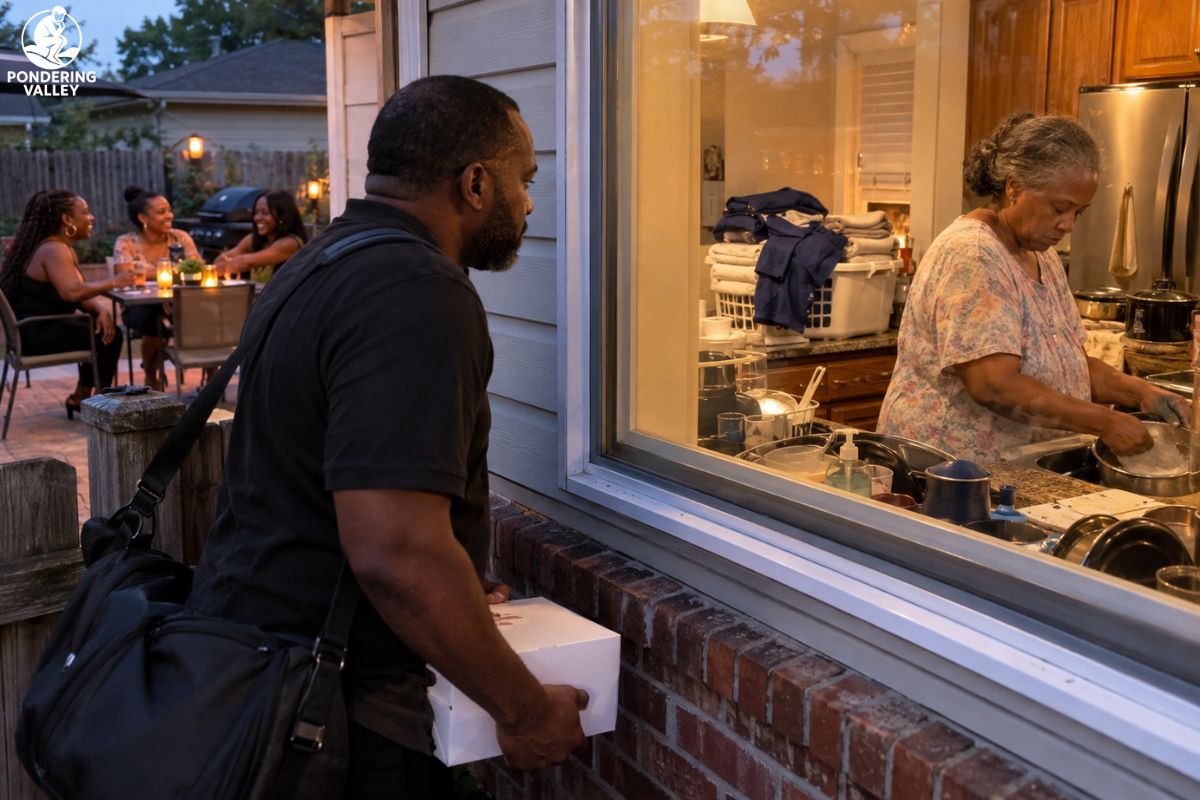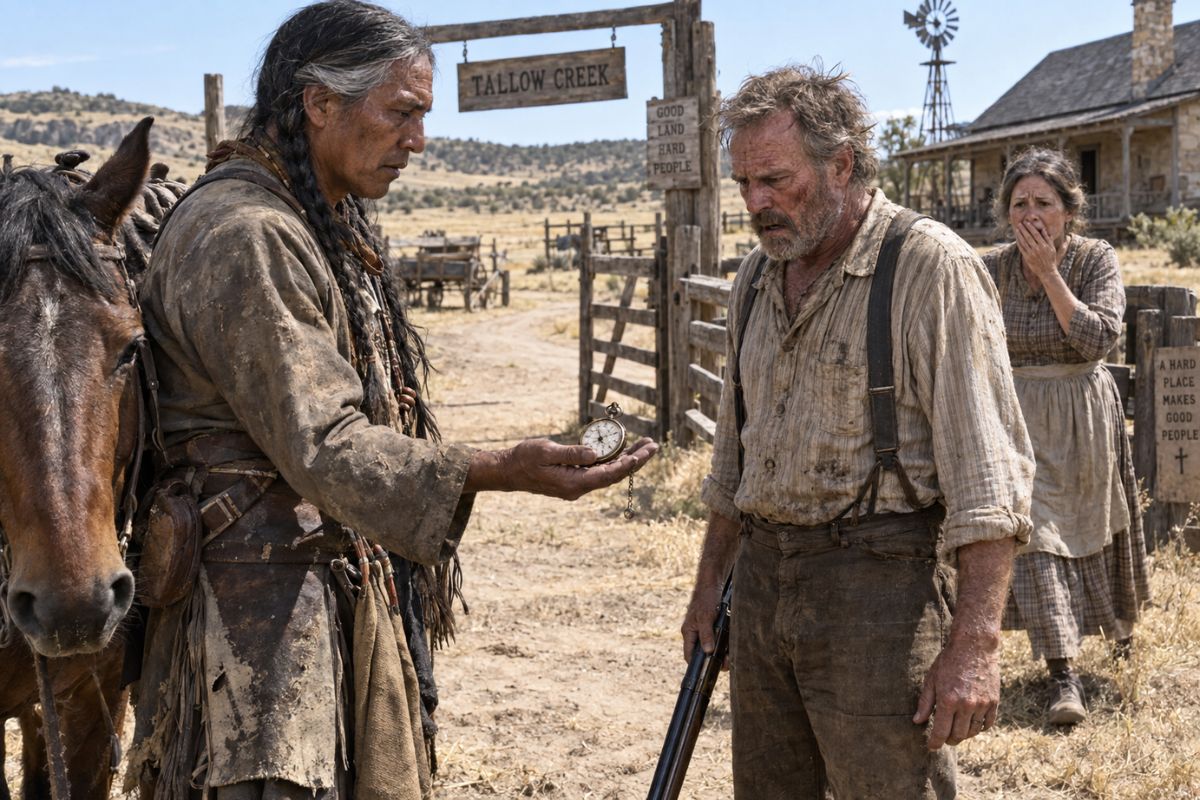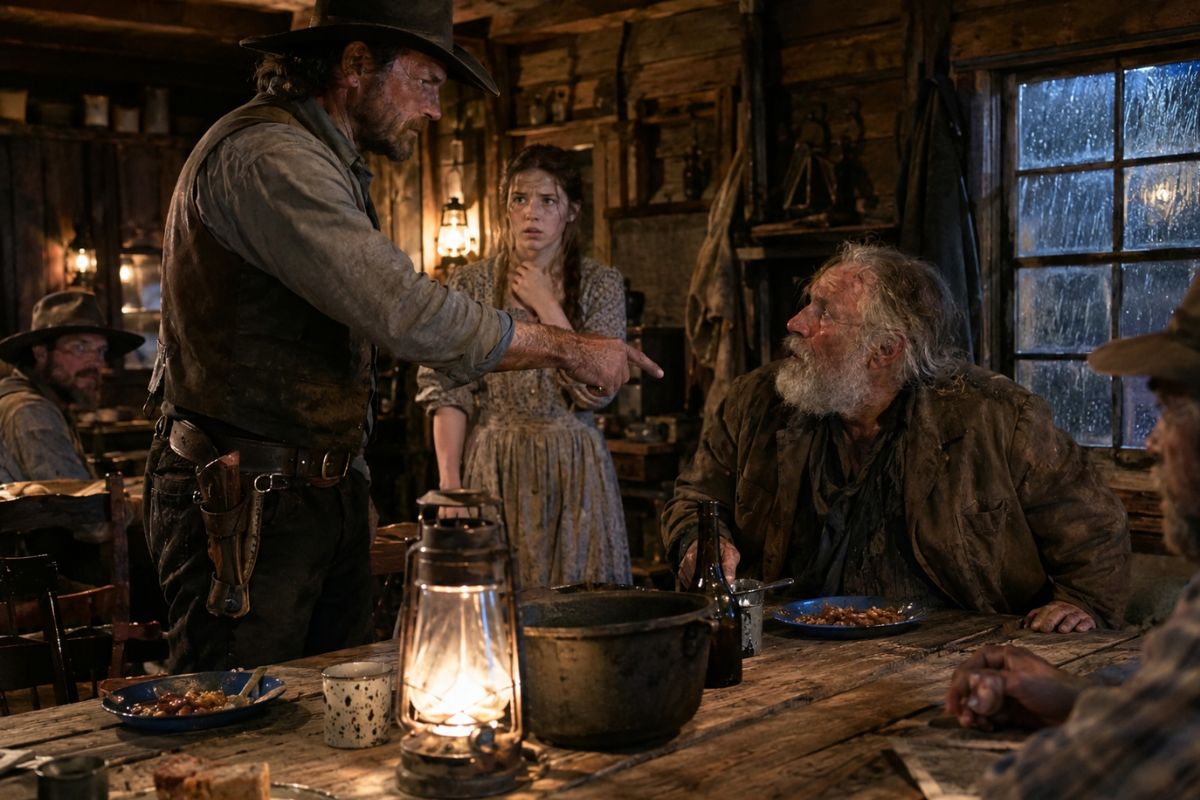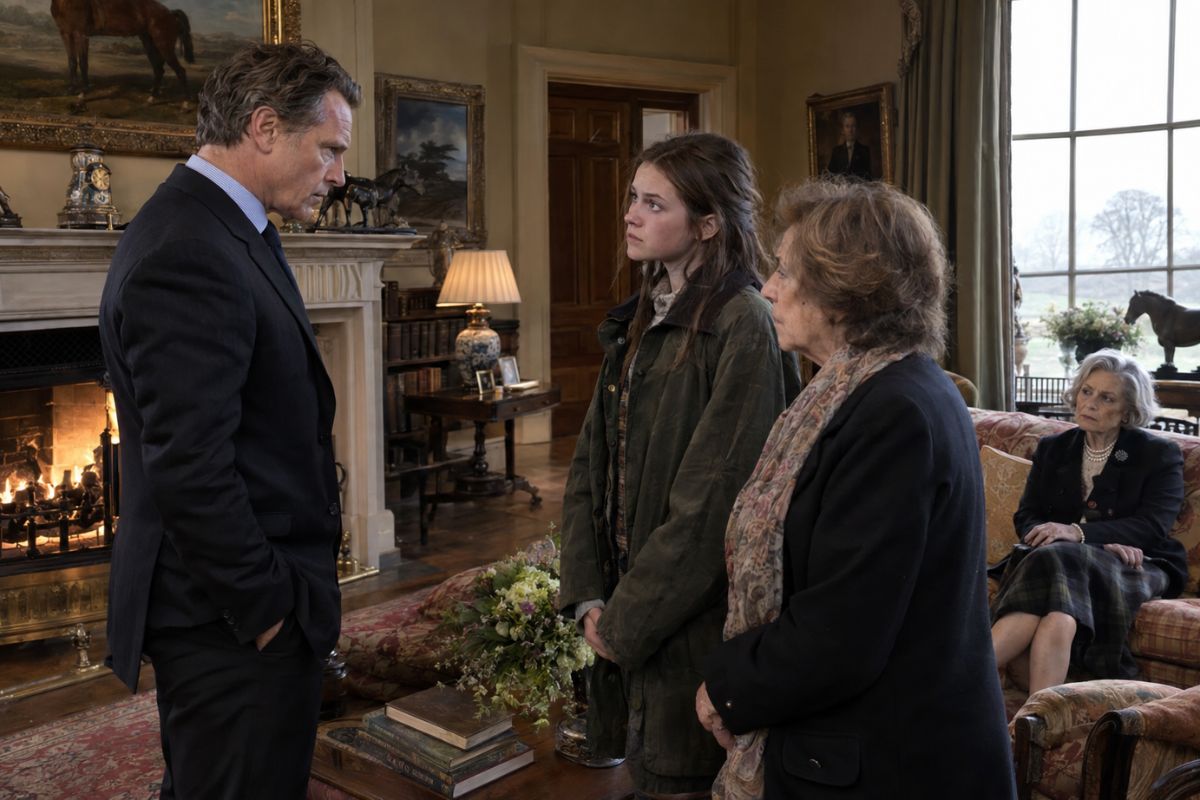
If you’ve already read part 1 of this story on Facebook, go here for Part 2!
PART 1
Coach Daniel Reyes benched the best player in the school thirty minutes before the championship game.
Not because the boy was late.
Not because he failed a class.
Not because he mouthed off.
He benched him while the gym was already filling, while parents were saving seats with jackets, while cheerleaders practiced under the bright lights, while the whole town waited to watch Marcus Hill win them a trophy.
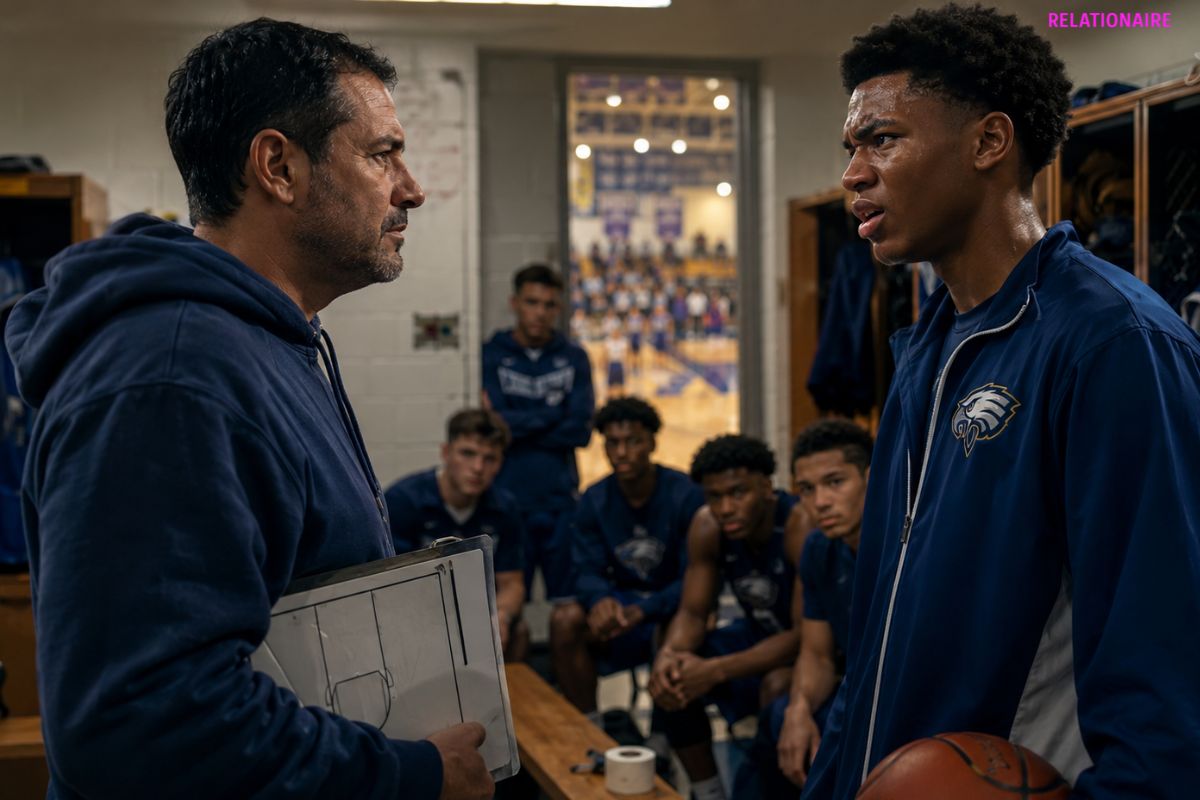
And Marcus just stood there in his blue warm-up jacket, holding the basketball against his hip like he had forgotten what it was for.
“You’re not starting tonight,” Coach Reyes said quietly.
Marcus blinked once.
Then he laughed, because at first he thought it had to be a joke.
“Good one, Coach.”
Coach Reyes did not smile.
The locker room got quiet in a way only boys can make a room quiet. No one moved. Someone’s shoelace squeaked against the floor. A roll of athletic tape sat half-unwrapped on the bench.
Marcus stared at him.
“You serious?”
“I am.”
“We’re playing Westbrook.”
“I know.”
“They’ve got Darius on me.”
“I know that too.”
Marcus’s face changed. The color went up his neck first, then into his cheeks.
“You said if I worked, I’d earn my spot.”
“You did work.”
“So what is this?”
Coach Reyes folded the clipboard under his arm. His hand was steady, but anyone who knew him well would have noticed the tiredness under his eyes.
“This is me making a decision.”
Marcus looked around the locker room, as if someone might stand up and say no, this isn’t right.
Nobody did.
Because Coach Reyes wasn’t some cruel man.
He was the coach who opened the gym early for kids whose apartments were too loud.
He was the one who kept granola bars in the bottom drawer of his desk and pretended not to notice when students took two.
He drove boys home after practice when parents stopped answering phones.
He wore the same faded school hoodie every winter because, as he joked, “the budget doesn’t cover style.”
Everybody loved Coach Reyes.
Until that night.
“You’re humiliating me,” Marcus said.
His voice cracked on the last word.
Coach Reyes looked at him, and something passed over his face so quickly most of the boys missed it.
But I didn’t.
I was standing by the locker room door holding the sign-out sheet for the student managers. I taught English down the hall, but on game nights I helped where I could. I had seen Marcus walk into school with his hood up for three straight weeks. I had seen him sleep through first period with his pencil still in his hand.
I had also seen Coach Reyes watching him.
Not like a coach watching a player.
Like a grown man watching a child try to carry something too heavy.
“You’ll dress,” Coach said. “You’ll sit with us. But you’re not playing tonight.”
Marcus dropped the ball.
It bounced once.
Hard.
Then again.
Nobody touched it.
“You’re a liar,” Marcus said.
Coach Reyes took that like a slap and did not defend himself.
The gym doors opened behind us and a wave of sound rushed in. Sneakers on polished wood. Parents talking. The band testing the first few notes of the fight song.
Marcus pushed past me so fast his shoulder hit the metal doorframe.
By halftime, the whole gym knew.
At first it was whispers.
Then stares.
Then phones held low in laps.
By the third quarter, Marcus’s mother was standing near the bleachers with her arms crossed so tightly her fingers pressed white into her coat sleeves.
She was a nurse at the county hospital. Everyone knew her too. She came to every game in her scrubs when her shift ran late, her hair pulled back, her eyes always searching the court for her son.
That night, she kept looking at the bench.
Marcus sat at the far end, towel over his knees, jaw locked.
He never looked at Coach.
We lost by six.
Six points.
In a championship game.
And nobody let Coach Reyes forget it.
By the time the final buzzer sounded, parents were already moving toward him.
“What were you thinking?”
“You cost those boys everything.”
“That kid carried this team all season.”
“You don’t do that to a child in public.”
Coach Reyes stood near the scorer’s table, still holding his clipboard, still wearing that old school hoodie, and took every word without raising his voice.
Marcus was gone.
His jersey had been left in a heap beside his locker.
One shoe sat under the bench like he had kicked it there and forgotten it.
I found Coach Reyes after everyone left.
The gym had that hollow, after-game smell—popcorn, sweat, floor wax, and crushed paper cups. The scoreboard was dark. The championship banner someone had ordered too early leaned against the wall, still rolled in plastic.
Coach sat alone on the bottom bleacher.
His clipboard was beside him.
His elbows rested on his knees.
“You didn’t have to take all that alone,” I said.
He didn’t look up.
“Yes, I did.”
“Daniel.”
He rubbed both hands over his face.
For a second, he looked older than any teacher in that building. Older than the job. Older than the noise.
“Everyone thinks I punished him,” he said.
“Didn’t you?”
He looked at me then.
And there it was.
Pain.
Not anger.
Not pride.
Pain.
“Two weeks ago,” he said, “Marcus fell asleep during film study. I thought he was exhausted. Then I saw his hands shaking.”
I waited.
Coach reached into the pocket of his hoodie and pulled out a small folded paper.
It was wrinkled at the edges, like he had opened it too many times.
“I found this in his gym bag.”
My stomach tightened.
“What is it?”
He looked toward the locker room door, where Marcus had disappeared an hour earlier.
Then he held the paper out.
“Before you read it,” he said, his voice almost breaking, “you need to understand something.”
PART 2
I unfolded the paper under the dim lights of the empty gym.
It wasn’t a note from a girl.
It wasn’t a failed assignment.
It wasn’t even really a note.
It was a torn corner from a pharmacy printout.
A medication name I recognized only because my father had taken something like it after surgery.
Below it, in Marcus’s handwriting, were numbers.
Not math homework.
Counts.
Dates.
Little scratches beside each day like someone trying to keep track of something and failing.
I looked at Coach Reyes.
“Is this his?”
Coach shook his head.
“His mother’s.”
The gym seemed to get colder.
“She hurt her back lifting a patient last month,” he said. “She’s been on pain medication. Marcus has been taking pills from the bottle at home.”
The words were quiet, but they landed hard.
I looked back at the paper.
The numbers made sense now.
A child’s messy inventory of something he had no business counting.
“How do you know?”
Coach leaned back against the bleacher behind him.
“I didn’t. Not at first.”
He told me what he had seen.
Marcus, once the first boy at practice, coming in late with glassy eyes and a smile that didn’t belong on his face.
Marcus snapping at a freshman over a missed pass, then apologizing five minutes later like he didn’t remember doing it.
Marcus missing free throws he could make in his sleep.
Marcus sitting alone in the locker room after everyone else left, staring at his hands.
And the shaking.
Always the shaking.
“I thought it was pressure,” Coach said. “Championship week. Scouts coming. Everybody telling him he was the family’s ticket out.”
That part was true.
People talked about Marcus like he was already gone.
College scholarship.
Bigger city.
Better life.
They said it kindly, mostly.
But kindness can still weigh something when everyone puts it on a seventeen-year-old’s shoulders.
Coach found the torn pharmacy paper after practice, half-stuck inside the front pocket of Marcus’s backpack. He hadn’t meant to search it. A bottle of water had leaked inside, and Coach was helping empty it before it soaked Marcus’s textbooks.
There was also a crumpled lunch debt notice.
A folded permission slip with no parent signature.
A broken phone charger.
And that paper.
“When I asked him,” Coach said, “he lied so fast it scared me.”
“What did he say?”
“That he was tracking them for his mom. Making sure she didn’t take too many.”
“Maybe he was.”
Coach looked down at his hands.
“That’s what I wanted to believe.”
The next day, he called Marcus into his office. Not the principal’s office. Not the counselor yet. Just the tiny coach’s office behind the gym, the one that smelled like rubber mats and dry erase markers.
He closed the door.
He didn’t accuse him.
He just said, “I’m worried about you.”
Marcus laughed.
Then got angry.
Then got quiet.
Coach told him he had noticed the shaking.
Marcus said he hadn’t eaten.
Coach handed him a granola bar.
Marcus didn’t take it.
Coach told him he had noticed the way his eyes looked.
Marcus said he was tired.
Coach said tired doesn’t make you forget plays you’ve run since seventh grade.
That was when Marcus stood up.
“You don’t know anything about my life,” he said.
Coach told me he almost let him leave.
That would have been easier.
There is always an easier thing in school.
Write the referral.
Make the call.
Pass the child to the next adult.
Protect your job.
Protect your peace.
But Coach Reyes had been teaching too long to mistake easy for right.
So he said the one thing he knew might make Marcus stop.
“I know what it looks like when a kid starts needing something he swears he can control.”
Marcus froze.
Coach had never told many people this, but he told Marcus that day.
His younger brother, Leo, had been a beautiful baseball player.
Fast hands.
Big smile.
Everybody’s favorite.
After a shoulder injury in college, Leo got pain pills.
Then more.
Then other things.
Their mother kept saying he was just tired.
Their father kept saying he was just stressed.
Coach kept saying he would talk to him tomorrow.
There was always a tomorrow.
Until there wasn’t.
Marcus sat back down when he heard that.
He didn’t confess.
Not fully.
But he stopped lying with his whole face.
Coach told him he needed help. Real help. Not shame. Not gossip. Help.
Marcus begged him not to tell his mother.
“She’ll lose it,” he said. “She already works nights. She already thinks I’m the one good thing she did right.”
Coach promised he would not turn it into a spectacle.
But he would not ignore it.
That was the line.
Then came championship week.
Marcus got worse.
He smiled too much. Sweated through warm-ups. Played like a miracle in flashes and like a stranger in others.
Coach called the counselor. Quietly.
He called the nurse. Quietly.
He tried Marcus’s mother twice and got voicemail both times.
On game day, twenty minutes before warm-ups, Coach saw Marcus in the hallway outside the boys’ bathroom.
His face was pale.
His pupils were wrong.
And his hands were shaking so badly he couldn’t zip his warm-up jacket.
Coach made the decision right there.
Unpopular.
Ugly.
Public.
The kind of decision that gets a coach hated by people who only see the scoreboard.
“He could’ve gotten hurt,” Coach said. “He could’ve hurt someone else. Or he could’ve gone home tonight thinking he had fooled everybody.”
I thought about Marcus sitting on that bench while the gym stared at him.
I thought about his mother’s face.
“You should have told people.”
Coach laughed once, but there was no humor in it.
“Told them what? That a seventeen-year-old boy might be stealing medication from his injured mother? Let the whole town chew on that over hot dogs and halftime?”
He stood, picked up his clipboard, then sat back down like his legs had changed their mind.
“I benched him because I love him,” he said. “And he may never forgive me for it.”
The next morning, Marcus didn’t come to school.
By second period, his absence had moved through the building like weather.
By lunch, the parents’ group online had called for Coach Reyes to be suspended.
By last bell, the principal had received twelve emails and one voicemail that simply said, “Resign.”
Coach didn’t answer any of it.
He taught his health class.
He covered lunch duty.
He told a sixth grader to stop running in the hallway.
At 3:42, Marcus’s mother walked into the front office still wearing her hospital badge.
Her eyes were red.
In one hand, she held a pharmacy bottle.
In the other, she held Marcus’s team jacket.
She asked to see Coach Reyes.
And when he stepped out of the gym, she said the words that made every secretary stop typing.
“What did you do to my son?”
PART 3
No one moved in the front office.
Not Mrs. Delaney at the attendance desk.
Not the school secretary holding a stack of late slips.
Not the little boy waiting with a tissue pressed under his nose.
Coach Reyes looked at Marcus’s mother, then at the pharmacy bottle in her hand.
“Mrs. Hill,” he said softly, “let’s talk somewhere private.”
“No,” she said.
Her voice shook, but not because she was weak.
Because she was holding herself together with both hands.
“You benched him in front of everybody. They called me at work. Parents. Kids. My own cousin sent me a video. My son walked home from a championship game like he had done something dirty.”
Coach didn’t defend himself.
That made her angrier.
“Say something.”
He glanced toward the hallway.
Students were slowing down, pretending to drink from the water fountain, pretending to fix backpacks with broken zippers.
“Please,” he said. “Not here.”
For a moment, I thought she would refuse.
Then her face changed.
Not softened.
Changed.
Like she had run out of anger and found fear underneath.
She followed him into the counselor’s office.
The door closed.
I don’t know every word said in that room.
I only know what Marcus’s mother told me later.
She said Coach asked her to sit down.
She didn’t.
She threw the team jacket onto the chair.
Then she put the bottle on the counselor’s desk.
“There were twenty-eight,” she said. “Now there are eleven.”
Coach closed his eyes.
Just for a second.
Not like he was surprised.
Like he had been praying he was wrong and had just found out he wasn’t.
Mrs. Hill said she had counted them that morning after Marcus didn’t come down for school.
At first, she thought she had miscounted.
Then she checked the trash.
Then the laundry.
Then Marcus’s room.
Under his mattress, she found two pills wrapped in a napkin, a half-empty sports drink, and a folded team photo from freshman year.
On the back of the photo, Marcus had written one sentence.
I can’t mess this up.
That was when she understood.
Not all of it.
But enough.
Enough to feel her knees nearly give out beside his bed.
“I thought he was mad about the game,” she said.
Coach sat across from her.
“He is.”
“He hates you.”
“I know.”
“You should have told me.”
“I tried.”
“I work nights.”
“I know.”
“No,” she said. “You don’t know. You don’t know what it’s like to come home after twelve hours and find dishes in the sink, bills on the table, your child already asleep, and still tell yourself he’s okay because you need one thing in your life to be okay.”
Coach didn’t interrupt.
She cried then.
Not loudly.
Just the kind of crying that makes a person look away because it feels too private to witness.
The counselor slid a box of tissues toward her.
Mrs. Hill didn’t take one.
“I’m his mother,” she whispered. “I should have noticed.”
Coach’s voice was gentle.
“You noticed enough to come.”
That broke her.
By evening, they found Marcus at the outdoor court behind the elementary school.
He was sitting on the cold concrete under the basketball hoop, still wearing yesterday’s jeans and the T-shirt from under his uniform.
His team jacket was with his mother.
His eyes were swollen.
There was a basketball beside him, but it looked untouched.
Coach Reyes didn’t rush him.
He walked across the court slowly, like approaching a frightened animal.
Mrs. Hill stayed near the fence, one hand over her mouth.
Marcus saw Coach first.
His face hardened.
“You brought her?”
“She brought herself.”
Marcus looked away.
“I’m not going to rehab.”
Nobody had said that word yet.
It hung there.
Heavy.
Adult.
Too big for a boy sitting under a bent basketball rim.
Mrs. Hill made a sound like someone had pressed on a bruise.
Coach sat down on the concrete a few feet away.
In his old school hoodie.
With his tired eyes.
With nothing in his hands.
“No one is dragging you anywhere tonight,” he said. “But we are not pretending.”
Marcus laughed, sharp and ugly.
“You ruined everything.”
“I stopped a game.”
“You ruined my life.”
“I may have saved it.”
Marcus looked at him then.
And for the first time, the anger slipped enough to show the terror underneath.
“You don’t get it,” he said. “Everybody needed me to win.”
His voice cracked.
“Mom needed it. The team needed it. The school needed it. Scouts were there. You think I wanted to take anything? I just needed my knee to stop hurting. Then I needed my head to stop. Then I needed to sleep. Then I needed to feel normal.”
Mrs. Hill walked toward him.
“Baby.”
He shook his head hard.
“I was going to fix it after the game.”
That sentence did something to all of us.
After the game.
After the trophy.
After the applause.
After the moment when everyone else’s dreams had been placed on his back.
Coach leaned forward.
“Marcus, listen to me. You are not a scholarship. You are not six points. You are not a headline in the local paper. You are a child we love more than we love winning.”
Marcus covered his face with both hands.
His shoulders started to shake.
Not from anger now.
From surrender.
His mother dropped to her knees in front of him and pulled him into her arms.
At first he resisted.
Then he folded.
All six feet of him.
All that talent.
All that pressure.
All that fear.
He folded into his mother like the little boy she still remembered, the one who used to sleep with a plastic basketball tucked beside him.
“I’m sorry,” he kept saying.
She rocked him on the concrete.
“I’m sorry too,” she whispered. “I’m here now. I’m here.”
Coach looked away.
He gave them that dignity.
The school board meeting happened four nights later.
It was supposed to be ugly.
Parents came ready.
Some had printed emails.
Some wanted answers.
Some wanted blood.
Coach Reyes stood at the microphone in the cafeteria, under the hum of fluorescent lights, beside a bulletin board covered in crooked student artwork.
Marcus walked in halfway through.
The room went silent.
He wore his team jacket.
His mother walked beside him.
Coach stepped back from the microphone, but Marcus shook his head.
“I need to say something.”
No one breathed.
Marcus gripped the edge of the podium.
“I thought Coach embarrassed me,” he said. “I thought he took everything from me.”
He swallowed.
“He didn’t.”
His mother put a hand on his back.
Marcus looked at the parents, the players, the teachers who had stayed late again without anyone clapping for them.
“He saw something I didn’t want anyone to see. And he stopped me before I became somebody I couldn’t come back from.”
A few people lowered their eyes.
One father who had shouted the loudest at the game took off his cap.
Marcus turned toward Coach.
“I hated you that night.”
Coach nodded.
“I know.”
Marcus’s mouth trembled.
“But I’m here because you let me hate you.”
That was when the room changed.
Not with applause at first.
With shame.
With understanding.
With the awful tenderness of realizing you judged a moment before you knew the wound inside it.
Then Mrs. Delaney, the school secretary, started clapping.
One slow clap.
Then another.
Then the cafeteria filled with it.
Not loud like a game.
Soft.
Human.
Coach Reyes looked down, embarrassed by gratitude, which was exactly like him.
Marcus didn’t play basketball for the rest of that year.
He went to counseling.
He apologized to his teammates.
He sat on the bench during practices and helped the younger boys learn footwork.
Sometimes he laughed again.
Sometimes he didn’t.
Healing was not a straight hallway.
But he kept showing up.
The next season, before the first home game, Marcus handed Coach a folded paper.
Coach opened it after the gym emptied.
It was another note.
Not a pharmacy paper this time.
Just one sentence in Marcus’s handwriting.
Thank you for loving me when it made you look like the villain.
Coach kept it in his desk drawer beside the granola bars.
Because in schools, the biggest lessons are not always written on boards.
Sometimes they sit quietly on benches.
Sometimes they cry in counselor’s offices.
Sometimes they cost a person their reputation for a little while.
And sometimes love looks, from far away, exactly like punishment—until you get close enough to see the hands holding it.