My Mother Let a Freezing Family Into Her Home, Then My Wife Tried to Throw Her Out of the Life She Built
“Tell me you did not send those children away from my mother’s porch.”
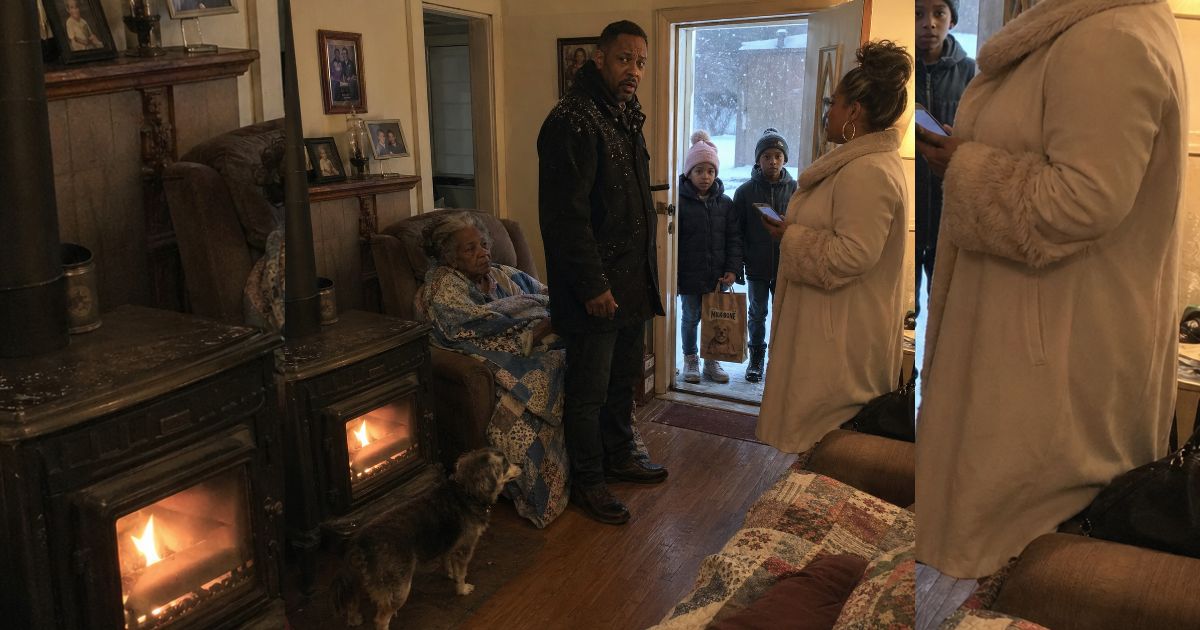
David stood in the middle of the living room with snow melting off his coat and shame already crawling up his neck.
His wife, Claire, didn’t even look up from her phone.
“They were bothering her,” she said.
From the old recliner by the window, my mother sat wrapped in a faded blue quilt, her hands folded so tightly her knuckles had gone pale.
Outside, the wind dragged loose snow across the street like white smoke.
Inside, the fire in the wood stove burned low.
And for the first time in my life, my mother’s house felt colder than the storm outside.
Her name was Martha Bennett.
Seventy-eight years old.
Widowed.
Stubborn in the way only old Southern women can be, even though she had lived in northern Ohio for nearly forty years.
She still said “supper” instead of dinner.
She still kept peppermint candies in a glass dish by the front door.
She still believed you fed people before you asked questions.
And she still lived in the little white house my father had bought for her when I was eight years old.
It sat at the end of Maple Street, just past the old church and the closed-down hardware store.
Nothing fancy.
Two bedrooms.
A narrow kitchen.
A front porch that sagged a little on the left side.
A wood stove in the living room that my dad had installed after the ice storm of 1989, when half the town lost power for almost a week.
“Electric heat is nice,” Dad used to say, tapping the black iron stove with his knuckle, “until it ain’t.”
My mother laughed at him then.
She didn’t laugh at him anymore.
My father, Samuel Bennett, had been gone seven years.
But his boots were still by the back door.
His fishing hat still hung on the same nail in the mudroom.
His old Bible still sat on the side table with a grocery receipt tucked inside to mark his place.
My mother said moving those things felt like pushing him out of the house.
So she didn’t.
She kept everything.
The chipped mugs.
The faded curtains.
The photo frames with crooked backs.
The quilt scraps in a basket beside her chair.
And the wood stove.
Especially that stove.
On the night everything changed, the storm came hard.
Not pretty snow.
Not Christmas-card snow.
Hard snow.
Mean snow.
The kind that beat against windows and swallowed roads and made the whole town go silent except for the wind.
My mother was alone in the living room, knitting by firelight.
The power had gone out across the block around six that evening.
Most houses went dark.
But Mom’s house still glowed.
That old stove kept the room warm, and the kettle on top gave off slow ribbons of steam.
Her little dog, Gus, slept on the braided rug near the hearth.
Gus was old too.
Gray around the muzzle.
One cloudy eye.
A crooked tail from something that happened before Mom and Dad found him wandering by the county road years ago.
Mom liked old things that still had love left in them.
That was what she always said.
She was counting stitches when the knock came.
Not soft.
Not polite.
Three desperate knocks that made Gus lift his head and bark once.
Mom froze.
Nobody knocked on Maple Street after dark in weather like that.
She set down her yarn and shuffled to the door in her slippers.
When she opened it, the cold burst in so hard it took her breath away.
On the porch stood the family from across the street.
John Miller.
His wife, Lisa.
Their teenage daughter, Emma.
And their little boy, Ben, wrapped in two blankets, his face flushed and his eyes half-closed.
John’s beard was crusted with ice.
Lisa’s lips were trembling.
Emma had one arm around her brother and the other pressed against her own chest like she was trying to hold herself together.
“Mrs. Bennett,” John said, his voice rough from the cold. “I’m sorry. I’m so sorry to bother you.”
Mom looked past them at the street.
No lights.
No porch lamps.
No cars moving.
Just snow and dark houses and the wind.
“Our furnace is out,” Lisa said quickly. “Power’s down everywhere. Ben’s got a fever, and we can’t get the house warm. We tried calling around but nobody can get through.”
John swallowed hard.
“We saw your light. I remembered you had that stove.”
Lisa looked close to tears.
“We can sit in the entryway. We won’t be any trouble. Please, just the kids for a little while.”
Mom didn’t hesitate.
Not one second.
“Oh, hush,” she said, opening the door wider. “Get in this house before you freeze standing there apologizing.”
John looked embarrassed.
Lisa looked grateful.
Emma guided Ben inside.
Gus got up slowly and sniffed the air, then wagged his crooked tail like he had been expecting guests all night.
Mom closed the door against the storm.
The Millers stood awkwardly in the living room, snow dripping off their boots onto the old rug.
Mom waved a hand.
“Don’t worry about the floor. Floors are for living on.”
She helped Lisa settle Ben on the couch near the stove.
She brought out towels.
Then quilts.
Then thick socks from the laundry basket.
She told Emma to take off her wet gloves and warm her hands near the stove, but not too close.
She told John to sit before his knees gave up.
When Lisa tried to protest, Mom gave her the same look she used to give me when I tried sneaking cookies before supper.
“Sit down, honey. A woman my age doesn’t need instructions in hospitality.”
Ten minutes later, the kettle was singing.
Mom made tea for John and Lisa.
Warm milk with honey for Ben.
Hot cocoa for Emma from an old tin she kept in the pantry.
She set out shortbread cookies from a Christmas plate even though Christmas was long over.
The living room softened.
That is the only way I know how to describe it.
The storm was still wild outside.
But inside, the house seemed to breathe.
Ben’s cheeks slowly turned less gray.
Emma smiled when Gus rested his chin on her boot.
John sat near the stove with both hands wrapped around his mug, staring into the fire like a man who had just escaped something.
“This place feels like another world,” he said quietly.
Mom smiled.
“My Samuel built that woodpile out back before he passed. He never trusted Ohio winters.”
Lisa looked around the room.
At the quilts.
The photographs.
The little ceramic angels on the mantel.
The old wind chime hanging in the window even though it was indoors.
“It feels like my grandmother’s house,” she said. “Safe.”
Mom’s eyes flickered toward my father’s photograph.
He was smiling in it.
Young.
Broad-shouldered.
One arm around Mom.
The other around me, back when I was missing my two front teeth and thought my father could fix anything.
“It used to be louder,” Mom said.
Her voice was gentle, but something in it made Lisa lower her mug.
“David used to run through here like his shoes were on fire. Samuel would tell him to slow down, then chase him himself.”
She laughed softly.
Then she looked into the fire.
“Quiet houses make you remember noise.”
Nobody said anything for a moment.
Even little Ben seemed to understand that some sentences are not asking for an answer.
Then he lifted his head.
“Is that your dog?”
Mom brightened.
“That’s Gus.”
“He looks like a grandpa dog.”
Mom laughed then.
A real laugh.
The kind that came from deep in her chest.
“He is a grandpa dog. And don’t you let him tell you he ain’t.”
Ben reached one small hand toward Gus.
Gus sniffed it, then licked his fingers.
That was all it took.
By the time the worst of the storm passed, the Miller children were asleep under my mother’s quilts, and John was adding another log to the stove like he had done it a hundred times.
Lisa helped Mom wash mugs in the kitchen by lantern light.
The two women spoke in low voices.
About children.
About old houses.
About losing people.
About how winter had a way of making every worry feel bigger.
When the Millers finally went back across the street near dawn, the snow was up to John’s shins.
He carried Ben.
Lisa hugged my mother at the door.
Not a quick hug.
A real one.
The kind you give when words do not feel big enough.
“You saved us tonight,” Lisa whispered.
Mom patted her back.
“No. I opened a door. That’s all.”
But it was not all.
Not to the Millers.
And not to my mother.
Over the next few weeks, that one night grew into something none of them expected.
Emma started visiting after school.
At first, she claimed it was for Gus.
She brought him little treats in paper bags from the local pet aisle.
Then she started bringing her homework.
She sat at Mom’s kitchen table and worked on essays while Mom knitted beside her.
Ben came too after his fever broke.
He called Mom’s house “the warm house.”
Every time Lisa tried to correct him, Mom told her not to.
“I’ve been called worse than warm,” she said.
John began shoveling Mom’s walk without being asked.
Then he fixed the loose porch rail.
Then he split wood for her out back.
Lisa brought soup in plastic containers with masking tape labels.
Chicken noodle.
Beef stew.
Potato leek.
Mom sent the containers back filled with biscuits or banana bread.
The exchange became a quiet ritual.
Nobody announced it.
Nobody made a big deal of it.
It simply happened.
The way real kindness often does.
Slowly.
Without a speech.
For the first time in years, Mom’s house had voices in it again.
Emma laughing in the kitchen.
Ben talking to Gus like Gus was a person.
John asking where Samuel had kept the good hammer.
Lisa telling Mom about a recipe her own grandmother used to make.
And my mother, who had spent years pretending she did not mind being alone, started setting four extra mugs on the counter without noticing.
One evening, they all sat around her kitchen table while snow tapped softly at the windows.
Mom had made stew.
John brought fresh bread from the little bakery downtown.
Lisa brought apple crisp.
Ben had Gus under the table and was sneaking him pieces of bread he thought nobody saw.
Emma asked Mom how long she had lived in the house.
“Thirty-nine years,” Mom said.
Emma’s eyes widened.
“That’s longer than my parents have been alive.”
John groaned.
“Thank you for that reminder.”
Mom laughed.
Then her eyes drifted around the room.
“We bought this place when David was little. The roof leaked. The kitchen cabinets were crooked. The backyard was more mud than grass. But Samuel walked in and said, ‘Martha, I can hear our life in here.’”
Lisa smiled.
“What did he mean?”
Mom touched the edge of the table.
“He meant he could hear Sunday breakfasts. Birthday candles. Screen doors slamming. Arguments. Forgiveness. Grandbabies maybe.”
Her smile faded a little.
“We didn’t get all of it. But we got enough.”
The room grew quiet.
Emma looked down at her bowl.
Ben stopped feeding Gus for once.
John cleared his throat.
“This house still sounds full to me.”
Mom looked at him.
Her eyes shone.
But she blinked fast and waved him off.
“Oh, eat your stew before it gets cold.”
That was Mom.
If love got too close, she covered it with food.
But the truth was there.
Everybody felt it.
She was becoming part of their family.
And they were becoming part of hers.
I did not know any of this.
That is the part I hate saying.
I was her only son, and I did not know the most important thing happening in my mother’s life.
I lived two hours away in Columbus.
I had a good job at a corporate office.
A corner desk.
A calendar full of meetings.
A phone that never stopped buzzing.
I told myself I was busy building a life.
That was the phrase I used.
Building a life.
As if my mother had not already built one and kept a chair open for me in it.
I called her on Sundays when I remembered.
Sometimes from the car.
Sometimes while answering emails.
Sometimes with Claire sitting beside me, silently pointing at her watch because we had dinner reservations or errands or something she considered more important than listening to my mother talk about a loose gutter.
Mom never complained.
She always said, “I’m fine, baby.”
I believed her because believing her was easier.
Then Lisa called me.
It was a Tuesday morning.
I was between meetings.
I almost did not answer because I did not recognize the number.
When I picked up, Lisa’s voice was careful.
“David Bennett?”
“Yes.”
“My name is Lisa Miller. I live across from your mother.”
Something inside me tightened.
“Is she okay?”
“She’s safe,” Lisa said quickly. “But she’s been weaker lately. A cough. Tiredness. She didn’t want to worry you, but I think you should come.”
I stood up from my desk.
“What happened?”
“She needs you,” Lisa said.
Not the doctor.
Not a handyman.
Not paperwork.
You.
Those three words landed harder than any alarm.
I told my boss there was a family matter.
I called Claire.
She sighed before I finished the sentence.
“David, we have the foundation dinner Thursday.”
“My mother is sick.”
“I understand that. But is it urgent urgent? Or is it old-person urgent?”
I remember going very still.
“What does that mean?”
“It means your mother has been alone in that house for years by choice. Every winter there’s something. A cough. A draft. A frozen pipe. A sad phone call. And suddenly we’re supposed to drop everything.”
I should have ended the conversation right there.
I should have told her my mother came first.
Instead, I said, “Pack a bag.”
Claire arrived at our townhouse thirty minutes later in a cream wool coat, carrying a suitcase that looked too expensive for Maple Street.
She barely spoke during the drive.
The highway was lined with dirty snow.
The sky was low and gray.
Every mile closer to my hometown made my chest feel tighter.
I had not been back since Thanksgiving.
Even then, we had only stayed four hours.
Claire said the house smelled like smoke.
I said nothing.
That was how our marriage worked too often.
Claire pushed.
I folded.
We pulled onto Maple Street just after dawn.
The old houses sat hunched under snow.
The church sign at the corner still had missing letters.
The little diner near the gas station still had the same faded red awning.
And there was my mother’s house.
Small.
White.
Warm light in the front window.
Smoke curling from the chimney.
For one second, I was eight years old again.
Running up that porch with a report card in my hand.
My father clapping from the doorway.
My mother wiping flour on her apron.
Then Claire’s voice cut through the memory.
“This is worse than I remembered.”
I parked.
“Don’t start.”
“I’m not starting. I’m observing.”
We walked up the salted path.
I knocked, though I still had a key somewhere on my ring.
Mom opened the door slowly.
She looked smaller than I remembered.
That was the first thing.
Not sick exactly.
Smaller.
Her shoulders curved under her shawl.
Her hair, once thick and dark, was now silver and pinned loosely at the back.
But her eyes lit when she saw me.
“My boy.”
I hugged her carefully.
Too carefully.
Like she might break.
She felt thin in my arms.
“Mom,” I whispered.
She patted my back.
“You came all this way in the cold.”
“All this way,” Claire repeated under her breath, stepping inside and brushing snow from her sleeve.
Mom either did not hear or pretended not to.
She had always been good at pretending not to hear unkindness.
She welcomed us in.
The living room was warm.
The stove glowed.
Gus thumped his tail against the rug.
Claire looked around with tight eyes.
At the quilts.
The old photos.
The basket of yarn.
The wood stacked near the stove.
“You’re still using this thing?” she asked.
Mom smiled faintly.
“It has kept me warm a long time.”
Claire looked at me.
“David, this cannot be safe.”
“It’s fine,” I said.
But I did glance at the stove.
Not because I thought it was dangerous.
Because Claire expected me to.
Mom saw.
I know she saw.
A shadow passed over her face, quick as a bird.
Then she asked if we wanted coffee.
I said yes.
Claire said bottled water would be fine.
Mom did not keep bottled water.
She gave Claire tap water in a glass with painted blue flowers on it.
Claire held it like it might stain her hand.
The first day was tense but polite.
Mom tried.
She made vegetable soup.
She asked about our work.
She told Claire the guest room had fresh sheets.
Claire smiled with her mouth only.
I checked Mom’s pantry, medicine cabinet, furnace filter, gutters, smoke alarm, and bills.
It was easier to inspect things than sit with her.
By evening, I had made a list on my phone.
Doctor appointment.
Home repair estimate.
Meal delivery.
Maybe assisted living.
Maybe sell house.
I told myself I was being responsible.
Mom watched me from her chair.
“What are you typing, baby?”
“Just things we need to take care of.”
“We?”
I looked up.
Her voice was soft.
Not challenging.
Just tired.
“Yes, we.”
She looked toward my father’s photograph.
“This house has been taking care of me longer than most people have.”
I almost said houses do not take care of people.
But the words felt ugly.
So I swallowed them.
The next afternoon, Emma and Ben knocked.
I was in the kitchen calling a local handyman.
Claire answered the door.
I heard the voices before I saw them.
“Hi, Mrs. Bennett,” Emma said. “We brought Gus a treat. And Mom made soup.”
Claire’s voice was flat.
“She’s resting.”
“Oh. We can just leave it.”
“The dog doesn’t need treats.”
Silence.
Then little Ben said, “But Gus likes the peanut butter ones.”
Claire sighed.
“This is not a drop-in center. Mrs. Bennett needs quiet, not neighborhood children running in and out.”
I walked into the hallway just as Emma’s face fell.
She was maybe fifteen.
Skinny.
Brown hair tucked under a purple knit hat.
Ben stood beside her clutching a paper bag.
He could not have been more than six.
His cheeks went red.
Not from cold.
From embarrassment.
Behind them, Lisa stood on the bottom step with a covered container in her hands.
Her smile faded when she saw Claire’s expression.
“I’m sorry,” Lisa said. “We didn’t mean to intrude.”
Mom’s voice came from behind me.
“They’re not intruding.”
She was standing beside her chair, one hand on the armrest.
Her face was pale, but her voice had steel in it.
Claire turned.
“You need rest.”
“I need kindness in my own house.”
The hallway went quiet.
Claire’s eyes sharpened.
I should have stepped in right then.
I should have opened the door wide and told the Millers to come in.
Instead, I stood between my wife and my mother and tried to keep the peace.
That is another phrase cowards use when they do not want to choose.
Keep the peace.
But peace without truth is just silence with better manners.
Lisa held out the container.
“I made chicken soup. No pressure. Just thought it might help.”
Mom’s face softened.
“Thank you, honey.”
Claire reached for it before Mom could.
“We have food covered.”
She set the container on the small entry table without looking at it.
Emma looked at Mom.
Gus whined from the living room.
Ben opened the paper bag slightly and whispered, “Bye, Gus.”
Then they left.
The door closed.
Something warm left with them.
Mom sat back down slowly.
I looked at Claire.
“That was unnecessary.”
Claire gave a short laugh.
“What’s unnecessary is strangers acting like they own your mother’s house.”
“They helped her.”
“They are too comfortable.”
“They’re neighbors.”
“They are inserting themselves.”
Mom’s hands trembled in her lap.
“Claire,” she said quietly, “that family came to me in a storm. I opened my door. Since then, they’ve opened theirs.”
Claire turned to her.
“With respect, Martha, you are vulnerable. People take advantage of vulnerable older people.”
Mom blinked.
The room went still.
Claire continued, softer now, like soft could make it better.
“We need boundaries.”
Mom looked at me.
Not at Claire.
At me.
I saw the question in her eyes.
Do you believe that too?
I said nothing.
And my silence answered.
After that, the house changed.
The Millers stopped coming inside.
Lisa still left food on the porch.
John still cleared the walk early in the morning before we woke up.
Emma still waved from across the street, but she did not knock.
Ben stood at his window sometimes and held up Gus’s treat bag like a tiny flag.
Mom waved back.
Gus watched the door.
Claire grew more restless.
She complained about the smoke smell.
The slow internet.
The narrow bed.
The old plumbing.
The way the floor creaked at night.
She said the town made her feel trapped.
She said Mom needed “a plan.”
By the fourth day, she had turned Mom’s kitchen table into an office.
Laptop open.
Papers stacked.
A notepad filled with numbers.
I saw words on it that made me pause.
House value.
Estate options.
Facility costs.
Liquidation.
I picked up the notepad.
Claire snatched it back.
“I’m being practical.”
“About my mother’s life?”
“About your future too.”
I stared at her.
She lowered her voice.
“David, this house is an asset. Sitting here, rotting, full of old furniture and firewood. Your mother cannot manage it forever. You know that.”
“She can still hear you.”
Claire glanced toward the living room.
Mom sat by the fire with her knitting in her lap.
Her hands were still.
Her eyes were on the flames.
Claire shut the notepad.
“Then maybe she should hear it.”
I felt anger rise, but it got tangled with guilt and fear and confusion.
Because part of me had wondered the same things.
Not in Claire’s sharp way.
Not with numbers and cold words.
But I had wondered.
Was Mom safe alone?
Could I keep driving back and forth?
Was the house too much?
Would she be better somewhere closer to me?
Those questions were not wrong.
But Claire made them cruel.
That afternoon, I had to drive into town to meet the handyman and pick up prescriptions.
I did not want to leave Mom and Claire alone.
But Mom insisted.
“Go on,” she said. “I’m not made of glass.”
Claire smiled.
“We’ll be fine.”
I believed her because I wanted to.
The pharmacy took longer than expected.
The handyman was late.
A neighbor stopped me outside the grocery store and told me he remembered my father helping fix his truck in 1997.
By the time I got back, the sky was turning purple.
The house was too quiet.
I opened the door and heard Claire’s voice from the living room.
Not shouting.
Worse.
Calm.
Cold.
“I’m trying to make you understand, Martha. Love is not a reason to freeze in a museum.”
Mom answered so quietly I could barely hear.
“This is my home.”
“It was your home,” Claire said. “Now it’s a burden. On David. On us. On everyone.”
My hand tightened around the prescription bag.
Mom said, “I never asked him to come.”
“Oh, please. You didn’t have to. Women like you don’t ask. You sit in the dark and wait for guilt to do the work.”
I stepped into the doorway.
Mom was in her chair near the window.
Her quilt had slipped from one shoulder.
Her face looked drained.
Claire stood beside the mantel, arms folded.
The soup Lisa had brought was still on the entry table.
Unopened.
“Claire,” I said.
She turned quickly.
For a second, guilt flashed in her eyes.
Then it disappeared.
“Good. You’re back. We need to talk.”
I looked at Mom.
“Are you okay?”
She smiled.
That small, terrible smile parents use when they are trying to protect their children from the truth.
“I’m fine, baby.”
But she was not fine.
Her hands were shaking.
Her eyes were wet.
And Gus was pressed against her slipper, looking up at her like he knew.
Before I could say more, there was a knock.
John Miller stood at the door.
Lisa behind him.
Emma and Ben close by.
John’s face was serious.
Not angry.
Serious.
“David,” he said. “Can we come in?”
Claire made a sound under her breath.
I opened the door wider.
“Yes.”
They stepped inside carefully, like they were entering a room where something fragile had already cracked.
Lisa went straight to Mom.
“Martha?”
Mom reached for her hand.
That one small movement told me more than any argument could.
Lisa was the person my mother reached for.
Not me.
Lisa.
My chest tightened.
John looked at Claire, then at me.
“We need to talk about what’s been happening.”
Claire laughed sharply.
“Unbelievable.”
John ignored her.
“Your mother has been scared to upset you. She asked us not to interfere. But this has gone too far.”
“Scared?” I repeated.
The word tasted strange.
My mother had never been scared of me.
Had she?
Lisa took a folded envelope from her coat pocket.
“Martha gave me permission to show you this.”
Mom closed her eyes.
Claire’s face changed.
Just a little.
“What is that?” I asked.
Lisa handed it to me.
Inside were papers.
Not legal papers.
Not medical records.
Simple pages torn from my mother’s notebook.
Her handwriting filled the lines.
Small.
Careful.
Shaky in places.
I read the first one.
Tuesday.
Claire told Emma and Ben not to come anymore.
Ben looked hurt.
I wanted to say more but my chest felt tight.
David looked tired.
I did not want to make things harder for him.
I swallowed.
The next page.
Wednesday.
Lisa left soup.
Claire put it on the table and said we had food covered.
David did not eat supper with me.
He worked on his laptop.
I miss when he sat at this table and told me everything.
The next.
Thursday.
Claire said this house is a burden.
Maybe I am too.
I know David has a life.
I do not want to be the reason he resents me.
My vision blurred.
The room tilted.
I turned another page.
There was a grocery receipt tucked between the notebook papers.
On the back, in Mom’s handwriting, was a list.
Things to remember before leaving house:
Samuel’s photo.
His Bible.
Wedding quilt.
Gus’s medicine.
Key for Lisa in case stove needs checking.
At the bottom, one line stopped me.
Tell David I tried not to need too much.
I could not breathe.
“Mom,” I whispered.
She looked away.
Claire stepped forward.
“That proves nothing except that she’s emotional.”
John’s voice was low.
“It proves she’s been made to feel like a problem in her own home.”
Claire turned on him.
“And who are you exactly? A neighbor who smelled an inheritance issue and decided to play hero?”
Lisa flinched.
Emma stiffened.
John’s jaw tightened, but he kept his voice steady.
“I’m the man your mother-in-law let inside when my son was burning with fever and my house was dark. I’m the man who watched her give warmth without asking what we could give back.”
Claire opened her mouth.
But Emma stepped forward.
Her hands were trembling.
“Mr. Bennett,” she said, looking at me. “Ben has something too.”
Ben hid behind Lisa’s coat.
Lisa touched his shoulder.
“It’s okay.”
Ben held out a small digital camera.
Bright blue.
Child-sized.
Scuffed at the corners.
“I didn’t mean to do anything wrong,” he said, voice tiny. “Mrs. Bennett said I could make videos of Gus because he does tricks.”
I stared at the camera.
Claire’s face went pale.
“He records everything,” Emma said quickly. “Gus rolling over. Mrs. Bennett knitting. The stove. He was making a movie called Gus Saves Winter.”
Despite everything, Mom gave a weak laugh.
Ben looked at Claire, then down.
“It was still on yesterday.”
The silence that followed pressed against the walls.
Claire said, “No.”
Just that.
No.
But Emma had already turned on the camera.
The first clips were sweet.
Gus walking slowly in circles while Ben narrated in a whisper.
Mom laughing as Gus refused to sit.
The fire glowing in the stove.
Emma’s voice in the background saying, “Ben, don’t film people eating.”
Then another clip.
The angle was low, like the camera had been set on a side table.
Mom sat in her chair by the window.
Claire stood near the mantel.
Her voice came through clear.
“This house is dragging everyone backward.”
Mom said, “It holds my life.”
Claire answered, “Your life is not the only life that matters.”
I closed my eyes.
But the sound kept going.
“You want David to stay trapped here because you’re lonely,” Claire said.
Mom whispered, “I want my son to remember me while I’m still here.”
The room around me disappeared.
All I heard was my mother.
Not accusing.
Not demanding.
Just asking to be remembered.
The clip ended.
Nobody moved.
Then the next one started.
Claire in the kitchen.
The soup Lisa had brought sat on the counter.
Claire lifted the lid, wrinkled her nose, and poured it into the trash.
“She doesn’t need these people,” she muttered. “She needs a decision made.”
Lisa put a hand over her mouth.
John looked at the floor.
Ben started crying quietly.
Mom looked smaller than ever.
I turned to Claire.
“Tell me there’s an explanation.”
Claire’s lips parted.
For once, no polished sentence came out.
I looked back at the camera.
Emma stopped the video before anything else played.
She was crying now too.
“I’m sorry,” she said to Mom. “I didn’t know it had that on there.”
Mom reached for her.
“Oh, sweetheart. You did nothing wrong.”
I stood there with my mother’s notebook in one hand and a child’s camera in the other.
Paper and proof.
Ink and image.
And between them sat the truth I had been too busy, too proud, too weak to see.
My wife had not created my mother’s loneliness.
I had.
Claire had only stepped into the empty place I left and filled it with her own coldness.
I turned to her.
“Pack your things.”
Her eyes widened.
“David.”
“Pack your things.”
“You are choosing these people over your wife?”
I looked at my mother.
Then at Lisa, still holding her hand.
At John, standing like a wall between decency and cruelty.
At Emma and Ben, who had loved my mother with more honesty in a few weeks than I had shown in years.
“No,” I said. “I am choosing my mother over the man I became.”
Claire stared at me.
Her face tightened.
“You’ll regret this.”
“I already regret enough.”
For a moment, she looked like she might argue.
Then she grabbed her coat from the chair and walked toward the guest room.
Her suitcase wheels scraped down the hallway a few minutes later.
The front door opened.
Cold air rushed in.
Then the door shut.
Not slammed.
Just shut.
Some endings do not need noise.
The house was silent.
I turned toward Mom.
She sat very still.
Her eyes were on me, but there was no victory in them.
Only sadness.
That hurt most.
I crossed the room and knelt beside her chair.
The same spot where I used to kneel as a boy when I had tracked mud across her clean floor and needed forgiveness.
Her hands rested in her lap.
Old hands.
Work-worn hands.
Hands that had packed my lunches, buttoned my Sunday shirts, held cold washcloths to my forehead, waved from this porch every time I drove away.
I took them in mine.
“I’m sorry,” I said.
My voice broke.
I tried again.
“Mom, I am so sorry.”
Her mouth trembled.
“David.”
“I should have been here. I should have listened. I should have called more. I should have known you were lonely.”
She looked toward the fire.
“I didn’t want to be a burden.”
That word broke something open in me.
“You are not a burden.”
My tears came then.
Hard.
Embarrassing.
Late.
“I made you feel like one because I didn’t want to face what I was doing. I kept saying I was busy building a life. But you were sitting here in the life you built for me, waiting for me to visit.”
Mom’s eyes filled.
I bowed my head over her hands.
“I missed Dad’s chair being empty, so I stayed away from the room. I missed being a kid here, so I acted like the house was the problem. I let Claire talk about your home like it was junk because I was scared she was right about how much responsibility I had ignored.”
My shoulders shook.
“I’m sorry. I’m sorry for every short phone call. Every rushed holiday. Every time you said you were fine and I believed you because it was easier.”
Mom’s hand lifted slowly.
It rested on my hair.
Light as snow.
Same as when I was little.
Same as when nightmares woke me.
Same as when I came home crying because boys at school had laughed at my old shoes.
“There now,” she whispered.
I cried harder.
She stroked my hair.
“My baby.”
“I don’t deserve that.”
“You don’t stop being my baby because you got lost.”
The room blurred.
Lisa turned away to give us privacy.
John cleared his throat.
Emma hugged Ben.
Gus crept over and rested his chin on my knee.
For the first time in years, I let myself be held by my mother.
Not as a successful man.
Not as a busy man.
Not as someone with answers.
Just her son.
And maybe that was where healing had to start.
The next few days were not magical.
Real life rarely fixes itself in one apology.
Claire left town that evening.
There were calls later.
Long ones.
Hard ones.
I will not pretend it was simple.
Marriages do not untangle cleanly, and some conversations belong behind closed doors.
But I made one thing clear.
My mother would not be treated like an inconvenience again.
Not by Claire.
Not by me.
Not by anyone.
I took leave from work.
For the first time in years, I stopped treating my calendar like it was more alive than the woman who gave me life.
Mom had a doctor visit.
No dramatic diagnosis.
No big speech.
Just age, exhaustion, a winter cough that needed care, and a firm warning that she needed help, rest, and steady meals.
The doctor did not tell her to leave her home.
He did not tell me to sell it.
He told me to pay attention.
It sounded simple.
It was not.
Paying attention meant noticing how slowly Mom stood from her chair.
How she held the wall when she walked to the kitchen.
How she pretended not to be winded after carrying wood.
How lonely the house became after sunset.
It meant seeing the stack of old birthday cards tied with ribbon.
Mine on top.
The last one from three years ago.
It meant finding the casserole dishes Lisa had left, washed and stacked carefully by the sink, because Mom had planned to return them even after Claire made the Millers feel unwelcome.
It meant reading more of her notebook.
Not all of it.
Some pages were private.
But enough.
Enough to see the shape of the silence I had left behind.
One entry said:
David sounded tired today.
I told him the gutter was fine.
It is not fine.
Maybe John can look at it, but I do not want David to think I replaced him.
Another said:
Ben called Gus a hero.
I laughed so hard I coughed.
I wish David could have heard it.
Another:
The house was warm tonight.
Not because of the stove.
Because someone knocked and stayed.
I sat at her kitchen table with those pages and cried into my coffee like a boy.
John found me there one morning.
He did not say much.
Just poured himself a cup and sat across from me.
After a while, he said, “Shame can either bury you or teach you where to dig.”
I looked at him.
He shrugged.
“My dad used to say that. Usually after I messed something up.”
“I messed up a lot.”
“Then you’ve got a lot of digging to do.”
I laughed once.
It came out broken.
John smiled.
Not smug.
Not superior.
Just kind.
That was almost harder to take.
Kindness from the people I had allowed to be pushed away.
Lisa helped Mom regain strength with soups, gentle walks around the living room, and the kind of firm cheerfulness mothers recognize in each other.
Emma came back after school.
At first she hovered, unsure if she was still welcome.
Mom opened her arms.
“Come here, purple scarf.”
Emma ran to her.
Ben brought the camera again and asked if he was still allowed to finish “Gus Saves Winter.”
Mom said yes, but only if Gus got top billing.
Ben did not know what top billing meant, but he agreed.
The house warmed again.
Not all at once.
But enough.
One morning, I woke early in the guest room.
The house was quiet.
Blue dawn pressed against the curtains.
I smelled coffee.
When I walked into the kitchen, Mom was already there in her robe, sitting at the table.
My father’s old Bible was open beside her.
She looked up.
“You always did sleep with one foot hanging off the bed.”
I smiled.
“You checked?”
“I’m your mother. I know things.”
I poured coffee and sat across from her.
For a while, neither of us spoke.
Then she said, “Claire gone?”
“Yes.”
“For good?”
“I don’t know.”
Mom nodded.
“I’m sorry.”
I looked at her.
“You’re sorry?”
“She is your wife.”
“She was cruel to you.”
Mom stirred her coffee.
“People can be cruel when they are scared. Doesn’t excuse it. But fear makes ugly masks.”
I shook my head.
“You’re still trying to be generous.”
“No,” she said. “I’m trying not to let bitterness take a room in my house.”
That was my mother.
Even hurt, she guarded the warmth.
I told her then what I had been afraid to say.
“I want you to come live closer to me.”
She looked toward the window.
Snow rested on the porch rail.
Gus slept near the stove.
My father’s picture watched from the mantel.
“I figured.”
“I’m not saying sell the house. I’m not saying leave everything. But maybe for winter. Maybe we try it. My place has a spare room. Or I find a better place nearby, something with a little porch. You can bring whatever you want.”
Her face tightened.
“This house is where your father is.”
“I know.”
“It’s where you learned to ride a bike.”
“I know.”
“It’s where he kissed me in the kitchen the day the doctor said his heart was failing because he said he wanted one more good kiss before I started fussing.”
I swallowed.
“I know.”
Her eyes filled.
“If I leave, what happens to all that?”
I reached across the table.
“It doesn’t disappear because you sleep somewhere warmer.”
She looked at me then.
A long look.
“I don’t want to be stored away.”
That sentence cut deep.
“Mom, no.”
“I don’t want to be put near you so you can visit when convenient and feel less guilty.”
I deserved that.
I nodded slowly.
“You’re right to say that.”
Her eyes softened, but she did not take it back.
I took a breath.
“Then don’t come for my guilt. Come because I want mornings with you. Come because I want you to teach me how to make Dad’s biscuits right. Come because I want to hear the stories I kept rushing you through. Come because I don’t want Ben and Emma to be the only kids who know what your laugh sounds like in this house.”
Her lips trembled.
“I’m not leaving Gus.”
“Gus comes.”
“I’m not leaving your father’s Bible.”
“That comes.”
“My quilt frame?”
“We’ll figure it out.”
“My cast-iron skillet?”
“Mom, I’m not brave enough to separate you from that skillet.”
She laughed.
Small at first.
Then real.
And with that laugh, something inside the kitchen loosened.
We did not decide everything that morning.
But we began.
That week, Mom did something none of us expected.
She finished the quilt.
The big one.
The one she had started before the storm.
It was spread across her lap for days while the fire burned and Ben narrated Gus’s heroic scenes and Emma worked on homework at the table.
The quilt was made from scraps.
A piece from one of Dad’s old flannel shirts.
A square from my childhood curtains.
Fabric from dresses Mom used to wear to church.
Little blue pieces from leftover baby blankets she once made for neighbors.
Nothing matched perfectly.
Some seams were uneven.
But somehow, together, it was beautiful.
On Saturday afternoon, the sun came out.
The snow began to melt from the roof in slow drops.
John and Lisa came over with the kids.
I had stacked wood by the back door.
Mom insisted on walking out to the porch herself.
I stayed close but did not hover.
She hated hovering.
She stood there in her blue cardigan, silver hair pinned back, quilt folded over her arms.
The Millers gathered at the bottom of the porch steps.
Gus stood beside her like a tiny old guard.
Mom cleared her throat.
“I have something to say.”
John smiled.
“Then we better listen.”
Mom looked at each of them.
Lisa.
John.
Emma.
Ben.
Her eyes rested on Ben a little longer.
“You came to my door because you needed warmth,” she said. “But I think maybe God knew I needed it too.”
Lisa’s eyes filled.
Mom held out the quilt.
“I made this before I knew who it was for.”
Emma pressed both hands to her mouth.
Ben whispered, “Is that for Gus?”
Mom laughed.
“No, baby. It’s for your family. Gus may visit it.”
John took one corner carefully, like it was something sacred.
Lisa took the other.
The quilt opened between them, catching the pale winter light.
For a moment, nobody spoke.
Then Lisa stepped up and hugged Mom.
Gently.
Carefully.
But with all her heart.
“You gave us more than a quilt,” Lisa whispered.
Mom patted her back.
“You gave me back a house full of voices.”
Then Mom reached into her cardigan pocket.
She pulled out a brass key.
Old.
Worn smooth.
The key to the front door.
I stared at it.
She held it out to John and Lisa.
“This house is still mine,” she said firmly, looking at me when she said it.
I nodded.
“Always.”
“But I’m going with my son for a while,” she continued. “Maybe winter. Maybe longer. We’ll see.”
Ben’s face crumpled.
“You’re leaving?”
Mom bent as much as she could and touched his cheek.
“Not leaving. Stretching the road between us a little.”
“That sounds like leaving.”
“It does,” she admitted. “But roads go both ways.”
He thought about that.
Then he nodded sadly.
Mom placed the key in Lisa’s hand.
“I want you to keep this. Not because I’m giving the house away. But because homes should not sit cold when people nearby need warmth.”
Lisa looked stunned.
“Martha, we can’t—”
“You can,” Mom said. “You will check on the stove. Air it out. Let Gus visit when we come back. And if another storm comes and somebody knocks, you open the door.”
John’s throat worked.
“We’ll take care of it.”
Mom smiled.
“No. You’ll let it keep doing what it does.”
I looked at the house behind her.
The little white house with chipped paint and a stubborn stove.
For years, I had seen it as a place my mother would not let go of.
Now I understood.
It had never been only a house.
It was memory with walls.
Grief with a chimney.
Love with a front porch.
A place that had held my father’s laughter, my childhood noise, my mother’s loneliness, and one freezing family who needed a door to open.
A week later, we packed the car.
Not everything.
Just enough.
Clothes.
Medicine.
Photo albums.
Dad’s Bible.
The cast-iron skillet.
Gus’s bed.
Three quilts.
And the framed photograph from the mantel.
Mom walked through each room before leaving.
She touched the kitchen table.
The stove.
The back door.
The window where she had watched snow fall for so many winters.
In the living room, she stopped in front of my father’s chair.
I stood behind her, giving her time.
She placed one hand on the worn armrest.
“I’m going with our boy, Sam,” she whispered. “Don’t fuss.”
The stove popped softly.
Mom smiled through tears.
“He’d fuss,” she said.
“I know.”
She turned then.
Ready and not ready.
Both at once.
Lisa and John stood on the porch with Emma and Ben.
Ben held Gus’s leash.
Gus looked deeply annoyed by the whole situation.
Emma hugged Mom first.
“You’ll call?”
“I expect you to call me,” Mom said. “I need updates on school and that scarf you keep wearing even though it has a hole.”
Emma laughed and cried at the same time.
Ben hugged Gus, then Mom.
“Can I still make the movie?”
“You better. I expect a premiere.”
“What’s a premiere?”
“It means popcorn.”
That satisfied him.
John shook my hand.
His grip was firm.
“Take care of her.”
“I will.”
He held my eyes.
“I mean it.”
“I know.”
Lisa hugged me too.
At first, I stiffened.
Then I hugged her back.
“Thank you,” I said.
She pulled away and looked at me.
“Don’t thank us by feeling bad forever. Thank us by showing up.”
I nodded.
That sentence stayed with me.
Thank us by showing up.
Mom looked at the house one last time.
The curtains moved slightly in the front window.
Maybe from a draft.
Maybe from memory.
Then I helped her into the car.
Gus climbed onto the blanket in the back seat and sighed like a tired old man.
We drove away slowly.
At the end of Maple Street, Mom turned and looked back until the house disappeared behind the bend.
I thought she might cry.
Instead, she reached over and took my hand.
“Your father would be proud of you.”
I shook my head.
“Not yet.”
She squeezed my fingers.
“Then keep going.”
So I did.
The months that followed were not perfect.
Mom moved into my place at first.
She complained about the quiet dishwasher.
The bright hallway lights.
The fact that my apartment windows did not open “like proper windows.”
She said my coffee maker looked like it needed a college degree.
She hated the elevator until Gus decided he liked it.
Then she tolerated it.
I learned to cook more than scrambled eggs.
Badly at first.
Mom sat at the counter and supervised like a tiny general.
“No, David, onions need patience.”
“Your father chopped carrots like that when he wanted me to take the knife away.”
“Biscuits can sense fear.”
We burned the first batch.
The second batch was flat.
The third batch made her nod once and say, “Getting there.”
That felt like winning a medal.
I changed my work schedule.
Not because I suddenly became noble.
Because I finally understood that time is not something you find.
It is something you choose.
We spent mornings together.
Sometimes talking.
Sometimes not.
She told me stories I had never heard.
How Dad proposed outside a diner because he was too nervous to wait until dessert.
How she cried the first night in the Maple Street house because the roof leaked into a pot and she thought they had made a terrible mistake.
How I once hid peas in my sock during supper.
I denied it.
She said she had evidence.
She did not.
But she was my mother, so I lost anyway.
Every other weekend, we drove back to Maple Street.
The house was never abandoned.
Lisa kept flowers on the kitchen table.
John kept the wood stacked.
Emma did homework there when she wanted quiet.
Ben finished “Gus Saves Winter,” a twelve-minute masterpiece featuring Gus walking slowly, sleeping often, and once barking at a sock.
We watched it in Mom’s living room with popcorn.
Mom gave it a standing ovation from her chair.
Gus slept through most of his own fame.
That winter, another storm came.
Not as fierce as the first, but enough to knock power out on Maple Street again.
Lisa called Mom.
Not panicked.
Just emotional.
“You were right,” she said. “Someone knocked.”
A young couple from two blocks over.
Their baby was cold.
Their heat was out.
They had seen the light in Mom’s window because John had gone over early to start the stove.
Lisa opened the door.
She brought them in.
Wrapped the baby in one of Mom’s quilts.
Made tea in Mom’s mismatched mugs.
Fed the young parents soup.
When Lisa told the story, Mom cried quietly.
Not sad tears.
Full-circle tears.
The kind that come when something you loved keeps living without needing you to hold it every second.
Spring came slowly.
Snow melted into brown grass.
The church sign got new letters.
The diner reopened under new owners.
Maple Street smelled like wet earth and chimney smoke.
Mom grew stronger in some ways and older in others.
That is how aging works.
It gives and takes in the same breath.
But she was not alone.
Not anymore.
One Sunday in April, we drove back to the house.
The Millers were already there.
John had fixed the porch step.
Emma had planted pansies by the walkway.
Ben had drawn a sign for the kitchen that said:
THE WARM HOUSE
The letters were uneven.
The W was backwards.
Mom declared it perfect.
We hung it on the fridge.
Then we all sat in the backyard under a pale sun, eating sandwiches and potato salad from paper plates.
Gus slept in a patch of light.
Mom had her quilt over her knees.
John told a story about trying to repair the fence and accidentally locking himself on the wrong side.
Lisa laughed so hard she wiped her eyes.
Emma rolled hers.
Ben asked if old houses could remember people.
Everyone got quiet.
Mom looked at the house.
Then at me.
Then at Ben.
“I think they remember what we do inside them,” she said.
Ben considered this.
“So if people are nice, the house remembers nice?”
“I believe so.”
“And if people are mean?”
Mom’s eyes flickered toward me.
Not unkindly.
Just honestly.
“Then the house waits for someone kind to come along and change the story.”
Ben nodded like that made perfect sense.
Maybe it did.
I looked at my mother then.
Really looked.
At the lines in her face.
The silver hair.
The hands folded over the quilt.
The woman who had given warmth in a storm while her own heart had been freezing quietly for years.
I thought about how easy it is to praise kindness from a distance.
How nice it sounds in stories.
How simple.
Open the door.
Feed the cold.
Forgive the lost.
But real kindness costs something.
It costs comfort.
Pride.
Convenience.
Sometimes it costs the story you told yourself about being too busy to show up.
My mother paid that cost her whole life.
I was only beginning to learn.
Later that evening, after the Millers went home and the sun slipped behind the trees, Mom and I sat alone by the stove.
The house was quiet.
But not empty.
That difference mattered now.
I added a log to the fire.
Probably too many.
Mom corrected me.
“Don’t smother it.”
I moved one back.
She nodded.
We sat in the glow.
My father’s photo was back on the mantel for the weekend.
Gus snored softly.
The new sign on the fridge fluttered when the heat kicked on.
I looked at Mom.
“Do you regret opening the door that night?”
She looked surprised.
“No.”
“Even after everything?”
“Especially after everything.”
I waited.
She watched the fire for a long moment.
“That family needed heat,” she said. “I needed reminding.”
“Of what?”
“That I was still here. Still useful. Still able to give something.”
Her voice softened.
“And you needed a way back.”
My throat tightened.
“You think so?”
“I know so.”
I looked at the flames.
“I hate that it took all that.”
Mom reached over and patted my hand.
“Most people don’t come back because nothing happened. They come back because something shook the walls.”
Outside, the last of the snow melted from the porch rail.
Inside, the stove burned steady.
Not roaring.
Not dramatic.
Just steady.
Like my mother.
Like love when it survives neglect.
Like a home that refuses to go cold.
I do not tell this story because I was the hero.
I was not.
I was the son who almost mistook distance for success.
The man who let his mother’s loneliness become background noise.
The one who needed a neighbor’s courage, a woman’s notebook, and a child’s little blue camera to show him what should have been obvious.
My mother was not a burden.
She was the fire.
And for years, I had been standing outside in the cold, too busy to come in.
Now, whenever we visit Maple Street, Ben still runs ahead to unlock the door.
Emma still complains that Gus gets more attention than she does.
Lisa still leaves soup in the freezer.
John still checks the woodpile even when it does not need checking.
And Mom still sits by the stove, wrapped in that old blue quilt, smiling every time the room fills with voices.
Sometimes strangers come too.
A neighbor during an outage.
A delivery driver stuck in bad weather.
A young mother who just needs to warm a bottle.
Nobody asks too many questions.
The kettle goes on.
The mugs come out.
The fire gets another log.
Because in that little white house at the end of Maple Street, the rule is simple.
If the world outside is cold, you open the door.
And if someone you love is sitting alone by the fire, you do not wait for a storm to remember they are there.
Thank you so much for reading this story!
I’d really love to hear your comments and thoughts about this story — your feedback is truly valuable and helps us a lot.
Please leave a comment and share this Facebook post to support the author. Every reaction and review makes a big difference!
This story is a work of fiction created for entertainment and inspirational purposes. While it may draw on real-world themes, all characters, names, and events are imagined. Any resemblance to actual people or situations is purely coincidenta