If you’ve already read part 1 of this story on Facebook, go here for Part 2!
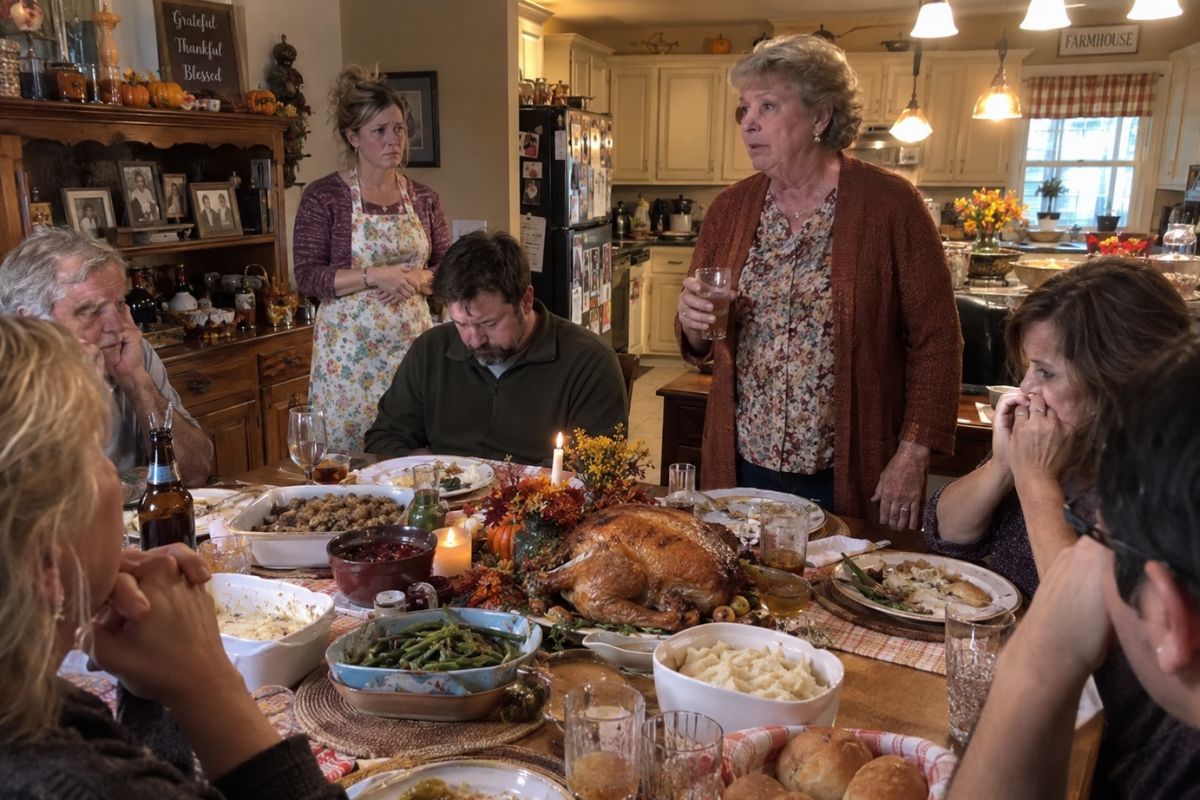
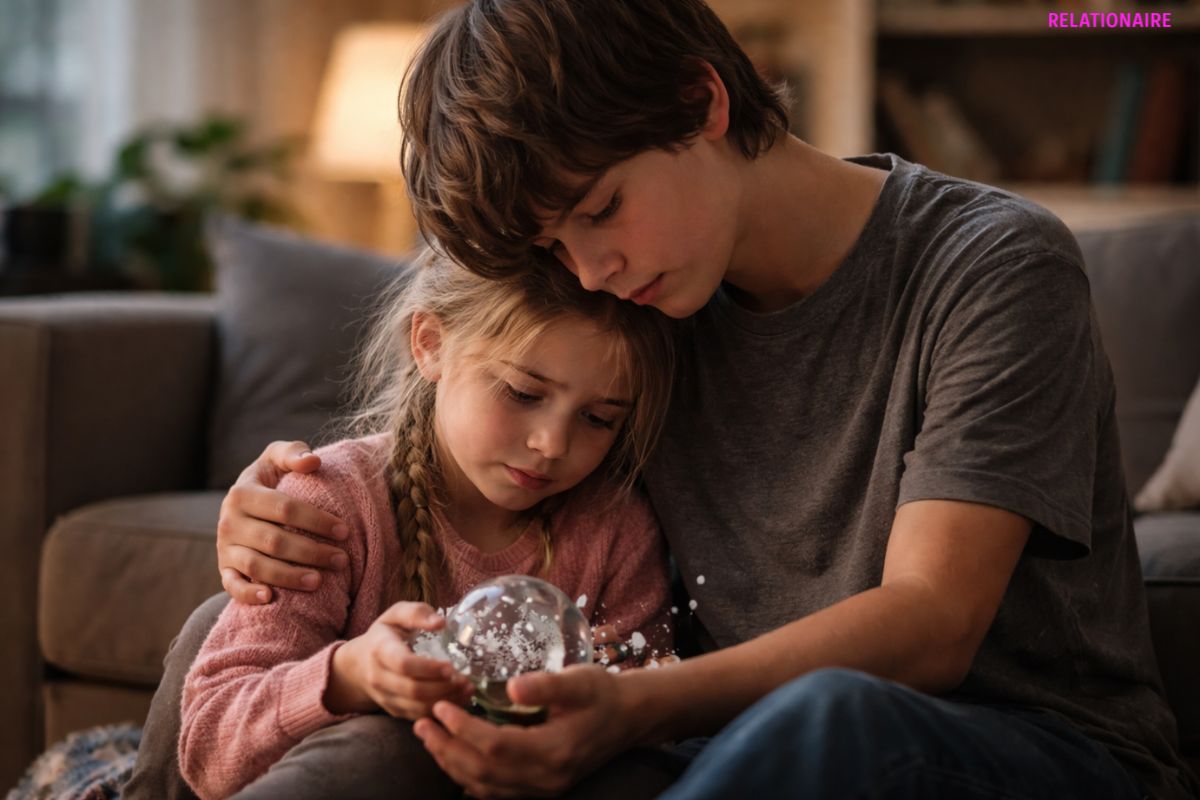
The snow globe shattered at 6:14 on a Tuesday, right between the meatloaf and the canned green beans.
No one even moved at first.
The sound was too small for what it did to the room. Just one sharp crack against the hardwood, then the soft scatter of glass skidding under the table, and all at once the whole house seemed to stop breathing.
Mia looked down at the floor.
She was six, with a braid that had come loose by noon and never got fixed, and a pair of pink socks that never matched because she insisted they didn’t have to. She stood beside her chair with both hands hanging at her sides, staring at the water spreading across the floorboards.
In the middle of it lay the tiny white church and two little pine trees, tilted sideways in glitter and broken glass.
Across from her, Jonah went white.
It wasn’t just anger. Rachel saw that immediately. Anger would have been easier.
He was fifteen and lanky and careful with his face in the way teenagers get when they’ve already learned too young that showing pain gives people something to step on. But now his mouth came open a little, and then closed again, and his hand gripped the edge of the table so hard his knuckles blanched.
Rachel’s husband, Ben, pushed his chair back too fast.
“Mia,” he said.
Just her name. Nothing else yet.
But the warning in it filled the room anyway.
Rachel had known this was coming, not this exactly, but some version of it. You couldn’t take a grieving teenage boy, a tender little girl, a widowed father, and a divorced mother with too much hope in her chest and cram them into one narrow two-story house without expecting the fault lines to show.
They’d been married nine months.
Long enough for people at church to stop calling them newlyweds.
Not long enough for the children to act like family.
Mia was Rachel’s daughter. Jonah was Ben’s son. And every day in that house felt like everyone was trying very hard not to touch a bruise.
The snow globe had been Jonah’s bruise.
It sat on the top shelf of the bookcase in the living room, always turned slightly toward the window, where the last bit of evening light would catch the glitter in the water. Jonah never told anyone not to touch it. He didn’t have to. The whole house seemed to understand.
It had belonged to his mother.
Her name was Laura.
Rachel never said it unless Jonah said it first.
Laura had died three years ago after a short, ugly fight with ovarian cancer, the kind that chewed a family to pieces in silence while casseroles piled up on counters and everyone kept saying the wrong things in gentle voices. Ben had told Rachel once, late at night, that the snow globe had sat on Laura’s hospital tray table through her last month because Jonah brought it to her when he was twelve and she’d smiled like it was treasure.
“It’s silly,” Ben had said then, staring at the ceiling.
“It’s not silly,” Rachel had answered.
But she’d thought, privately, that maybe it was dangerous.
Not the object. The way Jonah looked at it.
The way, sometimes, he’d lift it carefully and turn it over in his hands like he was checking whether time had shifted inside it.
Now it was broken in the middle of the dining room floor, and Jonah was looking at Mia with a face Rachel hoped she’d never see again.
“Mia,” Ben said again, sharper now. “Did you touch that?”
Mia didn’t answer.
She kept looking at the little church in the puddle.
Rachel stood up slowly. “Sweetheart?”
No response.
Jonah shoved back from the table so hard his chair nearly tipped. “You knew,” he said, voice low and shaking. “You knew that was mine.”
“Jonah,” Ben said.
But Jonah wasn’t loud. That was the worst part. He was trying not to be. His voice kept catching on itself like something was tearing underneath it.
“She knows,” he said again. “Everybody knows.”
Mia finally lifted her face. Her eyes were huge, dark, wet but not crying.
“I’m sorry,” she whispered.
The words landed badly.
You could feel it.
Jonah let out one short laugh that had no humor in it at all, just disbelief and hurt and a little bit of hate, the kind that sometimes flashes across teenagers before they can stop it.
Rachel saw Ben flinch.
“Mia,” Rachel said softly, trying to reach across the room with her voice. “Tell me what happened.”
Mia’s lower lip trembled.
She looked at Rachel, then at Ben, then at Jonah, and her shoulders curled inward.
“It fell.”
Jonah barked out another broken laugh. “It fell?”
“Jonah,” Ben snapped.
But he looked wrecked himself.
Rachel knew this dance now. Ben trying not to overprotect Jonah. Jonah punishing Ben for moving on. Rachel standing in the middle like a translator nobody had asked for. And Mia, sensitive little Mia, picking up tensions from the walls like static.
They’d spent months trying to make the house feel neutral.
They took family walks on Sundays. They ate tacos on Fridays. Rachel put both children’s drawings on the fridge, though Jonah was too old for drawings and mostly rolled his eyes at that. Ben fixed the wobbly leg on Mia’s bed. Rachel learned Jonah liked his grilled cheese nearly burnt. Mia started saying “our hallway” instead of “your house.”
Still, every now and then, something slipped.
A photograph left out too long.
A birthday observed wrong.
A sentence that began with “When your mom used to…”
The house never exploded. It just tightened.
Now Rachel looked at the floor and knew they had reached something worse than tightening.
Ben crouched down near the broken globe, not touching it. “Mia,” he said, gentler now. “Honey. Did you climb up there and take it?”
Mia nodded once.
Rachel closed her eyes briefly.
Because this wasn’t an accident then. Not really.
Jonah saw the nod too, and something in him gave way.
“Why?” he asked.
One word.
Barely breathed.
Rachel had expected fury. A slammed door. A shout. Something easy to label and manage later.
She had not expected that word.
Why.
Mia stared at him.
Jonah was still standing, tall and thin and pale under the kitchen light, his fists opening and closing at his sides. He looked suddenly younger than fifteen. Not like a boy on the edge of manhood. Like a child who had walked into a room and found grief waiting there, fresh all over again.
“I hate this,” Ben muttered under his breath, a sentence maybe meant only for himself.
Rachel didn’t know which part he meant. The glass. The tension. The way love kept arriving late to the people who needed it most.
“Mia,” Rachel said, “you need to tell the truth.”
Mia swallowed.
Then Jonah spoke again, quieter than before.
“You did this on purpose?”
The whole room leaned toward her answer.
Mia’s eyes filled. Her chin shook. For one terrible second Rachel thought she would lie again, because six-year-olds lie when they’re scared and ashamed and in over their heads.
Instead, Mia whispered, “Yes.”
Rachel felt the air leave her lungs.
Ben stood up so fast he hit the edge of the table with his leg. “Mia!”
Mia flinched, but she still didn’t cry.
Jonah took one step back, like he’d been struck.
Rachel’s heart turned over in her chest. She had spent months worrying Jonah would never make room for them, for her daughter, for this rearranged family built out of old wreckage and second chances.
It had not occurred to her that the first true cruelty in the house might come from the smallest person in it.
“Mia,” Rachel said, and now there was fear in her own voice, “why would you do that?”
Mia looked at Jonah.
Not at Rachel.
Not at Ben.
At Jonah.
And when she spoke, her voice was so small they almost missed it.
“Because he shakes it when he cries,” she said.
No one moved.
Mia twisted her fingers together. “I hear him at night.”
Jonah went still.
Rachel felt something cold pass through her.
Mia’s face crumpled then, but she kept going in a rush, like the truth had broken open and she couldn’t stop it now.
“He shakes it and shakes it,” she whispered. “And I thought… I thought maybe if it stopped working… maybe he could stop pretending she was still in there.”
The room fell into a silence so deep it didn’t feel like silence anymore.
It felt like standing at the edge of something and realizing the ground was not where you thought it was.
Jonah’s face changed first.
Not to anger.
To shock.
To something rawer.
Rachel looked at him, then at Mia, then at the broken church in the water on the floor, and for the first time since the crash, she understood that nothing about this was what it seemed.
Then Jonah bent down suddenly and reached beneath the broken glass for something Rachel hadn’t even noticed.
A folded piece of paper, soaked through and hidden inside the base.
He stared at it.
And when he looked up, he didn’t look angry anymore.
He looked afraid.
Part 2
Jonah carried the wet paper upstairs with both hands, like it might come apart if he breathed wrong.
No one tried to stop him.
Rachel stood in the dining room with Mia pressed against her hip and listened to Jonah’s bedroom door shut. Not slam. Just close. Quietly. Which was somehow worse.
Ben stared at the broken snow globe on the floor like it had betrayed him.
For a while the only sound in the house was the hum of the refrigerator and Mia’s uneven breathing against Rachel’s side.
Then Ben said, “What paper?”
Rachel shook her head. “I don’t know.”
He dragged a hand over his face. He looked older than he had an hour ago.
“I never knew there was anything inside it.”
Rachel believed him. She had seen Ben avoid that globe the way people avoid altars they don’t know how to pray at.
Mia clutched a fistful of Rachel’s shirt. “Is Jonah mad forever?”
The question was so small it nearly broke her.
Rachel knelt in front of her daughter. “I don’t know what Jonah feels right now.”
Mia nodded like she deserved that answer.
“Did you really hear him crying?” Rachel asked gently.
Mia looked down at her socks. “Sometimes.”
“How long?”
“A lot of nights.”
Rachel closed her eyes for a second.
The bedrooms were on the same hall upstairs. Mia’s room was closest to the stairs, Jonah’s at the far end. Rachel had assumed the quiet creak of footsteps at midnight was the old house settling. Or Jonah going to the bathroom. Or grief moving through a teenager in the ordinary hidden ways grief does.
She had not imagined Mia awake in the dark, listening.
“Why didn’t you tell me?” Rachel asked.
Mia frowned, thinking hard in that child way that made every answer feel clean and devastating.
“Because it sounded private.”
Rachel had no defense against that.
Ben crouched down and started picking up the broken glass one piece at a time. His movements were careful, mechanical. Rachel watched his hands and thought about all the things adults call children too young to understand.
Too young for grief.
Too young for shame.
Too young to know when someone is trying not to fall apart in the next room.
But children lived inside the weather adults made.
They felt the pressure drop before anyone admitted the storm.
“Mia,” Ben said without looking at her, his voice rough, “you can’t break people’s things because you think it will help them.”
“I know.” She said it quickly. Then quieter: “I know now.”
Rachel heard the now and felt her throat tighten.
Not defiance. Regret.
Not a lesson she had been taught. One she was teaching herself too late.
Ben gathered the last wet shards into a dish towel. The tiny church and trees sat on the table beside him, absurd and helpless-looking. Souvenir pieces from a winter town none of them had ever seen.
“Stay with her,” he said to Rachel.
Then he went upstairs.
Rachel wanted to stop him. Or follow him. Or rewind the evening to before the meatloaf, before the crack, before the truth came out sideways from a six-year-old who had tried to fix sorrow with the only logic she had.
Instead she cleaned the water from the floor and put Mia in the living room with a blanket and a cartoon she didn’t watch.
At 8:02, Ben came back downstairs alone.
Rachel stood up. “Well?”
He rubbed his jaw. “He won’t let me in.”
That stung him. Rachel could tell. Not because Jonah was rude. Because grief had always made Jonah quieter, not cruel, and a locked door meant pain had crossed into territory Ben couldn’t reach.
“What about the paper?”
Ben hesitated.
“He said it was from his mom.”
Rachel felt a shiver move through her shoulders. “A note?”
“I guess.”
“What did it say?”
Ben looked toward the stairs. “He didn’t tell me.”
Mia sat on the couch very straight, listening without pretending not to.
Rachel went to her and lowered the TV volume. “Sweetheart, you should get ready for bed.”
Mia’s eyes filled again. “Can I say sorry to Jonah?”
Rachel looked at Ben.
He shook his head slightly. Not tonight.
Mia read the answer on their faces anyway.
When Rachel tucked her in later, the child who usually wanted three stories and a song only asked for the hall light to stay on.
Rachel sat on the edge of the bed and smoothed the hair off her forehead.
“Were you trying to be mean?” Rachel asked softly.
Mia looked offended for half a second, then ashamed for looking offended.
“No.”
“I know.”
Mia studied the blanket. “I thought he was keeping himself sad.”
That was such a child sentence. So wrong. So painfully close to something real.
Rachel swallowed. “Sometimes people don’t know how to stop being sad.”
Mia nodded. “Because if they stop, it feels like they’re bad?”
Rachel stared at her.
“Who told you that?”
“No one.” Mia picked at a loose thread on the blanket. “When I don’t wear Daddy’s old sweatshirt anymore, I feel weird.”
Rachel’s ex-husband lived two states away now. He called when he remembered and sent child support late and still smelled, in Mia’s memory, like cedar soap and peppermint gum. Mia slept in one of his old sweatshirts when she missed him.
Rachel had not known her daughter had already made that connection.
She kissed Mia’s forehead and turned off the lamp, leaving the hall light on in a warm stripe across the carpet.
An hour later, when Ben had gone quiet in their room and the house had settled into its nighttime creaks again, Rachel got up and went to Jonah’s door.
She knocked softly.
No answer.
She waited, then said through the wood, “I’m not here to defend Mia.”
Still nothing.
“I know you have every right to be furious.”
A long silence.
Then, finally: “I’m not furious.”
His voice sounded wrong. Drained out.
Rachel rested her hand against the door. “Can I just sit out here for a minute?”
Another silence.
Then, “Do whatever you want.”
So she sat on the hallway floor like a teenager herself, back against the wall across from his room, feeling ridiculous and old and terribly earnest.
After a while she said, “I’m sorry.”
“For what?”
She let the question sit. For marrying your father. For moving my child into your grief. For all the ways I have tried to make this house feel safe and maybe asked you to do that work with me when it was never your job.
“For not seeing what was happening,” she said.
Inside the room, something rustled. Maybe he sat up. Maybe he turned toward the door.
“You didn’t know about the globe,” Rachel said.
“I didn’t know either.”
There was something in that answer that made her straighten.
“Jonah?”
His voice came muffled through the wood. “I thought it was just… a thing. Something she liked. I used to shake it because…” He stopped.
Rachel waited.
“Because it was from the hospital,” he said finally. “And sometimes it felt like if I held the last things she touched, then maybe I hadn’t moved so far away from her.”
Rachel shut her eyes.
“But the note…” he said.
He went quiet again.
Then she heard the lock turn.
The door opened three inches.
Jonah stood there in a faded gray T-shirt and flannel pajama pants that were too short now. His eyes were red-rimmed, his face pale with exhaustion. In one hand he held the paper, flattened carefully between pages from a hardback book.
“It wasn’t for me,” he said.
Rachel blinked. “What?”
He handed her the note.
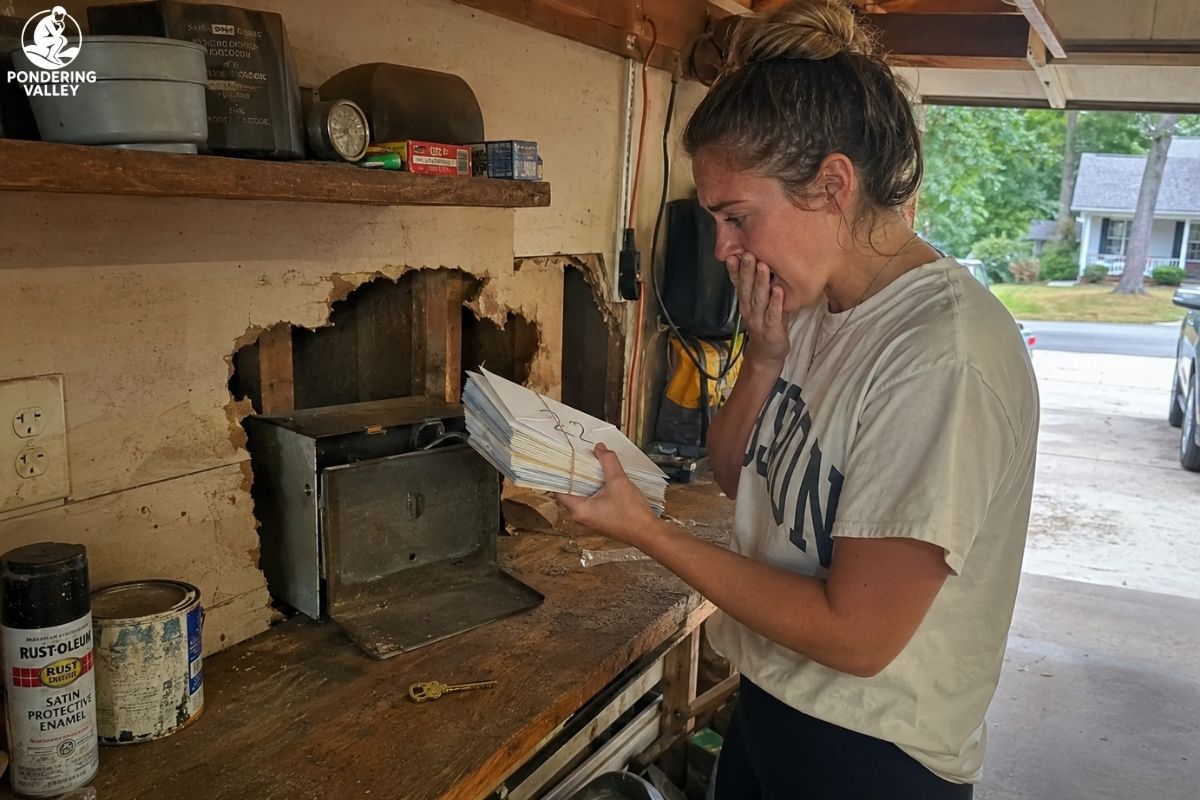
The paper was water-wrinkled and fragile. Laura’s handwriting slanted across it in blue ink, the lines cramped as if written in a hurry.
Ben, if he’s shaking this again, please tell him I was never in the snow.
Rachel’s breath caught.
Below that, another line.
I was in his hands. I was in his laugh. I was in the way he always turned back to make sure I was still behind him.
The words blurred for a second.
There was more.
Don’t let him build a church around one small memory and call it me.
Love him past this if I can’t.
Rachel pressed her lips together.
Jonah looked wrecked.
“I never knew it was in there,” he said. “I never knew.”
“Why would she hide it there?” Rachel whispered.
He gave a helpless shake of his head. “Maybe she thought Dad would see it first. Maybe she thought…” He swallowed hard. “Maybe she knew I wouldn’t be ready.”
Rachel looked from the note to the boy in front of her.
And all at once she understood something else too.
Mia hadn’t just broken a snow globe.
She had broken the one ritual Jonah had built around his grief.
Not cleanly. Not kindly. But completely.
Behind Rachel, a floorboard creaked.
She turned.
Mia was standing at the end of the hallway in her nightgown, clutching the hem in both fists, her face pale in the hall light.
Rachel opened her mouth to send her back to bed.
Before she could speak, Jonah looked at Mia, then at the note in Rachel’s hand, and said in a voice so raw it barely sounded like him:
“She was trying to let me go.”
Part 3
Mia thought that meant he was leaving.
Rachel could see it happen in her face.
Children heard one phrase and built a whole world from it. Let me go. In Mia’s mind it landed as abandonment, punishment, disappearing. Her little body stiffened, and for one awful second Rachel thought the child might run.
Instead she stepped forward into the hall light.
“I didn’t want you to go away,” she whispered.
Jonah stared at her.
Rachel had seen him annoyed, withdrawn, sarcastic, numb. She had not seen him look at someone with that kind of naked confusion. Like he’d spent years guarding one wound so fiercely that he no longer knew what to do when another person touched it and cried.
Mia’s eyes went to the note in Rachel’s hand. “I just wanted it to stop hurting so loud.”
Jonah blinked.
And then Ben appeared behind Mia, having come out of the bedroom at the sound of voices. He took in the scene in one glance: Rachel holding the note, Jonah at the open door, Mia barefoot in the hallway.
No one spoke for a moment.
Then Ben said, very softly, “Can I see it?”
Rachel handed him the note.
She watched his eyes move over Laura’s handwriting.
Watched his mouth tighten at the second line.
Watched him stop breathing for half a heartbeat at don’t let him build a church around one small memory and call it me.
Ben sat down right there on the hallway floor.
Not gracefully. Just folded, like his knees had made the decision for him.
Jonah had his mother’s eyes. Rachel had noticed that before. But in that moment, reading the note, Ben had Laura’s grief. Same quiet devastation. Same look of loving someone you could no longer help in the ordinary ways.
“She wrote this in the hospital,” he said. “That’s her notepad. They gave her those cheap little pads with the blue lines.”
His thumb hovered over the edge of the page without touching it.
“I must have missed it.”
Jonah leaned against the doorframe. “Dad—”
“I should have checked.” Ben’s voice cracked. “I should have looked.”
Rachel felt the old familiar adult instinct rise in the hall: to turn pain into blame because blame at least gave it shape. But before she could say anything, Jonah surprised all of them.
“It’s not your fault.”
Ben looked up.
Jonah swallowed. “You were losing her too.”
That did something to Ben’s face. Not relief. Relief would have been too simple. More like a wound finally acknowledged.
Mia stood frozen between them, small and frightened and so clearly out of her depth that Rachel wanted to scoop her up and take her back to a world where a broken object was just a broken object.
But that was the thing about families. Especially second families. Nothing stayed small once love and grief got inside it.
Jonah looked at Mia again.
She whispered, “I’m sorry I broke it.”
He nodded once, but he still said nothing.
Rachel knew then that apology was not enough. Not because Mia didn’t mean it. Because some damage couldn’t be tidied with the right sentence. Not in one night.
So she did the only honest thing.
“Mia,” she said gently, “you can be sorry and still have done something very wrong.”
Mia’s chin wobbled. “I know.”
“And,” Rachel added, her own throat thickening, “you can do something wrong because you were trying, in your own little kid way, to help.”
Mia looked at her like she hadn’t expected mercy to exist beside truth.
Jonah’s eyes dropped to the floorboards.
Then, very quietly, he said, “I did shake it.”
No one moved.
He rubbed his thumb against his palm, over and over, a restless motion. “At night.”
Ben’s face crumpled.
Jonah gave a small, embarrassed huff of breath. “It sounds stupid.”
“It doesn’t,” Rachel said.
“It does to me now.” He looked toward the note again. “I thought I was keeping something alive.”
Mia spoke before anyone could stop her.
“Maybe you were keeping it from changing.”
The hall went still.
It was such a child sentence. Simple. Slightly crooked. Perfectly aimed.
Jonah looked at her as if he had never seen her clearly before.
Rachel almost cried then, not because it fixed anything, but because it didn’t. Because it named the thing without pretending the naming made it easier.
Ben stood and crossed the hall in two steps. For a second Rachel thought he would go to Mia.
He went to Jonah.
He put one hand on the back of his son’s neck, the same absent, tender gesture Rachel had seen fathers do at ball fields and graduations and funeral homes. Jonah stood rigid under it at first.
Then he folded.
Not all the way. Fifteen-year-old boys do not always collapse neatly into grief. But enough. Enough that his forehead dropped to his father’s shoulder. Enough that Ben let out the kind of sound men make only when no longer trying to protect anyone from hearing it.
Rachel pulled Mia against her and held her there while father and son stood in the hallway and finally looked like two people mourning the same woman instead of two people standing on opposite sides of her absence.
Later, after Mia was asleep for real this time and Jonah had gone back into his room with the note and Ben had sat wordless at the kitchen table for nearly an hour, Rachel found the broken pieces of the snow globe still wrapped in the dish towel.
She laid them out carefully.
The glass was useless.
The water was gone.
But the little church had survived. So had one of the pine trees.
She turned them in her palm and thought about what Laura had written.
Don’t let him build a church around one small memory and call it me.
The next morning Jonah came downstairs before anyone else.
Rachel was making coffee in the gray early light. She expected him to head straight for the cereal cabinet and avoid her. Instead he stopped at the table.
The little church and pine tree were there beside the folded note.
He looked at them a long time.
Then he said, “I don’t want her to think I hate her.”
Rachel set the mug down. “She doesn’t think that.”
“She should a little.”
Rachel almost smiled, despite everything. “Maybe. But she doesn’t.”
He rubbed the back of his neck. “I’m still mad.”
“You’re allowed.”
“I know.”
He stood there a second longer.
“Can I ask you something?” Rachel said.
He nodded.
“When she said she heard you crying… was that the first time you realized she noticed?”
His expression changed. Softer. Sadder.
“No,” he said. “One night a couple weeks ago, I opened my door and there was a granola bar on the floor outside my room.”
Rachel stared.
He shrugged, embarrassed. “I thought Dad put it there.”
By noon Mia had made a card.
Not because Rachel told her to. Because that was how six-year-olds sometimes carried what they couldn’t speak. Folded paper. Crayon hearts. Misspelled truth.
On the front she wrote, in shaky letters: I AM SORRY ABOUT YOUR MOM AND ALSO YOUR GLOBE.
Inside, after a long time chewing on the marker cap, she added: I did not know about the note. I only knew about the crying.
Rachel found Jonah sitting on the back porch steps reading it that evening while the April wind lifted the corner of the page.
Mia stood in the doorway, half hidden behind the screen.
Jonah looked up.
For a moment Rachel thought he might say something too grown-up, too careful, the way people do around children when they’re scared of harming them more.
Instead he said, “She liked cardinals.”
Mia blinked. “Your mom?”
He nodded.
“There’s one in the tree,” Mia said at once, pointing to the bare dogwood by the fence.
“There is,” Jonah said.
They both looked at it.
That was all.
No big speech. No instant repair. No movie version of healing where everyone cries at the right time and means the exact right thing.
Just a boy on a porch step. A girl in a doorway. A red bird in a tree between them.
Over the next few weeks, the house changed in small, unimportant-looking ways that mattered more than anyone said.
Jonah stopped eating dinner like he was doing the table a favor.
Mia stopped lingering outside his room at night because she no longer heard the globe being shaken through the wall.
Ben framed Laura’s note and put it in the upstairs hall, not hidden, not worshipped, just present.
And one Saturday, Jonah took Mia to the thrift store and came home with a battered snow globe shaped like a diner, with silver glitter instead of snow and a tiny pie case inside.
“It’s ugly,” Mia announced.
“It is,” Jonah agreed.
She held it up to the light anyway.
The diner inside the globe had a crooked red sign and one window painted slightly off-center. When you shook it, the glitter spun wild, then settled slowly over the pie case and the counter stools and the little door.
Mia put it on her dresser.
She almost never shook it.
Years later, Rachel would still think about that night in the hallway. About how easy it had been, before the truth, to decide what kind of child Mia was being. Careless. Jealous. Destructive. Too young to understand what she had touched.
But children do understand.
Not always correctly. Not always safely.
But often more deeply than adults can bear.
They hear the crying through the wall.
They notice which objects get held too long.
They see where grief has stopped moving and mistaken stillness for love.
And sometimes, with their clumsy little hands and terrible timing and hearts wide open, they break the wrong thing for the most human reason in the world:
because they cannot stand to watch someone hurt and do nothing.
That does not make the breaking harmless.
But sometimes, by grace or accident or the strange mercy children carry without knowing it, it opens something that was never going to open any other way.
And sometimes healing does not begin with wisdom from the grown-ups.
Sometimes it begins with the smallest person in the house, standing barefoot in the wreckage, telling the truth as best she can.