A Hungry Twelve-Year-Old Brought a Lost Old Man Home From the Cold, Then a Silver Bracelet Exposed the Truth Nobody Expected
“Elijah, tell me you did not just bring a stranger into this apartment.”
My mother’s voice was low.
Not loud.
Not angry the way people think anger sounds.
It was the kind of voice that came from a woman who had counted every can in the cupboard, every dollar in her purse, every hour left before rent was due.
And now I was standing in our doorway with an old man leaning against my shoulder.
His hands were shaking.
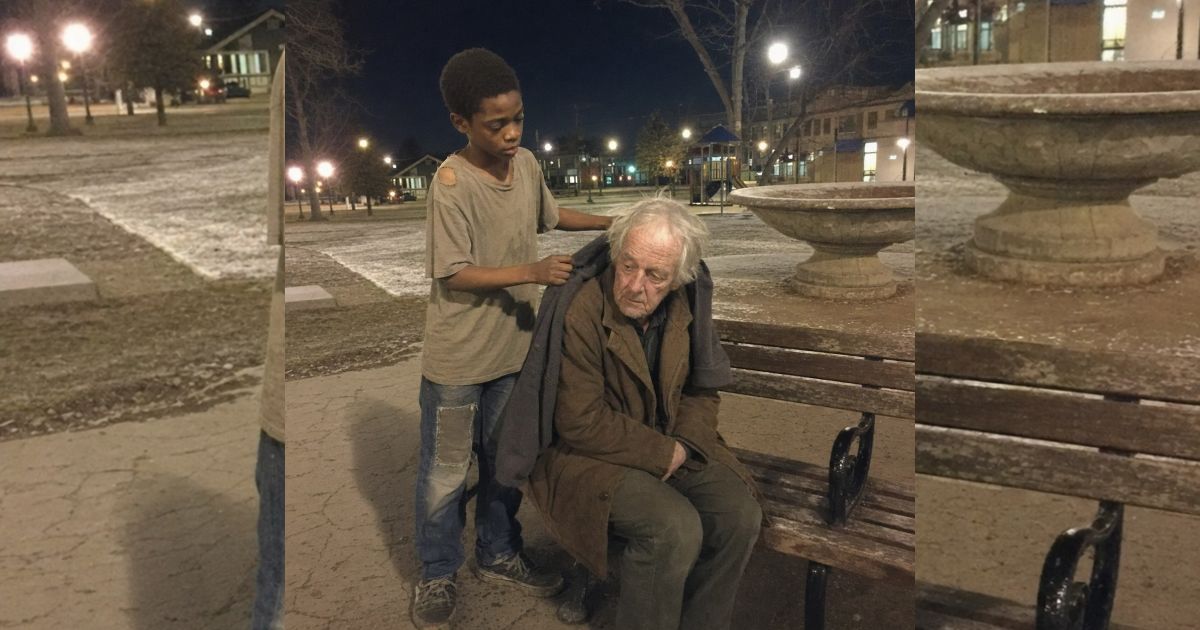
My hoodie was draped around his thin shoulders.
I was freezing without it.
He looked at the floor like he had dropped his whole life there and couldn’t remember how to pick it up.
“Mama,” I said, trying to breathe, “he was outside.”
My little sister, Maya, sat on the couch with her knees tucked under her chin.
Her picture book was open in her lap, but she wasn’t looking at it anymore.
She was looking at him.
At his pale face.
At the way his gray hair stuck up in the back.
At the way his nice dress shoes were wet and scuffed, like he had walked for miles without knowing where he was going.
My mother, Denise Carter, took one step back from the kitchen table.
Bills were spread out in front of her.
Electric bill.
Rent notice.
A pink envelope from the school cafeteria.
The kind of paper that made grown-ups go quiet.
“Elijah,” she said again, “who is he?”
I swallowed hard.
“I don’t know.”
Her eyes widened just a little.
That hurt more than if she had yelled.
“I found him at Jefferson Park,” I said. “On the bench by the old fountain. He was shaking so bad, Mama. He didn’t know where he was. He didn’t know his address. He didn’t even know if anybody was looking for him.”
The old man lifted his head a little.
His blue eyes moved around our tiny living room.
The stained couch.
The heater that only worked when it felt like it.
The towel stuffed under the window to keep the draft out.
The small plastic table where Maya colored because we didn’t have a desk.
His lips moved, but nothing came out.
My mother pressed one hand to her mouth.
I knew that look.
She was scared.
Not scared of him.
Scared of what kindness might cost.
Because in our house, every kind thing came with a price.
An extra bowl of soup meant less soup for tomorrow.
An extra blanket meant somebody else would be cold.
An extra person meant one more way the night could go wrong.
But then the old man’s knees buckled.
Just a little.
Enough that I grabbed his arm.
“Mama,” I whispered. “Please.”
That word did something to her.
Her face changed.
The hard part of her softened, but not all the way.
She was still my mother.
Still tired.
Still careful.
Still carrying the whole world on her back with no one clapping for her.
She looked at the old man.
Then at me.
Then at Maya.
Then she closed her eyes for one second, like she was asking God why He kept sending tests to a woman who was already worn down.
When she opened them, her voice was gentle.
“Sit him down.”
I helped the old man to the kitchen chair with the wobbly leg.
Maya jumped up and ran to the bedroom.
“Maya,” Mama called. “Where are you going?”
“To get the good blanket,” Maya said.
“We don’t have a good blanket.”
“The one with only two holes.”
She disappeared before Mama could answer.
The old man sat at our table with both hands folded in front of him.
They were long hands.
Thin.
Spotted.
A gold wedding band sat loose on one finger.
I noticed that right away.
My mother noticed too.
She moved slowly to the stove and lifted the lid off the pot.
Steam rose, thin but warm.
Chicken broth stretched with noodles.
Mostly noodles.
A few carrots.
Enough to smell like dinner even when it wasn’t much.
She glanced at me.
“You eat today?”
I looked away.
“Elijah.”
“A little.”
That was not true.
I had eaten half a biscuit at school and a handful of crackers I found in the back of the pantry.
Mama knew it.
She always knew.
Her jaw tightened.
But she didn’t say anything.
Not in front of the old man.
Maya came back dragging the blanket.
It was faded blue, patched twice, and soft from years of being washed by hand when the laundromat money ran short.
She carried it like it was something special.
Then she walked right up to the old man and laid it over his lap.
“There,” she whispered. “You can borrow it.”
The old man looked down at the blanket.
Then at Maya.
His eyes filled so suddenly it scared me.
Not crying hard.
Just shining.
Like something inside him had cracked open.
“Thank you,” he said.
His voice was dry and shaky.
Maya smiled with her missing front tooth.
“You’re welcome.”
Mama set a bowl in front of him.
Then one in front of me.
Then one in front of Maya.
Her own bowl had almost nothing in it.
I noticed.
I always noticed.
Before the old man took his first bite, he stared at the spoon like he had forgotten what it was for.
Then he lifted it slowly.
His hand trembled so much the broth shook.
I wanted to look away, but I couldn’t.
He took one sip.
Then closed his eyes.
The whole room changed.
It wasn’t magic.
It was just soup.
Thin soup in a chipped bowl.
But for a second, it felt like we had done something bigger than feed him.
We had told him he still mattered.
That was how it started.
But it was not where the story really began.
The story began thirty minutes earlier, when I had nothing in my stomach and one dollar and seventeen cents in my pocket.
I was walking home from the recycling center with an empty sack over my shoulder.
The air in Pine Hollow cut through my hoodie like it had teeth.
It was the kind of cold that made your ears sting and your hands hurt even if you stuffed them in your pockets.
I was twelve years old.
But most days I felt older.
Not grown.
Just tired in a way kids are not supposed to be.
My sneakers were splitting near the toes.
Every step on the cracked sidewalk let the cold reach my socks.
I kept my head down.
That was something I had learned.
Head down meant people bothered you less.
Not always.
But sometimes.
Pine Hollow was not the kind of Ohio town people put on postcards.
It had a nice part, sure.
Every town does.
There were brick houses on Maple Ridge with porch lights shaped like lanterns and wreaths that changed with the season.
There was a clean little downtown with a bakery, a toy store, and benches nobody slept on.
Then there was our side.
South Ash Street.
Old duplexes.
Peeling paint.
Bus stops with cracked plastic.
Corner stores where a loaf of bread cost too much because there was nowhere else close enough to walk.
Our building had six apartments and one front door that never locked right.
The hallway smelled like dust, fried onions, and old carpet.
Mama called it temporary.
She had been calling it temporary for three years.
She worked mornings at a senior cafeteria and evenings cleaning offices in a medical building.
She left before sunrise.
Came home after dark.
Some nights she still smelled like bleach when she kissed Maya on the forehead.
I collected cans when I could.
Not because Mama asked me.
Because I knew.
Kids know more than adults think.
I knew when the food got thinner.
I knew when Mama pretended she had already eaten.
I knew when she turned the kitchen faucet on so we wouldn’t hear her crying in the bathroom.
That night, I had hoped to get enough from the cans to buy bread.
Maybe peanut butter if the store had a dented jar marked down.
But the recycling machine had been jammed.
The man at the counter said to come back tomorrow.
I wanted to tell him tomorrow didn’t help tonight.
Instead, I nodded.
Head down.
Keep moving.
I was passing the coffee shop on Fuller Avenue when I heard them.
“Elijah Carter.”
I didn’t stop.
I knew that voice.
Tyler Briggs.
He went to my school.
He wore clean sneakers every Monday and complained when his mom packed turkey instead of ham.
He was standing under the bright awning with three other kids from seventh grade.
They had hot drinks in paper cups.
Steam curled up into the air.
I tried not to look at them.
That was my first mistake.
People like Tyler want you to look.
They want to see your face when they cut you.
“Still picking through trash?” he called.
The others laughed.
Not loud at first.
Just enough.
Like they were testing how mean they wanted to be.
I kept walking.
My sack bumped against my leg.
It was empty, but somehow it felt heavy.
“Hey,” Tyler said. “I’m talking to you.”
I didn’t answer.
Another boy, Connor, stepped closer to the edge of the sidewalk.
“You find dinner in there or what?”
My face got hot even though the air was freezing.
A girl named Madison looked away, but she still smiled.
That was worse.
People act like silence makes them innocent.
It doesn’t.
Tyler lifted his cup.
“Maybe we should give him our leftovers.”
“Leave him alone,” Madison said softly.
But she didn’t mean it enough to matter.
Tyler laughed.
“What? I’m being nice.”
I walked faster.
My hands curled into fists inside my pockets.
Mama’s voice played in my head.
You don’t owe every fool a reaction.
That was one of her rules.
She had a lot of rules for me.
Keep your voice calm.
Keep your hands where people can see them.
Walk away when you can.
Do not let somebody else’s ugliness decide who you become.
At twelve, I hated those rules.
At twelve, I wanted to turn around and say something sharp enough to make them feel small too.
But I didn’t.
Because I had Maya at home.
Because Mama already had enough to worry about.
Because pride does not fill a pantry.
So I turned the corner.
Their laughter followed me for half a block.
Then the wind swallowed it.
I should have gone straight home.
But I didn’t.
Sometimes, when the apartment felt too small and my stomach felt too empty, I cut through Jefferson Park.
It was not fancy.
Just a rectangle of grass, a playground with one broken swing, and an old stone fountain that hadn’t worked since before I was born.
But at night, when the streetlights buzzed and the bare trees moved in the wind, the park felt separate from everything.
Quiet.
Like the city forgot to be hard there.
I pushed through the iron gate.
My breath came out white.
The playground was empty.
The benches were empty.
At least I thought they were.
Then I saw him.
An old man sat near the fountain.
Hunched over.
Both hands pressed between his knees.
His coat was thin and open at the chest.
Not a winter coat.
A dress coat.
The kind men wear to church or dinner.
His white hair was messy.
His face was pale.
He stared at the ground like he was waiting for it to speak.
At first, I kept walking.
I told myself somebody would come.
Somebody with a phone.
Somebody grown.
Somebody better.
Then the old man lifted one hand and looked at it like he didn’t recognize it.
That stopped me.
I stood there, twenty feet away, fighting with myself.
My stomach growled.
My arms ached from the cold.
Mama and Maya were waiting.
And still, I could not leave.
“Sir?” I called.
He didn’t move.
I stepped closer.
“Sir, are you okay?”
His head came up slowly.
His eyes were blue, but cloudy.
Not blind.
Just lost.
He looked right at me, then through me.
“I…” he whispered.
His voice sounded like paper.
I waited.
He swallowed.
“I think I’m supposed to be somewhere.”
The words made the park feel colder.
“Do you know where?”
He frowned.
His face twisted with effort.
“I was with…” He stopped. “There was music.”
“Music?”
“Maybe.” He looked around. “Where is Margaret?”
I glanced behind me.
Nobody.
No woman.
No car.
No one calling his name.
“Is Margaret your wife?”
His eyes filled with panic.
“My wife?”
Then he looked down at his hand.
At the ring.
His lips trembled.
“I don’t know.”
A chill went through me that had nothing to do with the weather.
People forgot keys.
Homework.
Where they put their glasses.
They didn’t forget if they had a wife.
Not unless something was wrong.
“Do you have a phone?” I asked.
He patted his coat slowly.
One pocket.
Then the other.
Nothing.
“Do you know your address?”
He shook his head.
“Your name?”
He looked up at me like I had asked him something unfair.
For a second, I thought he might cry.
“I’m sorry,” he whispered.
That did it.
The apology.
Like being lost was his fault.
Like he was embarrassed to need help from a hungry kid with torn shoes.
I looked toward the street.
A few cars passed, but no one slowed down.
Across the road, the warm windows of a diner glowed.
People sat inside drinking coffee and eating pie.
Nobody looked out.
Nobody saw him.
Or maybe they did and decided he belonged to somebody else.
That was what people did.
They made pain belong to someone else.
I took off my hoodie before I could talk myself out of it.
The cold hit my arms so hard I sucked in a breath.
The old man watched me with confusion.
“Here,” I said.
I put it around his shoulders.
He flinched at first.
Then he grabbed the fabric with both hands.
“This is yours,” he said.
“I know.”
“You’ll be cold.”
“I’ve been cold before.”
He stared at me.
Something in his face softened.
Not clear.
Not fixed.
But grateful.
I looked around again.
Still no one.
No officer parked nearby.
No family searching.
No phone booth like in old movies.
Nothing.
I could have walked him to the diner and asked someone to call for help.
I thought about it.
I really did.
But I had seen how people looked at boys from my side of town when we walked into warm places without money.
Like we had come to take something.
Like our hunger was rude.
And I was scared that if I left him with strangers, he might wander again before anyone cared enough to notice.
So I said the craziest thing I had ever said.
“Come on.”
He blinked.
“Where?”
“My apartment.”
His fingers tightened on my sleeve.
“Home?”
“Not your home,” I said softly. “Mine. Just until we find your family.”
He looked around the dark park.
Then back at me.
“I don’t want to be trouble.”
That almost made me laugh.
Not because it was funny.
Because trouble had been living with us so long it probably had its own toothbrush.
“You’re not trouble,” I said.
He stood slowly.
His knees shook.
I offered my arm because I had seen gentlemen do that for ladies in old church movies Mama liked.
He took it.
His hand was cold.
We walked out of the park together.
A twelve-year-old boy and an old man who could not remember his own name.
I could feel people looking at us as we passed the diner.
Maybe I imagined it.
Maybe not.
The old man moved slowly, and every few steps he asked where we were going.
Each time I told him.
“My place.”
“Is Margaret there?”
“I don’t know Margaret.”
“Oh.”
Then a minute later.
“Where are we going?”
“My place.”
“Is it far?”
“Not too far.”
“Thank you.”
“You said that already.”
“I did?”
“Yeah.”
“Oh.” He looked sad. “I’m sorry.”
“You don’t have to keep being sorry.”
He nodded like he understood.
Then forgot again.
By the time we reached my building, my teeth were chattering.
The front steps had a line of ice along one side.
I guided him carefully.
Our neighbor, Mrs. Alvarez, opened her door a crack as we passed the hallway.
She was in her robe and slippers, hair wrapped in a scarf.
Her eyes went from me to the old man.
“You okay, baby?”
“Yes, ma’am,” I said.
She didn’t look convinced.
But she didn’t stop us.
I think she knew something about hard choices.
Most people in that building did.
Then came Mama’s face.
Her shock.
Her fear.
Her question.
Who is he?
And my answer.
I don’t know.
After dinner, the old man fell asleep on our couch.
Mama had asked him a few gentle questions first.
His name.
His family.
His street.
He answered some things with half-words.
He called me “Peter” twice.
He called Maya “little bird.”
He asked if the train had come.
There was no train in Pine Hollow.
Not anymore.
Mama’s eyes kept filling with worry.
Not the kind that judges.
The kind that understands too much.
When he finally drifted off, she motioned for me to follow her into the kitchen.
It was only ten feet from the couch, but she lowered her voice anyway.
“Elijah,” she whispered, “we should have called someone right away.”
“With what phone?”
She looked toward the wall.
Our landline sat there.
Old.
Yellowed.
The only reason we still had it was because Mama didn’t trust not having any phone at all.
“For emergencies,” she said.
“I didn’t think.”
“That’s what worries me.”
I stared at the floor.
“I couldn’t leave him.”
Her face softened, then tightened again.
“I know.”
“You always say be better than the world is to you.”
“I say that because I want you to keep your heart,” she said. “Not because I want you bringing unknown people home in the dark.”
“He was freezing.”
“I know.”
“He didn’t know who he was.”
“I know, baby.”
Her voice cracked on baby.
That made me look up.
Mama was tired in a way I had never seen before.
Not sleepy.
Soul tired.
“I’m not mad that you cared,” she said. “I’m scared because you cared without thinking about yourself.”
I didn’t know what to say to that.
Because it was true.
But also, I had thought about myself.
I had thought about being cold.
Hungry.
Afraid.
Then I had looked at him and seen all those same things.
How was I supposed to walk away from that?
Maya had fallen asleep in the chair, her head tilted against the wall.
Mama lifted her gently.
My sister stirred.
“Is the grandpa okay?” she mumbled.
“He’s sleeping,” Mama whispered.
“He can keep my blanket.”
“I know.”
Mama carried her to the bedroom.
I stayed by the couch.
The old man’s breathing was slow and steady.
One hand rested outside the blanket.
That was when I saw it.
A silver bracelet around his wrist.
Not jewelry exactly.
More like an ID band.
It had scratches all over it.
I leaned closer.
There were letters on the top, but the light was dim.
I turned his wrist carefully, trying not to wake him.
On the underside, engraved in small numbers, was a phone number.
My heart jumped.
“Mama,” I whispered.
No answer.
She was in the bedroom with Maya.
I looked at the number.
Then at the phone.
Then at the old man.
I knew I should get Mama.
But there was this feeling in my chest, like the night had handed me a test and was waiting.
I picked up the phone.
The cord twisted around my wrist.
I dialed.
One ring.
Two.
Three.
A man answered so fast it startled me.
“Hello?”
His voice was sharp.
Not rude.
Terrified.
“Hi,” I said.
Silence.
Then, “Who is this?”
“My name is Elijah Carter. I think I found someone who belongs to you.”
The man stopped breathing.
I could hear it.
That sudden empty space on the line.
Then he said, very quietly, “What did you say?”
“I found an old man in Jefferson Park. He was sitting by the fountain. He was really cold and confused. He’s asleep at my apartment now. He has a bracelet with this number.”
The man made a sound I had never heard before.
A grown man trying not to break.
“Is his name Harold?” he asked.
“I don’t know. He couldn’t tell me.”
“White hair? Blue eyes? Brown dress coat? Wedding ring?”
“Yes.”
“Oh, thank God.”
The words came out like his whole body had dropped to the floor.
“Is he hurt?”
“No, sir. Just cold. My mom gave him soup. My sister gave him a blanket.”
The man’s voice shook.
“You brought him inside?”
“Yes, sir.”
“You stayed with him?”
“Yes.”
Another pause.
Longer this time.
When he spoke again, his voice was different.
Softer.
“My father’s name is Harold Whitaker,” he said. “I’m Grant Whitaker. He has memory trouble. Most days he knows us. Some days he gets turned around. I took him to Jefferson Park this evening because he wanted to see the fountain. My mother loved that park.”
His breath caught.
“She passed three years ago. He still asks for her when he’s scared.”
I looked at the old man.
Harold.
He shifted under Maya’s blanket.
His lips moved.
Maybe he was dreaming of her.
“I turned around to answer a work call,” Grant said. “Maybe thirty seconds. When I looked back, he was gone. We have been searching for hours. I thought…”
He stopped.
I was glad he did.
Some fears do not need to be said out loud.
“He’s safe,” I told him.
The man let out another shaky breath.
“Where are you?”
I hesitated.
Mama always said not to give our address to strangers.
But this stranger was Harold’s son.
And he sounded like he had spent the whole night with his heart in his throat.
I gave him the address.
Grant repeated it back.
“I’m coming now.”
I hung up.
My hand was shaking.
I turned around.
Mama was standing in the bedroom doorway.
She had heard enough.
“Elijah.”
“I found his son.”
She walked over to the couch and looked at the bracelet.
Then she looked at me.
For a second, I thought she might scold me for calling without her.
Instead, she touched my cheek with her cold fingers.
“You did good,” she whispered.
That nearly undid me.
Because I had not heard those words in a while.
Not because Mama didn’t believe them.
Because life had been too loud for praise.
We waited.
Mama straightened the living room even though there was nothing to straighten.
She folded the towel by the window.
Moved Maya’s crayons into a cup.
Wiped the kitchen table with a rag.
Then wiped it again.
“I don’t know why I’m doing this,” she muttered.
“Doing what?”
“Trying to make poor look neat.”
I didn’t answer.
Because I understood.
Poverty is not just empty cabinets.
It is wondering how your home looks through someone else’s eyes.
It is hiding the cracked plate.
Turning the ripped cushion around.
Praying nobody notices the bucket under the sink.
After about forty minutes, headlights swept across our window.
A car pulled up outside.
Not the kind that came to South Ash Street unless someone was lost.
Black.
Shiny.
Quiet.
Even the engine sounded expensive.
I peeked through the curtain.
A man stepped out.
He was tall and looked maybe forty.
Dark coat.
Neat hair.
Face drawn tight with worry.
He stood on the sidewalk for a second, staring up at our building like he was trying to understand how his father had ended up here.
Then he hurried to the door.
Mama opened it before he knocked.
“You Grant?” she asked.
“Yes.” His eyes flicked past her. “Please. Is he—”
“He’s here,” Mama said.
Grant stepped inside.
He stopped when he saw Harold on the couch.
Everything about him changed.
His shoulders dropped.
His mouth trembled.
He crossed the room slowly, like sudden movement might make the moment disappear.
“Dad,” he whispered.
Harold did not wake.
Grant knelt beside him.
For a long time, he didn’t touch him.
He just looked.
Like he was memorizing the rise and fall of his chest.
Then he placed one hand over his father’s.
Careful.
Gentle.
“Dad, it’s me.”
Harold stirred.
His eyes opened halfway.
He looked at Grant without knowing him at first.
That was the hardest part.
I saw it happen.
A son waiting for his father to come back into his own eyes.
“Dad,” Grant said again. “It’s Grant.”
Harold blinked.
Once.
Twice.
Then his face softened.
“Grant?”
Grant bowed his head.
“Yes.”
“Where’s Margaret?”
Grant closed his eyes.
The pain crossed his face so fast he could not hide it.
“She’s not here, Dad.”
Harold looked confused.
Then tired.
“Oh.”
“I’ve got you,” Grant whispered.
The old man reached for his son’s sleeve the same way he had reached for mine.
Like a child afraid of losing the only person he knew.
Grant held on.
Nobody spoke.
Even Mama stayed quiet.
Maya appeared in the bedroom doorway, rubbing her eyes.
She looked at Grant, then Harold.
“Is that his family?”
“Yes,” I whispered.
Grant turned at the sound of her voice.
He seemed to notice us for the first time.
Really notice us.
Not just as people in the room.
As the people who had kept his father alive through the coldest hours of the night.
His eyes moved over Mama’s work shoes by the door.
My torn sneakers.
Maya’s too-small pajamas.
The bills stacked on the counter.
The soup pot on the stove.
He took it all in.
Not with pity.
At least not the ugly kind.
With shame, maybe.
And gratitude.
He stood slowly.
“You did this?” he asked me.
I shrugged.
“I just found him.”
“No,” Grant said. “You brought him somewhere warm. You fed him. You called me.”
“My mom fed him.”
Grant looked at Mama.
“Mrs. Carter?”
“Denise is fine.”
“Denise,” he said, his voice thick. “Thank you.”
Mama folded her arms.
“You don’t have to thank us like that. Anybody decent would’ve done the same.”
Grant looked at Harold.
Then back at her.
“I wish that were true.”
Mama had no answer for that.
Grant reached into his coat pocket and pulled out an envelope.
It was white.
Thick.
Sealed.
He held it out to her.
Mama’s face changed immediately.
“No.”
“Please.”
“No,” she said again. “We didn’t help him for money.”
“I know.”
“Then don’t turn it into that.”
Her voice was calm, but I could hear the pride underneath.
Not fancy pride.
Survival pride.
The kind that kept her standing when everything else tried to make her bend.
Grant lowered the envelope a little.
“I’m not trying to buy what you did.”
“Good.”
“I’m trying to honor it.”
Mama looked away.
Grant continued, gentle but steady.
“My father could have died out there tonight. I don’t say that to be dramatic. I say it because I have spent the last four hours imagining every terrible possibility. And then I walked into this apartment and found him warm under a child’s blanket.”
Maya looked down at her feet.
Grant’s voice cracked.
“You gave him what he needed when he needed it. Let me do the same for you.”
Mama’s fingers tightened around her own elbows.
“We manage.”
“I believe you.”
“We don’t take handouts.”
“I believe that too.”
He set the envelope on the kitchen table instead of pushing it into her hand.
“Then don’t call it a handout. Call it a thank-you. Or don’t call it anything tonight. Just keep it there until morning.”
Mama stared at the envelope like it might burn through the table.
I stared too.
I wondered what was inside.
Money, probably.
More than we had seen in one place in a long time.
Maybe enough to pay the electric bill.
Maybe enough to get Maya winter boots.
Maybe enough to make Mama breathe for one whole week.
But Mama did not touch it.
Grant seemed to understand.
He turned to me.
“How old are you, Elijah?”
“Twelve.”
“You in school?”
My stomach tightened.
Mama’s face went still.
That question was simple for most kids.
For me, it was not.
I looked down.
“Sometimes.”
Grant frowned.
“Sometimes?”
Mama stepped in.
“He’s enrolled.”
That was true.
Barely.
“But I work mornings,” she said. “Some days the bus pass runs out. Some days Maya gets sick. Some days…”
She stopped.
Not because she had no reasons.
Because there were too many.
I felt embarrassed.
Not by Mama.
By the room.
By the bills.
By the way our life sounded when said out loud.
Grant looked at me again.
“Do you like school?”
I wanted to lie.
Say it didn’t matter.
Say school was boring.
Say I didn’t care.
But the truth rose up before I could stop it.
“I like science,” I said.
Mama looked at me.
I had not told her that.
Not really.
“I like knowing why things work. Engines. Weather. The body. Space.” I shrugged like it was nothing. “Stuff like that.”
Grant’s face softened.
“What do you want to be?”
Nobody had asked me that in years.
Adults ask little kids what they want to be.
Then life gets hard, and people stop asking.
Because dreams sound rude when rent is late.
“I don’t know,” I said.
That was a lie.
Grant knew.
Mama knew.
Maybe even Maya knew.
So I tried again.
“Maybe an engineer.”
The word felt too big for our apartment.
Like it belonged somewhere with clean desks and glass doors.
Tyler Briggs would have said it like it was normal.
I said it like I was borrowing it.
Grant nodded.
“That’s a good dream.”
I looked away.
“It’s not really a dream. Just something I think about.”
“That’s how dreams start.”
Mama let out a tiny breath.
Grant glanced at her, then back at me.
“I can help with school.”
Mama’s head snapped up.
“No.”
“Denise—”
“No,” she said, firmer now. “You are grateful. I understand that. But you don’t get to walk in here and rebuild my child’s life because you feel guilty tonight.”
Grant accepted that without flinching.
“You’re right.”
That surprised her.
He continued.
“I don’t get to decide anything. You’re his mother. But I can offer. Quietly. Respectfully. No strings.”
Mama’s eyes narrowed.
“People always say no strings.”
“My father taught at the community college for thirty-eight years,” Grant said. “Engineering basics, mostly. After my mother died, he started a small education fund in her name. It helps kids with supplies, tutoring, transportation, exam fees. Nothing flashy. Just the stuff that keeps good students from slipping through cracks.”
Mama looked at him, suspicious but listening.
“I run it now,” he said. “Most years, we struggle to find families who will accept help because pride is heavy. I understand that. But the fund exists for exactly this kind of thing.”
He looked at me.
“Elijah did not ask me for anything. He helped my father when no one was watching. That tells me more about his character than any application ever could.”
My throat tightened.
Nobody had ever talked about me that way.
Not in our living room.
Not while looking right at me.
Mama’s eyes shone, but she blinked fast.
“What are you offering?” she asked.
“School supplies. Transportation. Tutoring if he wants it. A proper winter coat. Shoes.” He paused. “And if he keeps his grades up, we keep helping.”
I looked at my shoes.
The left sole was peeling.
Suddenly, I hated that he had seen them.
Mama followed my eyes.
Her face twisted.
Not with shame.
With pain.
Because mothers feel every worn shoe as if they failed, even when the world is the thing that failed them.
“You don’t have to answer tonight,” Grant said softly.
Harold stirred on the couch.
“Grant?”
Grant went to him at once.
“I’m here.”
“Are we going home?”
“Yes, Dad.”
Harold looked around the apartment.
His eyes landed on Maya.
“Little bird,” he whispered.
Maya smiled sleepily.
“You can keep the blanket tonight.”
Harold smiled.
A real smile.
Tiny.
Fragile.
But real.
“Thank you.”
Grant helped him sit up slowly.
Mama brought his coat.
I gave back the silver bracelet to Grant.
He looked at it, then at me.
“You saw the number.”
“Yes, sir.”
“And you called.”
“Yes.”
He nodded, like that mattered more than I understood.
At the door, Harold stopped.
His hand tightened around Grant’s arm.
He looked back at me.
For a second, his eyes cleared.
Not all the way.
But enough.
“You were cold,” he said.
I blinked.
“What?”
“You gave me your coat.”
“My hoodie.”
He nodded.
“I remember that.”
I didn’t know what to say.
Harold reached into his pocket.
His fingers searched clumsily.
Grant started to help, but Harold waved him off.
Finally, he pulled out a small folded handkerchief.
White cotton.
Initials stitched in blue.
H.W.
He held it out to me.
Grant’s face changed.
“Dad,” he said softly, “that was Mom’s.”
Harold nodded.
His eyes stayed on me.
“For warmth,” he said.
It made no sense.
A handkerchief could not keep anybody warm.
But I took it anyway.
Because sometimes people give you the only thing their heart can reach.
“Thank you,” I said.
Harold smiled again.
Then Grant guided him out into the hallway.
The fancy car pulled away.
The apartment became quiet.
Too quiet.
The envelope still sat on the table.
Mama stared at it.
Maya climbed onto the couch and curled into the spot where Harold had slept.
“It smells like old man and soup,” she said.
Mama laughed.
Not much.
Just one short breath.
But it was the first laugh I had heard from her in days.
Then she sat down at the table.
She did not open the envelope right away.
She placed both hands on either side of it.
Like she was praying over it.
“I don’t know what to do,” she whispered.
I sat across from her.
“Maybe open it.”
She gave me a look.
“I didn’t mean it like that.”
“I know.”
She opened it slowly.
Inside was a check.
And a note.
Mama read the note first.
Her face changed as her eyes moved across the paper.
“What does it say?” I asked.
She swallowed.
Then she read it aloud.
Denise,
Tonight your son reminded me that character is not measured by income, address, or age. Please accept this as gratitude, not pity. If you allow it, I would also like Elijah to apply for the Margaret Whitaker Education Fund. No obligation. No pressure. Just a door.
Grant Whitaker
Mama lowered the paper.
“How much is the check?” I asked.
She looked at it.
Then covered her mouth.
“Mama?”
She shook her head.
Not no.
Just stunned.
“It’s enough,” she said.
“For what?”
Her eyes filled.
“For the heat.”
I froze.
“And rent?”
She looked at the check again.
“For rent too.”
The room blurred.
I didn’t cry.
Not exactly.
But my eyes burned.
Maya sat up.
“Does that mean we can turn the heater on?”
Mama laughed and cried at the same time.
“Yes, baby.”
Maya clapped.
Like heat was a birthday present.
Maybe in our house, it was.
That night, after Maya fell asleep again and Mama turned the thermostat up for the first time in weeks, I lay in bed with Harold’s handkerchief under my pillow.
I didn’t know why I put it there.
Maybe because it felt like proof.
Proof the night happened.
Proof one choice could bend another life.
Maybe even our own.
But hope is scary when you are not used to it.
I kept waiting for something to go wrong.
For the check to be fake.
For Grant not to call.
For Mama to change her mind.
For life to snap back like a rubber band.
The next morning, the apartment was warm.
Not hot.
Just warm enough that Maya walked to the kitchen without wrapping herself in a blanket.
Mama made oatmeal with brown sugar.
Real brown sugar.
Not the last hard clump we had been saving.
She looked different in the morning light.
Still tired.
Still worried.
But a little less folded in.
The envelope sat beside her coffee.
“I’m going to call Mr. Whitaker today,” she said.
I stopped stirring my oatmeal.
“You are?”
“I said call. Not accept everything.”
I tried not to smile.
She pointed her spoon at me.
“Do not look at me like that.”
“I’m not.”
“You are.”
Maya giggled.
Mama sighed.
“But I’ll listen.”
That afternoon, Grant came back.
This time, he did not bring Harold.
He brought a folder.
A plain one.
No fancy tricks.
No big speeches.
He sat at our kitchen table like he knew better than to act too comfortable in a place that was not his.
Mama sat across from him with her arms crossed.
I sat beside her.
Maya colored quietly on the floor, pretending not to listen.
Grant explained the education fund.
No legal talk.
No pressure.
No promises of miracles.
Just help.
Bus passes.
School lunch account.
Basic clothes.
Tutoring twice a week at the community center.
A used laptop if I needed one for assignments.
Mama asked questions.
A lot of them.
Grant answered every one.
What do you get out of this?
Nothing.
Who else knows?
Only the fund board and the school counselor.
Will my son be made into some charity story?
Absolutely not.
Do we owe you visits with your father?
No.
Do you expect Elijah to keep seeing him?
Only if Elijah wants to.
That last one made me look up.
Because I had been thinking about Harold.
Wondering if he remembered me.
Wondering if he still had Maya’s blanket.
Grant saw my face.
“He asked about you this morning,” he said.
“He did?”
“He asked if the boy with cold hands had gone home.”
My chest warmed.
“What did you tell him?”
“I told him yes. And that the boy’s name is Elijah.”
Grant paused.
“He remembered your name for almost ten minutes.”
He said it like a gift.
Maybe it was.
Mama looked down at the papers.
Then at me.
“What do you want?”
That question hit me harder than any insult Tyler had ever thrown.
What did I want?
I wanted shoes that didn’t leak.
I wanted to sit in class without worrying Maya was hungry.
I wanted to answer questions without kids looking at me like I had crawled out of a dumpster.
I wanted Mama to sleep.
I wanted to learn.
I wanted to be more than a boy trying to survive winter.
So I told the truth.
“I want to go back for real.”
Mama closed her eyes.
Then nodded.
“Okay.”
Just like that.
Okay.
One small word.
One giant door.
The first day back felt like walking into somebody else’s life.
Grant did not drive me all the way to the front entrance like some movie scene.
I asked him not to.
He dropped me at the corner.
Mama had packed my lunch.
Maya had drawn a tiny rocket ship on a sticky note and put it inside the bag.
My new backpack felt stiff and strange.
My coat was warm.
My shoes didn’t hurt.
I should have felt happy.
Instead, I felt like everyone could tell.
Like the newness was shining off me.
Like help had a smell.
The hallway at Pine Hollow Middle was loud with lockers and wet boots.
Kids pushed past each other.
Teachers held coffee cups and folders.
The same old posters hung on the walls.
Kindness Week.
Science Fair.
Basketball tryouts.
Lost and found.
Everything normal.
But I was not normal.
Not anymore.
Maybe I had never been.
Tyler saw me before first period.
His eyes dropped to my shoes.
Then my coat.
A slow smile spread across his face.
“Well, look at that,” he said. “Trash boy got an upgrade.”
My stomach clenched.
Connor laughed.
Not as hard as usual.
Maybe because the teacher was nearby.
Maybe because even he was tired of Tyler.
I remembered Mama’s rule.
Head down.
Keep moving.
Then I remembered something else.
Harold on the bench.
Cold.
Lost.
Invisible.
I had not helped him by pretending not to see him.
I stopped.
Tyler’s smile widened.
“What?”
I looked at him.
Not angry.
Not shaking.
Just looking.
“My name is Elijah,” I said.
The hallway seemed to quiet around us.
Tyler blinked.
“What?”
“You know my name.”
His face changed.
Not much.
Enough.
“I don’t know why you keep acting like you don’t.”
Madison looked at the floor.
Connor stopped laughing.
Tyler scoffed.
“You think you’re special now?”
“No.”
My voice stayed calm.
That surprised even me.
“I just think I’m done letting you rename me.”
A teacher appeared beside us.
“Everything okay here?”
Tyler stepped back.
“Yeah.”
I nodded.
“Yes, ma’am.”
Then I walked to class.
My legs felt weak.
But I did not look back.
That was the first thing that changed.
Not the money.
Not the shoes.
That moment.
I had spoken without becoming what he expected.
I had stood up without swinging my fists.
Mama would have been proud.
Science class was about simple machines that day.
Pulleys.
Levers.
Inclined planes.
Mr. Harris asked how a small force could move a heavy object.
My hand rose before I could stop it.
He called on me.
I explained it.
Not perfectly.
But enough.
Mr. Harris smiled.
“That’s exactly right.”
A few kids turned to look at me.
I waited for someone to laugh.
Nobody did.
For the first time in a long time, I felt my brain stretch open.
Like a window.
After school, I went to the community center for tutoring.
The building sat behind a church, but it was not fancy.
Folding tables.
Old computers.
A bulletin board covered in flyers.
A woman named Mrs. Bloom met me at the door.
She was short, with silver hair and glasses on a chain.
“You must be Elijah.”
“Yes, ma’am.”
“I hear you like science.”
“I guess.”
“No guessing in my room,” she said. “Either you like it or you don’t.”
I almost smiled.
“I like it.”
“Good. Then we have work to do.”
Mrs. Bloom did not treat me like a charity case.
That was important.
She treated me like a student who had missed some things and could catch up if he worked.
So I worked.
Fractions first.
Then reading assignments.
Then science vocabulary.
She gave me a notebook and said, “This is for questions.”
“What kind of questions?”
“All of them.”
By the end of the week, the first page was full.
Why do bridges curve?
How do heaters make warm air?
Why does metal feel colder than wood?
Can memory get lost and come back?
That last one I did not ask out loud.
I wrote it small at the bottom.
Mrs. Bloom saw it anyway.
She did not answer with medical words.
She just said, “Some people remember with the heart even when the mind struggles.”
I thought about Harold saying, “You gave me your coat.”
Maybe she was right.
On Saturday, Grant invited us to visit Harold.
Mama almost said no.
I saw it on her face.
Then Maya asked, “Can I see if he still has my blanket?”
So we went.
Grant lived on the north side of Pine Hollow, where the roads were smooth and houses sat back from the street.
His home was not a mansion.
But to me, it looked like one.
Two stories.
White trim.
A porch with rocking chairs.
A wreath on the door even though Christmas had passed.
Mama wore her church sweater.
Maya held my hand.
I carried the handkerchief in my pocket.
Grant opened the door before we rang.
He smiled, but carefully.
Like he knew walking into his world might feel strange.
“Thank you for coming.”
Mama nodded.
“We can’t stay long.”
“Of course.”
Inside smelled like coffee and lemon cleaner.
Photos lined the hallway.
Harold younger, standing beside a woman with kind eyes.
Margaret, I guessed.
Grant as a boy with missing teeth.
Harold holding a model bridge.
Harold in front of a classroom, chalk in hand.
So he had been a teacher.
Not just in Grant’s story.
In real life.
He had stood in rooms and explained things.
He had remembered formulas.
Names.
Lessons.
Then time had started stealing pieces.
Harold sat in a recliner by the window.
Maya’s blanket was folded over his knees.
When he saw us, his face brightened.
“Little bird.”
Maya beamed.
“You remembered!”
Harold looked unsure for a second, then smiled.
“Blue blanket,” he said.
“That counts,” Maya whispered to me.
Grant laughed softly.
Harold’s eyes moved to me.
“The boy with cold hands.”
“Elijah,” Grant said gently.
“Elijah,” Harold repeated.
Then he looked straight at me.
“Elijah Carter.”
The room went quiet.
Grant’s eyes widened.
Mama pressed her lips together.
I stepped closer.
“Yes, sir.”
Harold tapped the blanket.
“You came back.”
“Yeah.”
“Good.”
That was all.
But it felt like more.
Grant made coffee for Mama and hot chocolate for us.
Harold talked in circles.
He asked twice if I liked trains.
He told the same story about teaching a student to build a bridge out of popsicle sticks.
He called Mama “Miss Denise” like they had known each other for years.
Sometimes he drifted.
Sometimes he came back.
At one point, he looked at me and said, “A bridge doesn’t need to be pretty to hold.”
I didn’t know if he was teaching or just talking.
Either way, I wrote it down later.
A bridge doesn’t need to be pretty to hold.
Weeks passed.
Not perfect weeks.
This is not that kind of story.
The heat still had to be watched.
Mama still worked too hard.
Maya still outgrew shoes faster than we could afford.
Harold still had bad days.
Some mornings, he did not know Grant.
Some afternoons, he asked for Margaret until Grant’s face looked carved from grief.
But there were changes.
Real ones.
Mama got a better schedule through a friend of Grant’s who managed a cafeteria at a private office building.
Not fancy.
Not easy.
But steady.
She came home before dinner three nights a week.
That alone felt like a miracle.
The school lunch account got paid.
No more pink envelopes.
The bus pass stayed full.
My tutoring continued.
My grades climbed.
Slowly at first.
Then fast enough that Mr. Harris asked if I wanted to join the science fair team.
I laughed because I thought he was joking.
He wasn’t.
When I told Mama, she sat down right in the hallway with her coat still on.
“My baby is joining a science fair?”
“Maybe.”
“No maybe. You are.”
“Mama, it’s extra work.”
“Then we’ll make room.”
We did.
My project was about heat loss in old apartments.
Mrs. Bloom helped me turn it into something proper.
I tested different materials around windows.
Towels.
Plastic film.
Foam strips.
Cardboard.
I measured temperature changes with a little thermometer Grant gave me.
It was not glamorous.
But it was real.
It was our life turned into data.
Mr. Harris loved it.
“Practical science,” he said. “That matters.”
Tyler saw my display board in the hallway two days before the fair.
He read the title out loud.
“Keeping Heat In: Simple Insulation for Older Homes.”
Then he smirked.
“Could’ve just titled it ‘My Apartment Is Cold.’”
A few kids laughed.
Not many.
I felt the heat rise in my face.
Then Madison spoke.
“Why do you always do that?”
Tyler turned.
“Do what?”
“Make everything ugly.”
The hallway went still.
Tyler rolled his eyes.
“I’m joking.”
“No,” she said. “You’re not.”
I looked at her.
She looked embarrassed, but she didn’t back down.
Connor muttered, “Whatever, man,” and walked away.
Tyler stood there with nobody laughing.
For the first time, he looked small.
I wanted to enjoy it.
Part of me did.
But another part of me remembered Harold on the bench.
How easy it is for people to become invisible when everyone decides they are someone else’s problem.
I picked up my poster board.
“It’s fine,” I said.
Madison looked at me.
“It’s not.”
I didn’t know what to do with that.
An apology would have been nice.
But sometimes, the first crack in cruelty is someone simply refusing to laugh.
The science fair was held in the school gym.
Mama came wearing her work uniform because she had come straight from her shift.
Maya wore two different socks and announced to anyone who would listen that I was “basically a scientist.”
Grant came too.
With Harold.
That surprised me.
Harold had a good morning, Grant said.
He wanted to see the boy with the cold hands.
Harold stood in front of my display for a long time.
He read the title slowly.
His finger moved under each word.
Then he looked at my diagrams.
At the thermometer charts.
At the photos of our window, though I had made sure not to show too much of the apartment.
“You measured,” he said.
“Yes, sir.”
“You tested.”
“Yes.”
“You changed one thing at a time?”
I smiled.
“Yes.”
Harold nodded, satisfied.
“That’s how you find truth.”
Grant looked away.
His eyes were wet.
I pretended not to notice.
The judges came by.
Three adults with clipboards.
One asked why I chose the topic.
I could have given a clean answer.
Energy efficiency.
Older buildings.
Winter safety.
But I thought about Mama stuffing towels under the window.
Maya wearing her coat indoors.
My fingers numb in bed.
So I told the truth, but gently.
“Our apartment loses heat,” I said. “A lot of families in older buildings deal with that. I wanted to see what low-cost materials helped the most.”
The judge nodded.
“Why does that matter to you?”
I looked at Mama.
She stood behind the judges, hands clasped tight.
I looked at Grant.
At Harold.
At Maya.
“Because being cold makes everything harder,” I said. “Homework. Sleep. Getting up in the morning. People act like little things don’t matter, but they do. Warmth matters.”
The judge wrote something down.
Maya whispered loudly, “That was good.”
Everybody laughed.
Even Mama.
I didn’t win first place.
I won honorable mention.
A certificate.
A small gift card to the local bookstore.
And something better.
Mr. Harris asked if I would present my project at the community center’s winter resource night.
“People could use this,” he said.
Me.
Present.
To adults.
I almost said no.
Then I thought about the old man on the bench and the people in the diner who didn’t see him.
Maybe seeing mattered.
Maybe speaking did too.
So I said yes.
The night of the presentation, the community center was full.
Not packed.
But full enough.
Parents.
Seniors.
Kids.
People from our building.
Mrs. Alvarez sat in the front row with her arms crossed like she was guarding me from failure.
Mama stood in the back because she said sitting made her too nervous.
Grant brought Harold, who wore a brown sweater and held Maya’s blanket over one arm because he liked the feel of it.
I stood by my poster board.
My hands shook.
For a second, I forgot every word.
Then Harold raised his hand.
Not high.
Just enough.
Like he was a student in his own classroom.
I smiled.
“Yes, Mr. Whitaker?”
He looked confused by the attention.
Then he said, “Tell them about the towel.”
People chuckled softly.
I breathed.
“The towel worked,” I said. “But only for drafts at the bottom. It didn’t help much with heat loss through the glass.”
And just like that, I started.
I talked for twelve minutes.
I showed the charts.
I explained what helped most.
I made people laugh twice.
Not on purpose.
But still.
Afterward, a woman asked if cardboard was safe near a heater.
I told her not to put anything close to heat sources and to ask building maintenance about safe options.
I remembered not to pretend I knew everything.
Mrs. Bloom had taught me that.
A man asked where to get foam strips.
Someone else asked if kids could help install window film.
By the end, people were talking to each other.
Sharing ideas.
Comparing apartments.
Not solving the whole world.
Just making it a little less cold.
Mama hugged me in the hallway afterward.
Hard.
So hard I almost couldn’t breathe.
“I’m proud of you,” she whispered.
This time, I let myself believe her.
Spring came slowly to Pine Hollow.
Dirty snow melted along the curbs.
The park fountain stayed dry, but the grass around it turned green.
Harold had more visits.
Some good.
Some hard.
On good days, he helped me with math.
He could still do that.
Numbers stayed with him longer than names.
He would sit at Grant’s kitchen table with a pencil in his shaky hand, guiding me through problems.
“Don’t fear the equation,” he said. “It is only asking a question.”
On hard days, he stared out the window and asked for Margaret.
Grant would answer softly every time.
“She loved you.”
Not “she’s gone” every time.
Not when Harold couldn’t hold it.
Just “she loved you.”
I learned something from that.
Truth matters.
But mercy matters too.
Maya made Harold drawings.
Birds.
Blankets.
Soup bowls with smiling faces.
He kept them on the refrigerator.
Some days he knew she made them.
Some days he thought a little bird had brought them.
Maya accepted both.
Children can be better at love than adults.
They don’t demand people be whole before they care about them.
One afternoon, Grant asked if I wanted to walk through Jefferson Park with Harold.
I said yes.
Mama came too.
So did Maya.
The five of us stood by the old fountain where I had found him.
The air was cool but not cruel.
Harold looked at the bench.
His face tightened.
“Was I here?”
Grant nodded.
“Yes, Dad.”
Harold looked at me.
“You found me?”
“Yes, sir.”
He touched the sleeve of my coat.
“You were cold.”
I smiled.
“You remember that part.”
His eyes met mine.
“I remember kindness.”
Nobody spoke after that.
Not for a while.
The world felt quiet in a different way than it had that winter night.
Not empty.
Full.
Grant sat on the bench beside his father.
Maya chased a leaf across the path.
Mama stood next to me with her hands in her pockets.
“You know,” she said, “that night scared me half to death.”
“I know.”
“I wanted to fuss at you for a whole hour.”
“You kind of did.”
She gave me a look.
“I held back.”
I smiled.
She looked toward Harold and Grant.
“I still need you careful, Elijah. Kind and careful. Both.”
“I know.”
“I mean it.”
“I know, Mama.”
She nodded.
Then her voice softened.
“But I’m glad you saw him.”
I looked at her.
“So am I.”
That summer, the Margaret Whitaker Education Fund held a small picnic at the community center.
Nothing fancy.
Folding tables.
Lemonade.
Sandwiches.
Kids running through the grass.
Grant asked me to say a few words.
I said no three times.
Mama said, “You can say no if you want.”
That made me say yes.
Because she meant it.
When someone gives you a real choice, it changes the answer.
I stood in front of about forty people.
My hands still shook.
But not as badly.
I saw Mrs. Bloom.
Mr. Harris.
Mama.
Maya.
Grant.
Harold in a chair under the shade tree, wearing a straw hat Maya had decorated with a blue ribbon.
I held Harold’s handkerchief in my pocket.
Still folded.
Still clean.
Still impossible to explain.
“I don’t have a big speech,” I started.
Maya whispered, “Yes, you do.”
People laughed.
I smiled and kept going.
“Last winter, I found Mr. Whitaker in the park. He was cold and confused. I didn’t know his name. I didn’t know his family. I didn’t know what would happen.”
I looked at Mama.
“I just knew I couldn’t leave him there.”
The crowd went quiet.
“My family helped him. Then his family helped mine. But I don’t think this story is about money or luck. I think it’s about seeing people.”
Grant lowered his head.
Harold watched me closely.
Maybe understanding.
Maybe only feeling the room.
Both counted.
“A lot of people get missed,” I said. “Old people. Poor people. Kids who wear the same shoes too long. Mothers who are tired. People who forget things. People who need help but don’t know how to ask.”
My throat tightened.
I paused.
Mama nodded once.
So I finished.
“I used to think being invisible was just something that happened. Now I think sometimes people choose not to see. And sometimes one person choosing to see can change a whole life.”
The applause was not huge.
But it was warm.
And for me, warm had become the best word in the world.
After the picnic, Harold asked me to walk with him.
Grant stayed close, but not too close.
Harold moved slowly with his cane.
No drama.
No grand moment.
Just one careful step after another.
“I was a teacher,” he said.
“I know.”
“I liked bridges.”
“I know that too.”
He nodded.
“Bridges are promises.”
I looked at him.
“How?”
He frowned, working through the fog.
“They say, there is a way across.”
I stopped walking.
He took another step, then noticed and turned.
“Elijah?”
“Yes, sir?”
“You build bridges.”
I wanted to say I was just a kid.
That I had not built anything.
That I still got scared walking into school.
That some nights I still worried the good things would vanish.
But Harold’s eyes were clear just then.
So I did not argue.
“Yes, sir,” I said.
He smiled.
Then he forgot what we were talking about.
But I didn’t.
A year later, people still asked about that winter night.
Not everyone.
Life moves on.
The world finds new stories.
But in Pine Hollow, some people remembered.
Mrs. Alvarez started checking on older neighbors when the weather turned bad.
The diner put up a small sign that said anyone confused, cold, or needing a phone call could come inside and ask for help.
No questions.
The community center started a coat shelf.
Take one if you need one.
Leave one if you can.
Mama got promoted to shift lead.
She still came home tired, but not hollow.
Maya started reading chapter books and correcting everyone’s grammar.
Grant became family in the way people do when they keep showing up without making a show of it.
And Harold?
Harold faded.
That is the honest part.
His good days became fewer.
His stories looped more.
Names slipped away faster.
But he never stopped responding to kindness.
Not once.
Even when he forgot my name, he would pat my hand and say, “Warm now?”
And I would say, “Yes, sir.”
One cold evening, almost exactly a year after I found him, Grant called.
His voice was quiet.
“Elijah, Dad’s having a good hour. He asked for you.”
Mama drove me.
We had a used car by then.
Nothing fancy.
But ours.
Harold was in his recliner by the window.
Thinner.
Softer.
Maya’s blue blanket over his knees.
When I walked in, he looked up.
His eyes found me.
For one bright second, he was there.
“Elijah Carter,” he said.
Grant covered his mouth.
I sat beside him.
“Yes, sir.”
Harold reached for my hand.
His fingers were cool.
“I was cold,” he whispered.
“I know.”
“You stopped.”
“I did.”
“Good boy.”
My eyes burned.
“Thank you.”
He looked toward the window.
Snow had started to fall.
Soft flakes under the porch light.
“I taught bridges,” he said.
“You did.”
“You are one.”
I could not speak.
He squeezed my hand.
Not hard.
Just enough.
Then the fog rolled back in.
He looked at me kindly, but without knowing.
“Are you one of my students?”
I wiped my eyes with the back of my hand.
“Yes,” I said.
Because maybe I was.
Maybe I always would be.
On the walk home that night, Mama asked if I was okay.
I thought about it.
The old me would have said yes just to end the conversation.
But I was learning that being strong did not mean hiding every hurt.
So I said, “Not really.”
Mama nodded.
“That’s okay.”
“It hurts when he forgets.”
“I know.”
“But it still matters when he remembers.”
She looked over at me.
“Yes,” she said. “It does.”
I pressed Harold’s handkerchief in my pocket.
The same one he had given me that first night.
“For warmth.”
It still didn’t make sense.
And it made perfect sense.
Because warmth was never just heat.
Warmth was soup when the pot was almost empty.
A blanket with two holes.
A phone call made by a scared kid.
A mother saying yes when she had every reason to say no.
A son kneeling beside his father.
A teacher who still knew bridges even when names slipped away.
A door opening in a life that had felt locked.
I am thirteen now.
Not grown.
Not saved in some perfect, shiny way.
I still live in the same part of Pine Hollow.
Our apartment is still small.
The hallway still smells like old carpet when it rains.
Tyler still goes to my school, though he mostly leaves me alone now.
Some bills still make Mama quiet.
Some nights are still hard.
But I have a desk by the window.
A real one.
I have a science ribbon taped above it.
Honorable mention.
I have questions filling three notebooks.
I have shoes that fit.
I have people who know my name.
And when winter comes, I look at every bench a little longer.
Not because I expect another miracle.
Because I understand now that miracles do not always arrive with thunder.
Sometimes they look like a hungry kid stopping in the cold.
Sometimes they look like an old man who cannot remember his address but remembers kindness.
Sometimes they look like a mother opening her door when she has almost nothing left to give.
And sometimes they start with one simple choice.
Don’t walk past.
See them.
Stop.
Offer warmth.
Because one night, on a freezing sidewalk in a tired little city, I thought I was bringing home a lost old man.
I did not know he was carrying a bridge to my future.
Thank you so much for reading this story!
I’d really love to hear your comments and thoughts about this story — your feedback is truly valuable and helps us a lot.
Please leave a comment and share this Facebook post to support the author. Every reaction and review makes a big difference!
This story is a work of fiction created for entertainment and inspirational purposes. While it may draw on real-world themes, all characters, names, and events are imagined. Any resemblance to actual people or situations is purely coincidenta