The Christmas my mother-in-law looked my daughter in the face and said, “She’s not really family,” my quiet husband did not argue in the living room. He waited until midnight, carried a folder to her kitchen table, and changed all of us forever.
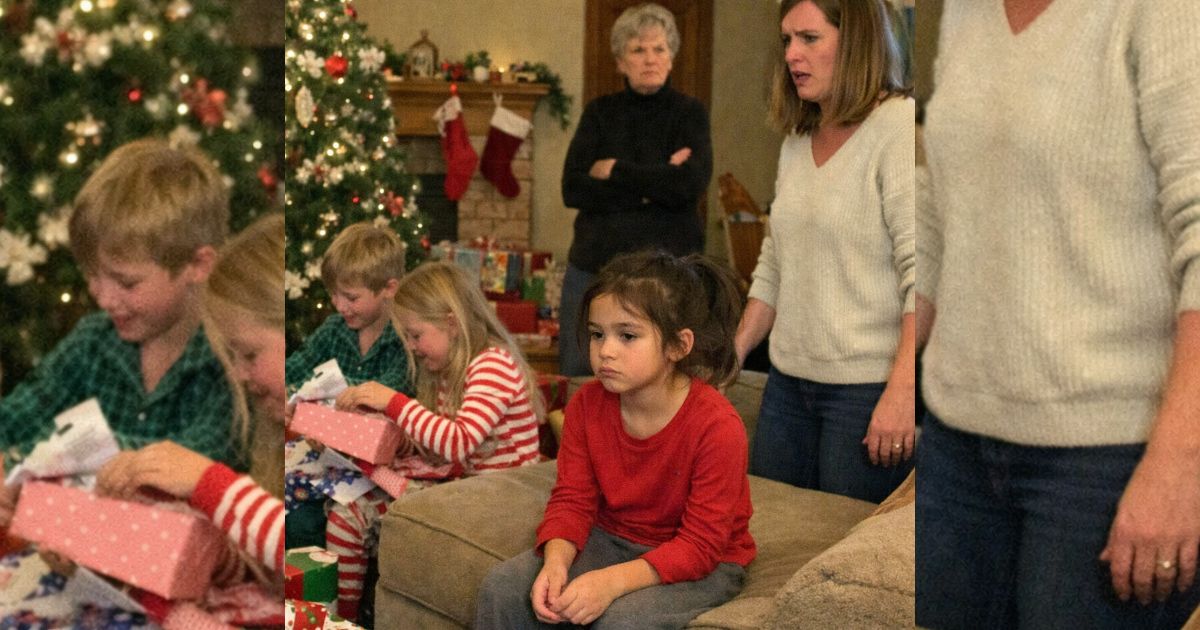
My daughter was sitting at the edge of the couch with her hands folded in her lap.
Her legs were swinging a little because she could never quite keep still when she was excited.
All around her, wrapping paper flew through the air like confetti.
Her cousins were laughing, shouting, holding up their gifts so everybody could admire them.
One had a pink tablet with a glittery case.
Another had a drone he kept trying to launch indoors while the adults told him to wait until later.
A little one in footie pajamas was hugging a giant stuffed dinosaur like he had just won the lottery.
The whole room was bright and loud and warm.
And Maya sat there smiling, waiting for her turn.
She had that soft, hopeful expression children get when they still believe grown-ups always do the right thing.
She believed, with her whole heart, that grandmothers love their grandkids.
She believed presents appear with your name on them because of course they do.
She believed she belonged in that circle.
I kept scanning every bag, every box, every gift tag under the tree.
I was looking for her name.
It had to be there.
I told myself it had to be there.
Maybe hidden behind the train set.
Maybe tucked near the back where the bigger gifts were stacked.
Maybe still in the hallway.
Maybe Margot was saving it for last.
Maybe.
That word can carry a whole lie if you let it.
By the time the last present was handed out, my smile hurt from holding it in place.
Maya looked up at me with the quietest little voice.
“Did Grandma forget me?”
I can still hear the way she said it.
Not accusing.
Not dramatic.
Just confused.
Like she was trying to solve a small puzzle.
Like surely there had to be a reasonable answer.
I stood up because I had to do something.
I turned toward my mother-in-law and asked in the gentlest voice I could manage, “Was there another one somewhere? Maybe it got missed?”
Margot did not even blink.
She did not look embarrassed.
She did not look flustered.
She looked inconvenienced.
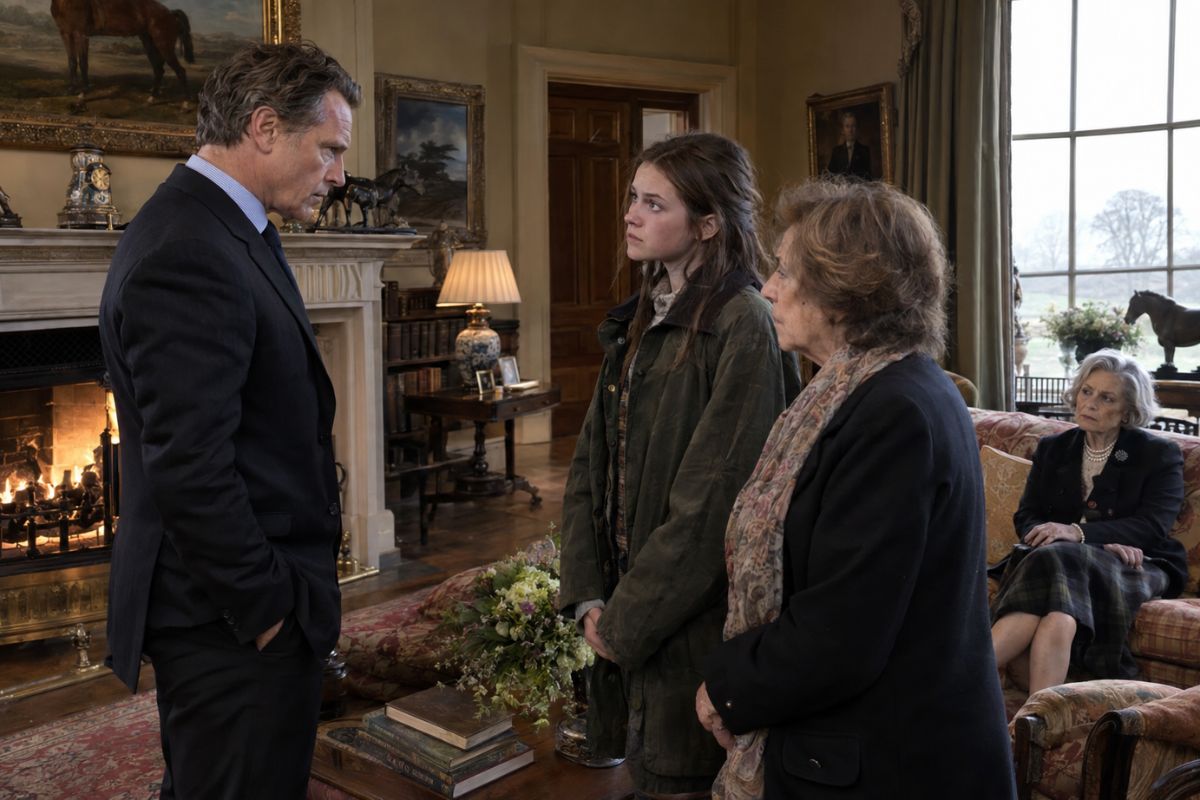
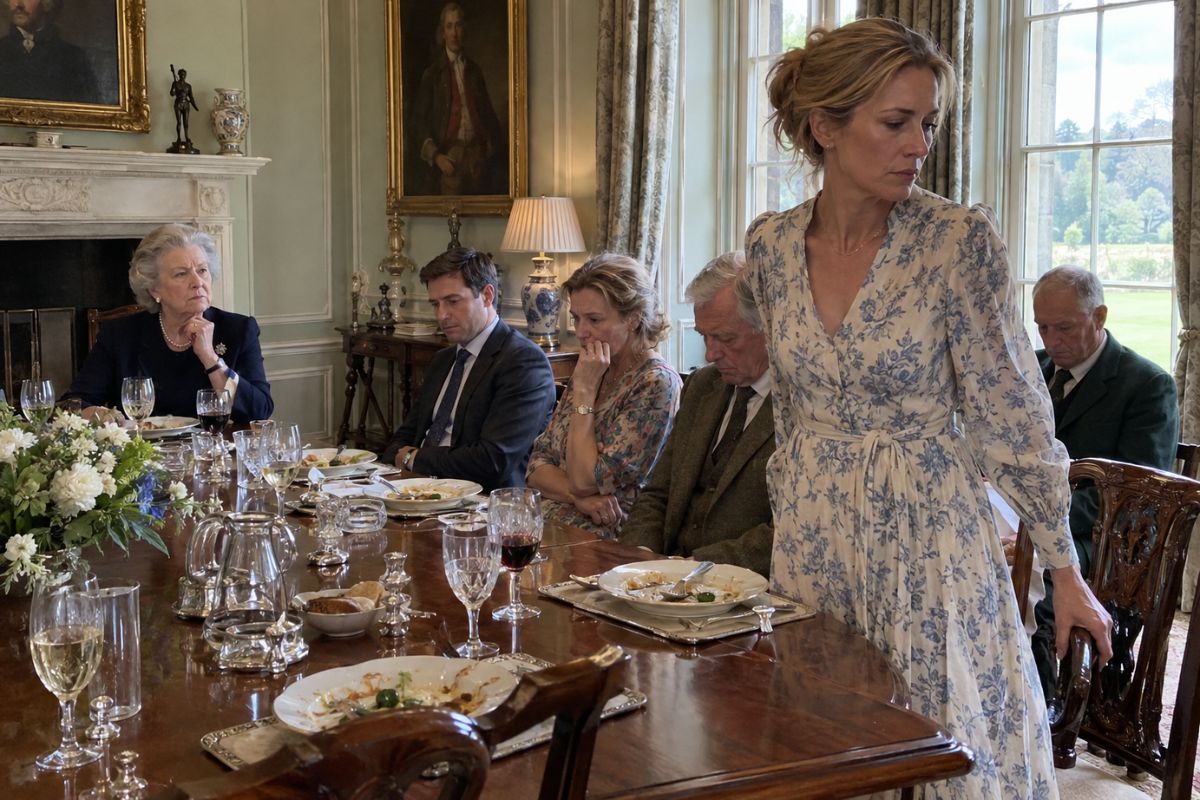
Then she said, clear as glass, “She’s adopted. It’s not the same. She’s not really family.”
Nobody moved.
That was the part that haunted me most later.
Not just the words.
The stillness after them.
The room did not explode.
Nobody gasped.
Nobody said, “Margot, that’s enough.”
Nobody laughed awkwardly and corrected her.
Nobody stood up.
It was the kind of silence that tells you a truth has been living in a room longer than you knew.
Maya heard every word.
Of course she did.
Children always hear the sentence you wish they hadn’t.
She didn’t cry right away.
She just looked down at her hands.
Then she folded them tighter in her lap, like she was trying to make herself smaller.
Like maybe if she took up less space, the moment would hurt less.
I felt all the air leave my chest.
My mouth opened.
Nothing came out.
I wish I could tell you I was brave right then.
I wish I could tell you I scooped her up, put on my coat, and walked out with my head high.
I wish I could tell you I looked that woman in the eye and said the perfect thing.
I didn’t.
I froze.
My husband, Caleb, was sitting two feet away from me.
His jaw was tight.
His eyes were locked on his mother.
His whole body had gone still in that dangerous way quiet people do when they are holding back something enormous.
But even he did not speak in that exact second.
Across the room, my sister-in-law bent down to gather tissue paper that did not need gathering.
One cousin suddenly became very interested in the ribbon tied around a toy box.
Another adult reached for coffee that had gone cold.
Everyone found a task.
Everyone avoided the truth sitting in the middle of the room beside my daughter.
Maya lifted her chin and gave me a tiny smile that made me want to break in half.
“It’s okay, Mommy,” she whispered. “Maybe next year.”
Maybe next year.
I wanted to scream.
Instead, I knelt in front of her and brushed a strand of hair from her face.
“You did nothing wrong,” I said.
She nodded like she was doing me a favor by agreeing.
Then she sat through the rest of that morning while the other kids played with their gifts.
She clapped for them.
She told one cousin his drone was cool.
She helped a younger child find batteries.
She did everything a good child does when she has already learned that other people’s comfort sometimes matters more than her pain.
That was last Christmas.
It was supposed to be one of those picture-perfect family holidays people post online and caption with words like blessed.
Margot loved those kinds of holidays.
She lived for them.
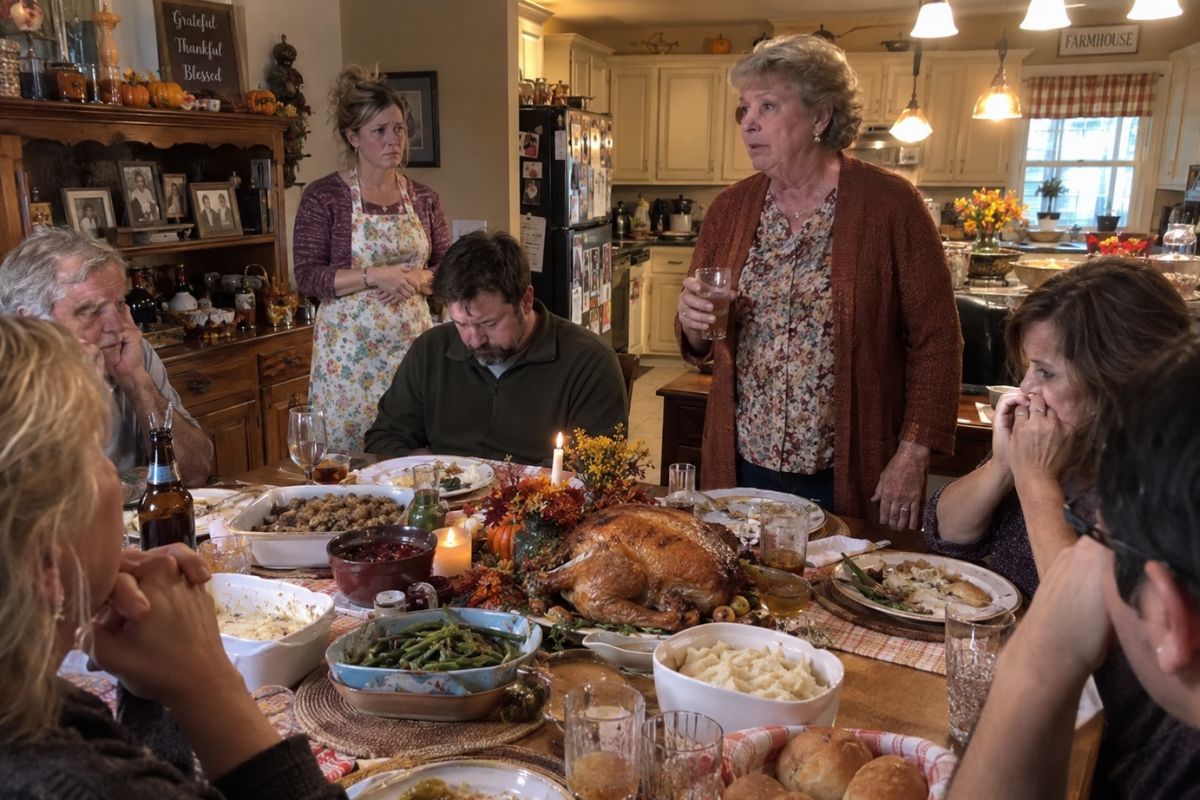
My mother-in-law was the kind of woman who labeled every serving dish at Thanksgiving.
She folded cloth napkins into little trees at Christmas.
She arranged cookies on platters as if a magazine editor might stop by unannounced.
There were always fresh wreaths on the doors.
There were always cinnamon sticks simmering on the stove.
There were always little place cards with everyone’s names at the table, written in her elegant slanted handwriting.
She loved order.
She loved appearances.
She loved the idea of family very deeply.
She just had a narrow idea of what counted as one.
I have been married to her son for ten years.
Caleb and I met in college.
He was never the loudest man in the room.
He was the one standing slightly off to the side, listening hard, noticing everything.
He remembered details nobody else remembered.
If you said you liked your coffee black once, he would remember a year later.
If you had a hard day, he could tell before you spoke.
There was something steady about him from the first day I met him.
Not flashy.
Not dramatic.
Steady.
The kind of person who makes you feel safer just by being near you.
When I fell in love with him, I also fell in love with the life I thought we would build.
A calm life.
A decent life.
A family built with intention and kindness.
It took us longer than we expected to become parents.
There were losses.
There were years that felt measured in waiting rooms and gentle voices and hopeful plans that did not turn into babies.
There were nights when we lay in bed in the dark and held hands because words had stopped helping.
I used to think grief always looked dramatic.
It doesn’t.
Sometimes it looks like two people folding laundry without speaking.
Sometimes it looks like unopened mail on the kitchen counter because one more appointment reminder feels like too much.
Sometimes it looks like hope coming back even when you didn’t invite it.
Adoption was not something we landed on because we were giving up.
It was something we walked toward because love kept moving us there.
The first time we met Maya, she was five.
We met at a park through a local agency.
I was so nervous I barely slept the night before.
I kept thinking, What if she doesn’t like us?
What if we say the wrong thing?
What if she looks at us and knows immediately we are not enough?
She was wearing a yellow sweater with one button missing.
Her hair was slightly crooked, like someone had tried to brush it in a hurry.
She did not run toward us.
She did not smile at first.
She looked at us carefully, like she understood that grown-ups made promises all the time and children paid the price when they didn’t keep them.
We walked together near the playground.
We talked about ducks.
That was what she wanted to talk about.
Not us.
Not her.
Ducks.
Then, halfway around the pond, she slipped her hand into mine.
Just like that.
No speech.
No announcement.
Her tiny fingers curled around mine as if she had made a decision and did not need to explain it.
I looked over at Caleb and saw his eyes fill.
We did not say anything in that moment because some moments are too sacred for language.
That night, sitting in our car afterward, I whispered, “That’s our daughter.”
And he whispered back, “I know.”
From the day she came home, she changed the atmosphere of our house.
Not in some big movie-scene way.
In a hundred small ones.
There were crayons under the couch.
Tiny socks in places socks should never be.
A plastic fox in the bathroom drawer.
Paintings taped to the refrigerator and then to the pantry and then to the hallway because the refrigerator ran out of room.
Laughter in the kitchen.
Questions at bedtime.
Songs invented in the grocery store.
She named the squirrels in our backyard.
Every single one.
She believed each squirrel had a story and strong opinions and a secret life once they got back to the trees.
She loved watercolor paints and oversized sweaters and pancakes shaped like stars.
She laughed at her own jokes.
She talked to animals like they were coworkers.
She had the kindest little heart I had ever seen.
The kind that worried about everyone.
The kind that noticed when a cashier looked tired.
The kind that would split her cookie in half without being asked.
She started calling Caleb “Dad” before she called me “Mom.”
It happened by accident.
He was helping her build a blanket fort in the living room.
She popped her head out and said, “Dad, can you hold this side?”
He froze.
I froze.
She froze because she could feel the room change.
Then Caleb smiled and said, “I’ve got it.”
That was all.
Later that night he cried in the laundry room because he didn’t want her to see.
She called me “Mom” a few weeks later while I was brushing her hair before bed.
I did cry in front of her.
I couldn’t help it.
She turned around so fast and said, “Did I say it wrong?”
I laughed through tears and said, “No, baby. You said it right.”
We never treated her as anything but ours because she was ours.
Not in a symbolic way.
Not in a nice-sounding social media way.
In the way that matters.
In the daily way.
In the tired way.
In the ordinary sacred way that parenthood becomes when you live it.
Still, even early on, I noticed something careful in Margot.
Not open hostility.
That would have been easier.
It was colder than that.
She was polite.
She always knew exactly how to remain technically polite.
When we first introduced Maya to Caleb’s side of the family, Margot smiled.
She brought over cookies.
She complimented Maya’s dress.
She asked if the drive had been smooth.
But she did not kneel to Maya’s level the way she did with the other children.
She did not ask about her favorite animal, or favorite color, or favorite show.
She did not remember what Maya liked from one visit to the next.
She sent birthday cards late.
She forgot little details that did not seem accidental after the fifth or sixth time.
I told myself I was imagining it.
I told myself some grandmothers are just reserved.
I told myself love takes time.
I told myself not everyone knows how to connect with children right away.
Caleb was less optimistic.
He knew his mother better than I did.
He had been raised by her.
He understood the tone behind her pauses.
He recognized the difference between surface-level acceptance and actual welcome.
But for Maya’s sake, he kept hoping.
For all our sakes, really.
He never pushed Maya toward Margot.
He never said, “You need to earn Grandma’s love.”
But he did keep leaving the door open.
When Margot invited the whole family to her house in western North Carolina for Christmas, we said yes.
It was a six-hour drive from where we lived.
We packed the car with gifts, overnight bags, coloring books, snacks, emergency wipes, extra sweaters, and the stuffed fox Maya took everywhere.
Maya was excited for weeks.
She made handmade cards for all her cousins.
Not quick little folded-paper cards either.
Detailed ones.
Each cousin got a drawing based on what Maya thought fit them best.
A dog in a baseball cap for one.
A rocket ship for another.
A snowy mountain scene for the oldest girl because Maya said she looked like someone who would love mountains.
For Margot, she drew a house with glowing windows and a wreath on the door.
She worked on that one the longest.
“Do you think Grandma will like it?” she asked.
“She’ll love it,” I said.
And I believed she would.
That is the embarrassing part.
Even after all the small slights, I still believed a child’s sincerity might melt something in Margot.
Maybe because I wanted that to be true.
Maybe because I could not stand the alternative.
Maya chose a red velvet dress to bring for Christmas dinner.
She held it up in the hallway mirror and asked, “Do I look grown up?”
I told her she looked beautiful.
She grinned and said, “Good. I want Grandma to see I can sit still at the fancy table.”
Children make bargains with love before they are old enough to know that love worth having should not require performance.
The drive down was noisy and sweet.
Christmas music played for hours.
Maya sang along to every chorus whether she knew the words or not.
At one point she fell asleep with her forehead against the window and her card for Margot still tucked safely beside her.
I looked back at her and thought, This year will be better.
This year she will feel it.
This year the edges will soften.
Margot’s house looked exactly like a holiday catalog when we pulled up.
White lights wound around the porch railing.
There were fresh garlands around the front door.
A giant wreath hung in the foyer.
Inside, the tree reached almost to the ceiling.
The whole house smelled like cinnamon and cedar and the ham warming in the oven.
There were cousins everywhere.
Shoes kicked off by the door.
Coats piled high in the guest room.
Children streaking from room to room with candy canes and too much energy.
Maya ran in like she had been invited into a wonderland.
She hugged her cousins.
She complimented the tree.
She spotted the cookie tray before she even took her coat off.
Then she turned to Margot, holding the carefully made card in both hands.
“I made this for you,” she said.
Margot accepted it with her polished smile.
“Well, isn’t that thoughtful,” she said.
She looked at the front for maybe two seconds, then set it on the hallway table beneath a stack of unopened mail.
Not mean.
Not warm.
Not enough.
Maya did not seem to notice.
Or maybe she did and chose not to.
She was good at that.
Better than any child should have to be.
The first day went smoothly enough.
There were games.
There were cookies.
There was chaos and football on television and too many adults trying to finish dinner at once.
Maya helped me in the kitchen.
She stood on a little stool and decorated sugar cookies with such concentration you would have thought the fate of the republic depended on her ability to place sprinkles evenly.
At dinner, she remembered to say please and thank you.
She passed dishes carefully.
She complimented the sweet potatoes because she had heard another child do it and wanted to be part of the rhythm.
Margot nodded at her now and then.
Nothing more.
I kept telling myself to stop grading every interaction.
Stop waiting for proof of harm.
Stop looking for cracks in every sentence.
By bedtime, I had almost convinced myself that maybe we really were okay.
Then morning came.
Christmas morning at Margot’s house was not a casual event.
It was a production.
She planned it all.
The paper was coordinated.
The gifts were placed in neat stacks around the tree.
Each child sat in a circle and got called up one by one.
Nobody ripped through everything at once.
Margot liked an audience.
She liked order even in joy.
The kids loved it because she made the whole thing feel ceremonial.
She had special hot chocolate ready.
Whipped cream.
Cinnamon on top.
Matching mugs.
Parents with cameras.
Grandparents in chairs.
Children glowing.
Maya was nearly vibrating with excitement.
She kept whispering to me, “I think mine is the purple one,” and then, “No, maybe the silver one with the snowflakes.”
I smiled and nodded and kept scanning tags.
Still nothing.
My stomach had begun to tighten by then, but I pushed the feeling away.
Surely not.
Surely even Margot would not do something so pointed, so public, so small and cruel at once.
Surely a grown woman would not stage exclusion in front of children on Christmas morning.
We always think people have a limit until they show us theirs was somewhere else entirely.
One by one, the kids were handed gifts.
Squeals.
Thank-yous.
Torn paper.
Hugs.
Batteries being requested.
Instruction manuals ignored.
The pile got smaller.
Then smaller.
Then smaller still.
Maya kept clapping for everybody else.
She was genuinely happy for them.
That was Maya.
Her heart did not know how not to be generous.
Then the last gift was handed out.
The circle broke.
The room shifted from anticipation to play.
And my daughter sat there empty-handed, still trying to understand what had happened.
That was when she whispered, “Did Grandma forget me?”
I asked the question.
Margot answered.
And the room became a place I have never fully forgiven.
After the words left her mouth, I felt something in me go cold.
Not hot.
Cold.
Hot anger comes fast and burns.
Cold anger settles into your bones.
I looked at Maya and saw the exact moment childhood trust made room for doubt.
That may sound dramatic, but it is true.
A child can be joyful at 9:12 and changed by 9:13.
Not ruined.
Not broken forever.
But changed.
Something leaves.
Something else moves in.
A new caution.
A new question.
A new awareness of how conditional some adults can be.
I knelt beside her and told her she had done nothing wrong.
She nodded.
She did not ask for more.
That broke me too.
Children who have learned disappointment early often become careful with their needs.
They start managing the room for you.
They make themselves easy.
They offer forgiveness before anyone has earned it.
The rest of the morning passed in a blur.
I remember sound without meaning.
I remember coffee being poured.
I remember someone saying the cinnamon rolls had turned out well.
I remember a cousin asking if anybody had seen the drone remote.
I remember wanting to stand up and overturn the entire day.
Instead, I drifted through it like someone underwater.
At one point Maya slipped away to the corner of the den with her stuffed fox.
She curled up in the armchair and watched the other children play.
Every time an adult glanced her way, she straightened a little and arranged her face into “I’m fine.”
Nobody should know how to do that at six.
I went to sit with her.
She leaned against me at once.
No fuss.
No complaint.
Just the full weight of a small child resting against the person she trusted most.
“You want to go outside for a minute?” I asked.
She shook her head.
“You want to go to the guest room?”
Another shake.
“Okay.”
After a while, she whispered, “Maybe she doesn’t know me yet.”
I had to turn my face away for a second because my expression felt dangerous.
“She should,” I said softly.
Maya was quiet.
Then she said, “I made her the card.”
“I know.”
“Maybe next time I can make it prettier.”
There it was.
The bargain.
If I am better, maybe I will be loved.
It is one of the ugliest lessons adults teach children without ever announcing the class.
I took both her hands and said, “Listen to me. This was not because of your card. It was not because of your dress. It was not because of anything you did or didn’t do. This is about Grandma. Not you.”
She studied my face.
She wanted to believe me.
But children trust evidence more than speeches.
The evidence she had that morning was awful.
Caleb spent most of the day quiet.
He helped clear dishes.
He fixed a toy battery compartment.
He carried firewood in from the porch.
From a distance, he probably looked calm.
I knew him too well for that.
He was not calm.
He was making decisions.
At dinner that night, Margot acted as if nothing had happened.
That was maybe the strangest part.
Her composure.
Her willingness to let the day stand exactly as it was.
She asked if anyone wanted more mashed potatoes.
She complimented one niece’s braids.
She discussed a church potluck with her sister on speakerphone.
She did not once speak directly to Maya.
I watched Caleb across the table.
He was saying very little.
His face was polite in the way men in his family had learned to be polite when they were furious.
I realized then that this was not new to him.
Maybe not this exact offense.
But this pattern.
The appearance of harmony at any cost.
The rewriting of pain as bad timing or misunderstanding.
The family rule was clear.
What matters most is that the tablecloth stays smooth.
After dinner, the adults drifted into separate corners of the house.
Some watched television.
Some cleaned.
Some played cards.
Maya went through the motions.
She said goodnight when prompted.
She brushed her teeth.
She put on her pajamas.
She climbed into the guest bed with her stuffed fox and pulled the blanket up to her chin.
She did not ask for a story.
She usually asked for two.
I sat on the edge of the bed and rubbed her back.
The bedside lamp cast a soft yellow light.
She stared at the ceiling.
Then she said, “Mom?”
“Yes, baby?”
“Do you think maybe she didn’t know I was coming?”
The hope in that question was almost harder than if she had cried.
Because hope means she was still trying to rescue the situation for the adult who hurt her.
“No, sweetheart,” I said. “She knew.”
A long pause.
Then, “Oh.”
One tiny word.
So much settling inside it.
A little later she asked, “Can I still call her Grandma?”
I swallowed.
That question did something to me I can barely describe even now.
Because what she was really asking was, Do I still belong to the story I thought I was in?
“Yes,” I said carefully. “You can call people what feels true in your heart. But you also never have to pretend someone was kind when they weren’t.”
She looked at me, trying to understand.
I brushed her hair back and said, “Whatever anyone says, you are our daughter. Completely. Forever.”
That she believed.
That part, thank God, she believed.
When her breathing finally slowed, I stood up and turned toward the door.
Caleb was there.
He had one hand on the frame and something manila-colored tucked under his arm.
His face was calm in a way that made my own pulse jump.
“What’s that?” I asked quietly once we stepped into the hallway.
He handed it to me.
Inside was a folder.
Neat.
Organized.
Thick.
The first page was an updated will.
The second was trust paperwork.
There were copies of adoption records.
Insurance beneficiary forms.
Property documents.
Savings and education account paperwork.
Everywhere I looked, there was Maya’s name.
Not as a footnote.
Not as a future possibility.
As daughter.
As child.
As equal heir.
As family, in every formal line that could hold such a truth.
I looked up at him.
“You did all this?”
He nodded.
“Months ago.”
“Why didn’t you tell me?”
“I wanted it finished first,” he said. “And I thought maybe I was being paranoid. I thought maybe I was preparing for something that wouldn’t happen.”
Something sharp moved through me.
“You thought she might do this.”
His jaw shifted.
“I thought if she ever did, I never wanted there to be a single place left where Maya could be treated like less.”
I sat down on the hallway bench because my knees had turned untrustworthy.
The folder felt heavy in my lap.
Not because it was thick.
Because it was love made official.
Love, translated into signatures and notarized pages.
Love that had prepared for a wound before the wound arrived.
“What are you going to do?” I asked.
He looked toward the closed guest room door.
Then toward the stairs leading down to the kitchen.
“I’m done pretending my mother doesn’t understand consequences,” he said.
His voice never rose.
That almost made it more powerful.
“I let a lot slide over the years because it was easier. I told myself she meant well. I told myself confrontation would only make things worse. But she looked at our daughter on Christmas morning and told her she wasn’t family. I’m not carrying that into another year. I’m not carrying it into tomorrow.”
The old house creaked around us.
Somewhere downstairs, I could hear the television still on low.
A laugh track from a holiday movie floated up and vanished.
I looked at my husband and realized I had never seen him more certain.
“Do you want me to come with you?” I asked.
He shook his head.
“No. This part is mine.”
He put on his coat.
He took the folder back.
He leaned down, kissed my forehead, then opened the front door and stepped into the cold night.
I stood in the hallway after he left, listening.
First the front door closing.
Then the deeper silence after.
I did not follow.
I did not stop him.
I sat on the edge of the guest bed and waited.
There are certain hours in a marriage when you understand the person you chose in a new way.
That was one of them.
I thought back to all the times I had mistaken Caleb’s quiet for passivity.
Not often, but enough.
I had always known he was gentle.
That night I remembered that gentle and weak are not even cousins.
Gentle can be steel wrapped in calm.
Gentle can be a line you cannot move once it is set.
I do not know every word Caleb said to his mother that night.
Not because he hid it from me.
Because what happened was partly between a son and the woman who raised him.
But later, over time, and in pieces, I learned enough.
Margot was still awake when he knocked on the kitchen door.
Of course she was.
Women like her do not drift casually off to sleep after a day they have controlled so carefully.
She let him in, probably expecting some version of a strained family discussion.
Maybe she thought he was coming for an apology.
Maybe she thought he was coming to smooth things over.
Maybe she thought he was coming as the son she knew best, the one who kept things civil.
Instead, he sat at her kitchen table and placed the folder in front of her.
Not dramatically.
Not with anger.
Just placed it there.
She looked at it, then at him.
“What is this?” she asked.
He said, “Proof, if you need it.”
She frowned and opened the folder.
She saw the documents.
She saw the adoption decree.
She saw Maya’s name beside ours.
She saw the trust language.
She saw the property designation.
She saw, in black ink and embossed notary stamps, the truth she had tried to deny in a room full of people.
And according to Caleb, that was the first moment her composure cracked.
He told me later she kept flipping pages like maybe she expected the paperwork to weaken halfway through.
Like maybe some clause would appear that said not quite.
It never did.
Because there was no not quite.
There was just daughter.
He told her, “I’m not here to argue definitions with you. I’m here because you humiliated my child today.”
Margot apparently tried to interrupt.
“She’s not—”
And he said, for the first time in maybe his entire adult life, “No. You’re going to listen.”
That sentence alone must have sounded like a thunderclap in her kitchen.
Caleb was not a man who enjoyed power.
He did not pull rank.
He did not dominate rooms.
If he said, “You’re going to listen,” then the earth itself might as well have paused.
He told her that Maya had clapped for every cousin.
He told her Maya had brought her a handmade card.
He told her Maya had gone to bed wondering if she had not been known well enough to deserve a present.
He told her exactly how she had folded her hands in her lap after being told she was not family.
Then he said, “I need you to understand something clearly. Maya is my daughter in every way that matters to me and every way the law recognizes. If you want to cling to some private belief that blood is the only thing that counts, that is your choice. But if you choose that, then you are choosing a future without us.”
No yelling.
No threats.
Just truth.
He went on.
He said, “You do not get access to my daughter while insulting her place in this family. You do not get holidays, birthdays, school photos, or visits. You do not get to stand at a distance and call that love. Either you decide she is yours to protect too, or you accept that you have drawn the line yourself.”
I imagine that landed harder than shouting ever could have.
Because Caleb was not bluffing.
His whole life, his family had relied on his reasonableness.
They probably thought reasonableness meant elasticity.
That he would bend to keep peace.
They were wrong.
He had bent enough.
That night he stood straight.
Margot asked, according to him, “You would cut me off over this?”
And Caleb answered, “No. You would lose us over this.”
I have replayed that distinction many times.
Because it mattered.
He was not punishing her for having feelings.
He was naming the cost of action.
Or inaction.
Or cruelty wrapped as principle.
He told her she had one chance to repair the damage she had done to Maya.
Not erase it.
Repair it.
And he made it clear there would not be another holiday performance where our daughter was expected to absorb rejection politely.
Then he stood up and left.
When he came back to the guest room, he did not look triumphant.
He looked tired.
Sad, even.
But resolved.
He took off his coat, lay down beside me, and reached for my hand in the dark.
“What happened?” I whispered.
“I said what needed saying,” he answered.
“Did she understand?”
A pause.
“She does now.”
I did not sleep much.
The house felt different.
As if something long buried had been dug up and left sitting in the middle of the floor.
In the morning, the quiet was strange.
Not peaceful.
Contained.
Like every adult downstairs had received a memo no one spoke aloud.
Maya was already awake.
She sat at the small table in the guest room drinking hot chocolate Caleb had made her.
She was stirring it carefully, watching the marshmallows spin.
Children are so brave in ordinary ways.
The world can tilt under them and they will still stir their cocoa.
Still hum.
Still ask where their socks went.
I was brushing my hair when there was a knock at the door.
Three soft knocks.
Not Margot’s usual style.
Normally she entered the world the way well-appointed women enter luncheon rooms.
Expecting ease.
Expecting space.
When I opened the door, she was standing there holding a wrapped box.
Silver paper.
No bow.
No flourish.
Her face looked different.
Not ruined.
Not tear-streaked.
Just stripped of performance.
The polished holiday hostess was gone.
What stood there was an older woman who looked tired.
“May I come in?” she asked.
Caleb looked up from tying his boots.
He said nothing.
I stepped aside.
Margot walked in slowly, as if she understood she was entering a room where she no longer had automatic standing.
Maya looked up from her mug.
There was no fear in her face.
Just caution.
A caution I hated seeing there.
Margot crouched beside the little table and placed the gift in front of her.
“This should have been here yesterday,” she said.
Maya looked at the box.
Then at me.
Then back at Margot.
Her hands did not move.
Good for her, I thought.
Good.
Margot swallowed.
Then, in a voice so low I almost missed the first part, she said, “I was wrong.”
Not to me.
Not to Caleb.
To Maya.
“I was wrong,” she repeated. “And I am sorry.”
The room stayed still.
She continued.
“I let an old, ugly idea sit in my heart for too long. I treated you as less than you are. That was unfair. It was hurtful. And it was wrong.”
Maya’s eyes flicked toward me again.
Children need witnesses when adults finally tell the truth.
I gave her a small nod.
Margot went on, and I could see this was hard for her.
Not because the words were complicated.
Because humility was.
“I told myself family was only one thing,” she said. “And I forgot that love makes a family too. You came into this house loving people before some of us deserved it. I did not honor that. I’m sorry.”
No excuses.
No “if you felt hurt.”
No “that’s not what I meant.”
Just an apology.
A real one.
I had not expected that.
I had expected some version of strategic repair.
Something tidy and self-protective.
This was more honest than I had imagined she could be.
Maya put both hands on the wrapped box.
She looked up and asked, “Is this really for me?”
Margot closed her eyes for half a second, then opened them again.
“Yes,” she said. “It always should have been.”
Maya unwrapped it carefully.
Inside was a real watercolor set.
Not a toy one from the kids’ aisle.
A beautiful set with solid paints in neat rows.
There was a new sketchbook too.
Heavy paper.
The kind that can hold water without buckling.
And on top of it lay a card.
Maya opened the card and read it silently.
Her lips moved a little as she sounded out some of the longer words.
When she finished, she looked up at Margot and asked, “Do you want me to paint you something?”
That was Maya.
Not because she forgot.
Not because she had no hurt.
Because generosity was stitched into her in ways the world had not managed to undo.
Margot’s eyes filled.
“I would like that very much,” she said.
Maya nodded once.
“Okay.”
No cinematic embrace.
No instant miracle.
No swelling music.
Just okay.
Sometimes okay is the bravest word in a room.
After Margot left, Caleb sat down on the edge of the bed and let out a breath that sounded like it had been trapped for years.
I sat beside him.
“You think she means it?” I asked quietly.
He looked at the closed door.
“I think she knows she has to,” he said.
Then, after a moment, “And I think part of her wants to.”
That was as much optimism as he was ready for.
Later that day, the house functioned differently.
Small changes.
Important ones.
Margot asked Maya if she wanted more hot chocolate and waited for the answer.
She showed real interest when Maya talked about painting foxes.
She brought the handmade card from the hallway table and set it beside her own chair at lunch.
When one of the cousins ran through the den with muddy socks, Margot scolded him while Maya listened, and I saw something shift in Maya’s face.
Belonging includes correction.
It includes expectation.
It includes being accounted for in the ordinary life of a household.
At one point I walked into the dining room and found Margot looking at Maya’s drawing from the card.
It was the house with glowing windows and the wreath on the door.
Margot touched the corner lightly and said, more to herself than to me, “She noticed the wreath was on the left side. Nobody ever notices that.”
I did not rescue her from her own regret.
I simply said, “Maya notices everything.”
That night, after dinner, Maya opened the sketchbook and began to paint at the long dining table.
Everyone else drifted around the room doing holiday things.
Talking.
Nibbling leftovers.
Watching a game.
Maya painted with her tongue peeking slightly from the corner of her mouth the way it always did when she concentrated.
After a while she turned the paper around and pushed it toward us.
It was a drawing of three figures holding hands in front of a house.
A little girl in the middle.
A man and a woman on either side.
Above them she had painted a sun with a smiling face because Maya believed all important drawings deserved a happy sky.
At the bottom she had written, in careful kid handwriting, HOME.
Caleb looked at it for a long time.
Then he bent and kissed her forehead.
“That’s exactly what we are,” he said.
Later, on the drive home, Maya fell asleep in the back seat with that sketchbook open on her lap.
I turned around at a stoplight and saw she had added another figure in one corner.
A woman with silver hair.
Not in the center.
Not holding the little girl’s hand.
Just standing close enough to be included.
I did not point it out.
I did not ask who it was.
I already knew.
That was the thing children can do that adults often cannot.
They can leave room without surrendering truth.
When we got home, life resumed.
School lunches.
Laundry.
Emails.
Bills.
Art projects spread across the kitchen table.
The great machinery of regular life kept moving.
But something in me had changed.
Actually, many things had.
For one, I could no longer pretend keeping peace was always the noble choice.
Sometimes keeping peace is just another name for asking the most vulnerable person in the room to carry the discomfort for everyone else.
I had done that to Maya, if only for those first stunned moments.
I hated that.
I still do.
I forgave myself slowly.
Not easily.
But slowly.
Because shame that never changes your behavior is just vanity in a darker outfit.
So I changed my behavior.
That was the only apology worth making to my daughter.
I became clearer.
Faster to speak.
Less willing to excuse cruelty because it was dressed in manners.
I stopped confusing age with wisdom.
I stopped confusing family status with moral authority.
And I watched Caleb differently too.
For years, I had known him as a loving father.
That Christmas taught me something else.
He was also a man willing to protect our daughter at personal cost.
Not loudly.
Not theatrically.
But completely.
There is a kind of love that makes a scene.
There is another kind that prepares paperwork months in advance because it senses danger to a child’s sense of belonging and refuses to leave any opening unguarded.
That second kind does not get as many movies.
It deserves more.
In the weeks that followed, Margot began to reach out.
Carefully.
Not too much.
Not in a flood.
At first it was a card in the mail addressed only to Maya.
Inside, in her tidy handwriting, she wrote: Thank you for the painting. I hung it where I can see it every morning.
A week later she sent a small packet of watercolor paper.
Then she called one Saturday afternoon and asked, awkwardly, “Would Maya like to tell me about the animals she’s painting these days?”
Maya did.
At length.
She spent twelve minutes explaining why foxes looked wise but raccoons looked like they knew secrets.
Margot listened.
I could tell because she asked follow-up questions only someone paying attention could ask.
Not every attempt was graceful.
Sometimes Margot sounded too formal.
Sometimes she praised Maya the way you praise a student at a recital.
Sometimes she overcorrected and came on too strong.
But effort was there.
And effort matters.
Not more than repair.
Not more than truth.
But it matters.
One afternoon in February, another envelope arrived.
No return label.
Just her handwriting.
Inside was an old photo of Caleb at five years old standing beside his mother in front of a Christmas tree.
He was holding her hand.
On the back she had written:
Family is who you fight for.
I see that now.
Thank you for fighting for her.
I sat at the kitchen table for a long time with that photo in my hand.
Not because I thought everything was healed.
It wasn’t.
Not because the sentence erased what happened.
It didn’t.
But because it told the truth about where change had begun.
Not with sentiment.
With a line.
With someone finally saying no, clearly enough that another person had to decide who they wanted to be.
Margot had chosen badly in the living room.
Then she had been forced to choose again.
That second choice did not make the first disappear.
But it did shape what came after.
That is the part I think about most now.
Not whether people can fail.
Of course they can.
They do.
Every day.
The deeper question is what they do when failure costs them something real.
Do they defend themselves?
Do they minimize?
Do they edit the story until they look kinder than they were?
Or do they let the truth stand and walk toward it anyway?
Margot, to her credit, walked toward it.
Slowly.
Awkwardly.
Proud people rarely transform in clean lines.
She was still proud.
Still particular.
Still the kind of woman who arranged crackers by type on a tray and corrected your pronunciation of certain words.
But now she asked Maya about school projects.
Now she remembered favorite colors.
Now when she mailed birthday gifts, Maya’s package arrived with the others, not as an afterthought.
Now she said “my granddaughter” without hesitation.
Maybe that should have been the bare minimum all along.
It should have been.
But I have learned that gratitude for change and clarity about past harm can live side by side.
You do not have to choose one.
By spring, Maya had painted Margot three pictures.
A fox at a tea party.
A snowy house with too many windows.
And, my favorite, a squirrel in a cardigan reading a cookbook.
When I asked Maya who the squirrel was supposed to be, she smiled and said, “Grandma. She’s learning.”
I laughed so hard I had to sit down.
Because yes.
That was exactly it.
She was learning.
Late.
Clumsily.
But learning.
Children say the truest things with the strangest pictures.
I still think back to that Christmas morning more often than I want to.
Sometimes it comes back when I am wrapping gifts in December.
Sometimes when I hear an older relative say something dismissive about a child and everybody else laughs nervously.
Sometimes when Maya, now more confident, runs ahead into a room full of people and never once wonders if she belongs there.
That last part is the healing.
Not that the memory vanished.
Not that the scene no longer matters.
But that it no longer defines the room she walks into.
She knows herself now in a stronger way.
She knows love should not be measured in bloodlines or matching faces or shared features.
She knows she is ours.
She knows the man who tucks her in, checks her math homework, braids holiday lights around the porch rail, and keeps old legal folders in desk drawers because he thinks ahead is her father.
She knows the woman who packs her lunch, sits through school programs, cries at her paintings, and would set the world on fire before letting anyone reduce her place at our table is her mother.
And she knows that sometimes adults get things terribly wrong.
But they are still responsible for fixing what they can.
That matters too.
The year after that Christmas, we went back to Margot’s house.
That was a decision we did not make quickly.
Caleb and I talked about it for weeks.
We were not interested in pretending everything was fine for the sake of tradition.
We were interested in whether return could happen without betrayal.
There is a difference.
In the end, we went because the effort had been consistent.
Because Maya wanted to.
Because trust, once broken, cannot be demanded back but can be rebuilt through repeated ordinary acts.
When we arrived, there was a stocking by the fireplace with Maya’s name embroidered on it.
Not handwritten on a gift tag.
Not added with marker at the last second.
Embroidered.
I stood there staring at it longer than anyone knew.
Maya spotted it and smiled a small, private smile.
Not the desperate smile from the year before.
A real one.
She did not rush to it.
She just looked over at me as if to say, See?
I nodded.
See.
Later that evening, Margot asked Maya if she would help set out the cloth napkins.
Maya said yes.
The two of them stood side by side at the dining room table, folding green napkins into rough little triangles that were supposed to look like trees.
Margot corrected her once, then stopped herself, laughed, and said, “Actually, yours look more fun than mine.”
Maya grinned and said, “They look like goofy trees.”
Margot said, “Then goofy trees it is.”
That may not sound like much.
But when you have seen a relationship start in exclusion, even silly napkin trees can feel holy.
At dinner, when one of the other grandchildren interrupted Maya mid-sentence, Margot said, “Hold on. I want to hear what Maya was saying.”
I looked down at my plate because my eyes had filled too fast.
Not because I needed the performance.
Not because I had forgotten the wound.
Because the child who once sat empty-handed in a room full of relatives was now being held in the center of a conversation by the same woman who had once pushed her out.
Repair rarely arrives with trumpets.
It arrives like that.
A stocking.
A question remembered.
A child not talked over.
A place set and meant.
There are people who hear this story and want the villain to stay a villain.
I understand that.
Clean lines are satisfying.
They let us keep our outrage pure.
But family is rarely that simple.
Most harm inside families does not come dressed like a monster.
It comes dressed like tradition.
Like preference.
Like “that’s just how I was raised.”
Like the confidence of someone who has never had their definition of love seriously challenged.
Margot was wrong.
Deeply wrong.
She hurt a child.
I will never make that smaller than it was.
But she also stood at the edge of losing her son and granddaughter and chose not to harden further.
She chose to change.
Not instantly.
Not perfectly.
But for real.
That matters to me because Maya saw it happen.
She saw an adult apologize.
She saw an adult take correction.
She saw an adult become better instead of defending being worse.
That is a gift too.
Not as pretty as watercolor paints.
Not as easy as a wrapped box under a tree.
But deeper.
The older Maya gets, the more I think about what that Christmas actually taught us.
It taught me that silence has a moral cost.
It taught Caleb that there comes a point when patience stops being virtuous and becomes permission.
It taught Margot that love does not stay respectable when it excludes.
And it taught Maya something I hope never leaves her.
That being chosen is not a one-time event.
It is something real love does again and again.
At breakfast.
In paperwork.
In living rooms.
At holiday tables.
In hard conversations.
In the moments when speaking up would be inconvenient but necessary.
We choose our children there.
That is where family becomes visible.
Not in matching cheekbones.
Not in ancestry charts.
Not in who resembles whom in old photographs.
In the choosing.
In the protecting.
In the staying.
Sometimes people ask me, in that casual way people ask holiday questions, “So how was that Christmas?”
I never know how to answer briefly.
Because how do you summarize the year something broke and something better began?
Do I say it was hard?
It was.
Do I say it was healing?
Eventually.
Do I say it was the Christmas my husband became even more himself than I already knew him to be?
The Christmas my daughter showed more grace than many adults twice her age?
The Christmas my mother-in-law met the consequences of her own belief system and did not entirely turn away?
All of that is true.
But if I have to choose one sentence, it is this:
It was the Christmas my daughter learned that love does not always enter a room perfectly, but the real kind will still stand up, tell the truth, and make a place for her that no one gets to take away.
That is the story I carry now.
Not just the cruelty.
Not just the silence.
The line drawn after.
The choice made after.
The home rebuilt after.
And maybe that is why the final image from that season is not the empty space under the tree.
It is later that night.
The house quiet.
The lamp low.
My daughter bent over fresh paper with a paintbrush in her hand.
My husband beside her.
Me across from them, watching.
And on the page, slowly appearing, a little house glowing from the inside.
Four figures this time.
Not all in the center.
Not all the same size.
But all there.
All counted.
All finally named for what they were.
Family.
Thank you so much for reading this story!
I’d really love to hear your comments and thoughts about this story — your feedback is truly valuable and helps us a lot.
Please leave a comment and share this Facebook post to support the author. Every reaction and review makes a big difference!
This story is a work of fiction created for entertainment and inspirational purposes. While it may draw on real-world themes, all characters, names, and events are imagined. Any resemblance to actual people or situations is purely coincidenta