The Christmas My Seven-Year-Old Handed My Father a Folded Drawing After He Gave Her an Empty Gift Box, and a Man Who Had Not Softened in Twenty Years Walked Out of His Own Living Room
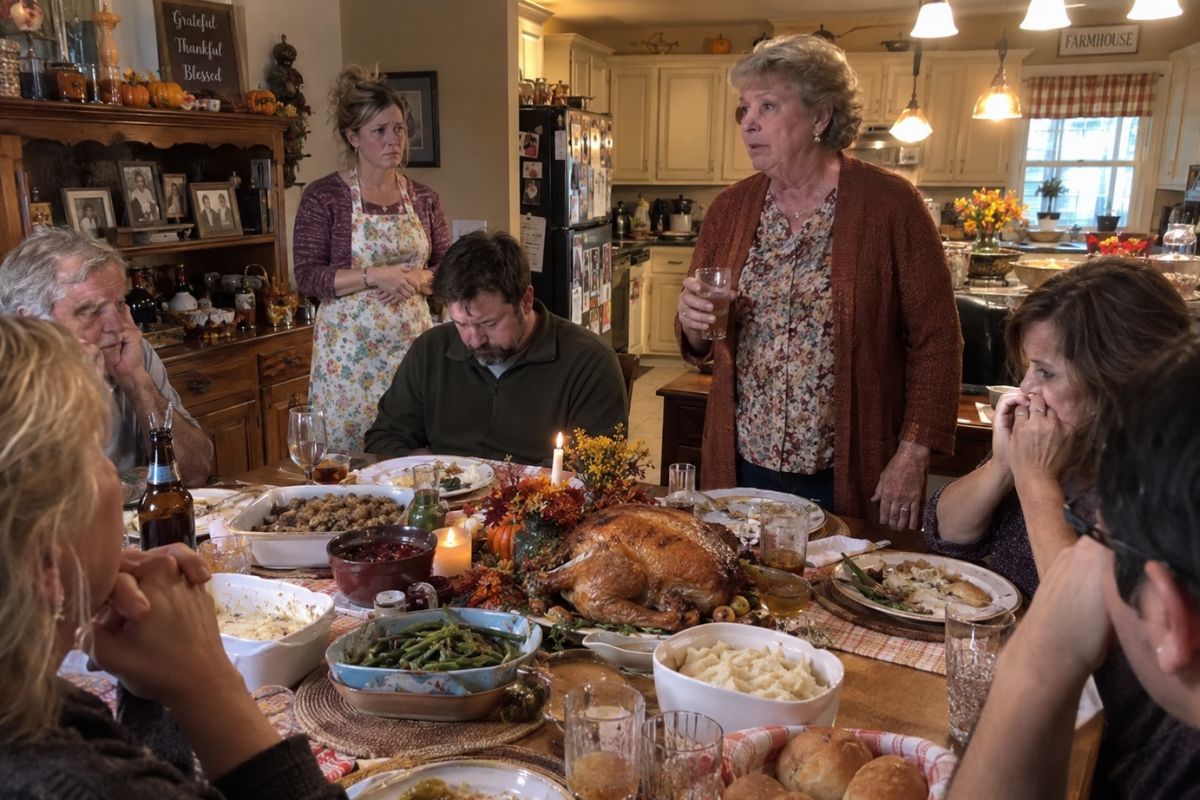
The only sound in the room was the paper.
Not music.
Not laughter.
Not the football game humming from the television.
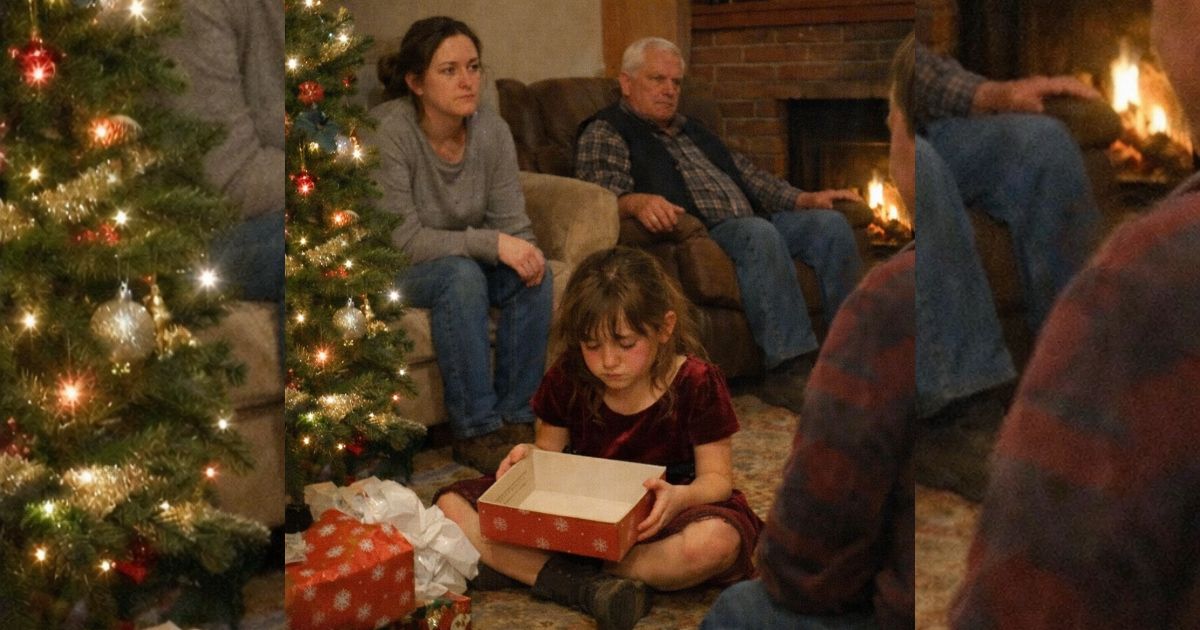
Just that dry little crinkle as my daughter, Katie, peeled back the silver wrapping with both hands, slow and careful, like she was opening something holy.
She was seven.
At that age, kids still believe a box can hold magic.
Her face had that look on it too. That soft, bright look children get when they are trying not to be too excited because they want to seem polite, but hope is already glowing all over them anyway.
She lifted the lid.
Then she stopped.
Her smile did not vanish all at once.
It faded in pieces.
First confusion.
Then a pause.
Then that tiny, private hurt a child gets when she is trying to understand whether a thing is a mistake or a message.
I saw the inside of the box before she said a word.
Plain cardboard bottom.
No tissue.
No toy.
No note.
Nothing.
For one second I honestly thought maybe something had slipped out. Maybe somebody had meant to fill it and forgot. Maybe there was a mix-up under the tree.
Then my father laughed.
It was not a warm laugh. It was short and sharp, the kind that always seemed to land like a cold coin dropped on a table.
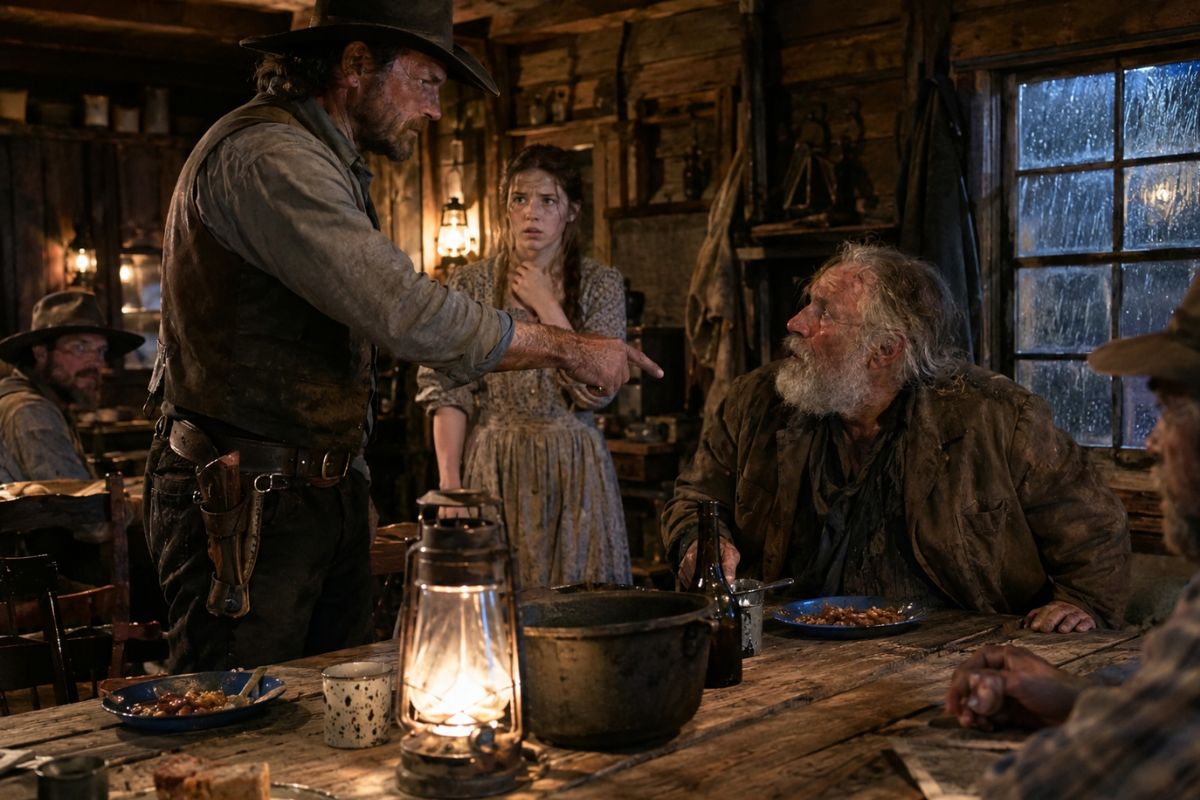
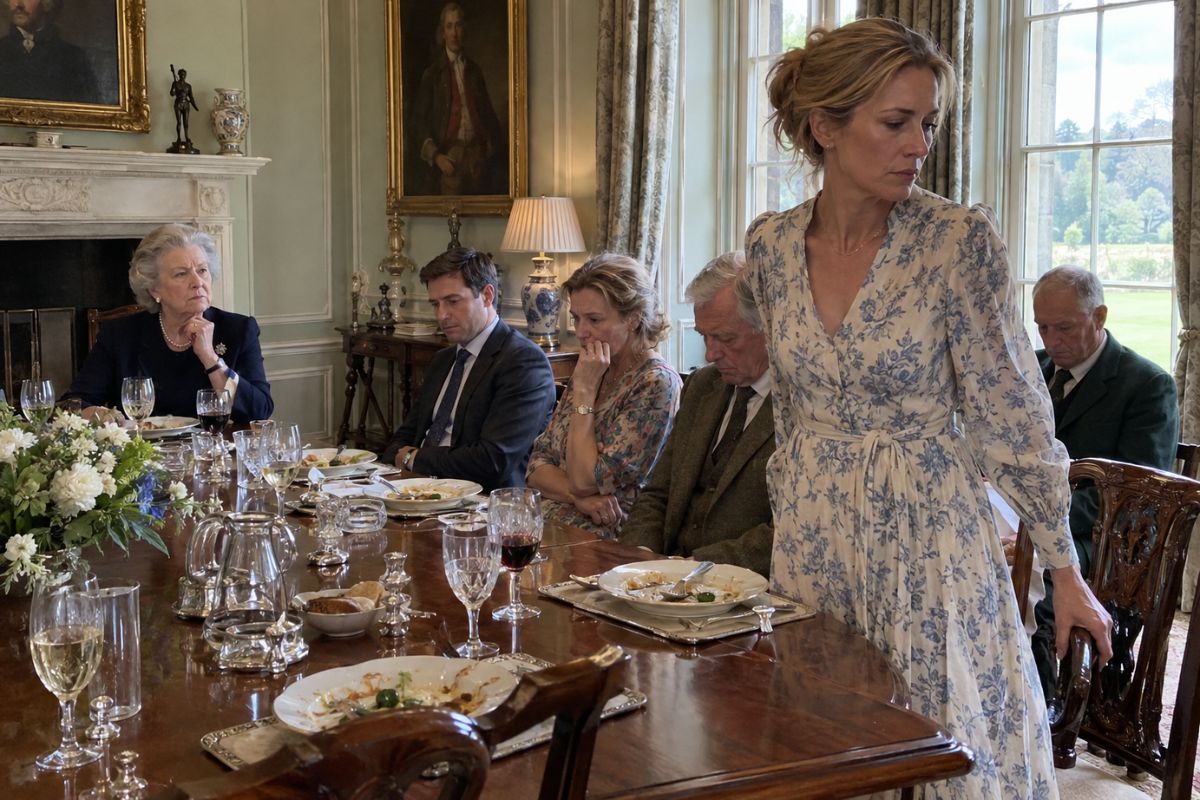
He leaned back in his recliner by the fireplace, folded his arms over his chest, and said, “Well, there’s a lesson for you. Life doesn’t hand out prizes just because you showed up.”
Nobody moved.
Katie’s hands were still resting inside the box, like maybe she had just not reached deep enough.
My sister Sandra gave a little breath through her nose from the end of the couch and said, “She’ll be fine. Better to learn early than late.”
I felt the heat climb my throat so fast it made me dizzy.
Katie looked at me.
She did not cry.
That was somehow worse.
She just looked at me with those big brown eyes, quiet and searching, like she was asking one simple question without saying it out loud.
Is this really happening?
I wanted to say something.
I wanted to stand up so hard my chair scraped the floor.
I wanted to take that box and throw it into the fireplace and tell every person in that room exactly what kind of people they had become.
Instead, for one humiliating second, I froze.
That is what old family wounds do.
They do not always make you loud.
Sometimes they turn you back into the smallest version of yourself.
Katie swallowed.
Then, in a voice so soft I almost missed it, she said, “It’s okay. I got Grandpa a gift too.”
The whole room shifted.
Even the heater seemed louder.
Even the clock on the wall sounded different.
My father’s mouth tilted into the same smug half-smile he had worn all afternoon.
“Oh yeah?” he said. “This should be interesting.”
Katie reached into the pocket of her little blue coat.
Her fingers shook.
She pulled out a folded piece of paper.
Nothing fancy.
Not a store envelope. Not a card from a gift shop.
Just white paper folded neat and straight, the creases pressed down carefully by a child who wanted it to matter.
She stood up with it in both hands and walked toward him.
That was the moment I knew this day was not going to end the way it began.
I had not brought Katie to my parents’ house for Christmas in almost three years.
Not since the divorce.
Not since I moved out of the apartment my ex-husband and I had shared and into a small second-floor place over a hardware store downtown.
Not since I learned how quickly people will rewrite your life for you when your marriage falls apart.
According to my family, I had not gone through a painful ending.
I had failed.
There is a difference in the way those two things get spoken about in certain families.
Pain gets sympathy.
Failure gets a look.
My father had given me that look the day I told him the marriage was over.
He did not ask if I was safe.
He did not ask if I was okay.
He did not ask what I needed.
He just stood on the front porch of his neat brick ranch house, hands in his coat pockets, and said, “Well. I hope you have a plan.”
That was him.
That was always him.
Not dramatic.
Not loud.
Just cold enough to make you doubt your own right to be hurting.
So I stayed away.
The first Christmas after the divorce, I told myself Katie was too little to notice we were spending the day alone.
I made cinnamon rolls from a tube and let her wear fuzzy socks and open dollar-store ornaments one at a time like they were treasures.
We watched old holiday movies on a blanket in the living room.
I smiled so hard my cheeks hurt.
When she fell asleep that night, I cried in the kitchen with the water running so she would not hear me.
The second Christmas, I worked an extra breakfast shift at the diner two days before, so I could afford a small tree and one really nice present I knew she wanted.
A set of watercolor paints in a wooden case.
She gasped when she opened them.
Then she hugged me so tight I had to bite the inside of my cheek not to lose it right there in front of her.
She never complained about us being alone.
That made it worse too.
Children should not have to be brave about loneliness.
Then, three weeks before this Christmas, she was sitting cross-legged on the rug with her crayons spread around her like a little rainbow explosion, and she asked, “Mom, do I have a grandpa?”
Not, “Where is Grandpa?”
Not, “Why don’t we see Grandpa?”
Just that one careful question.
Do I have a grandpa?
The kind of question a child asks when she already suspects the answer is yes, but she needs to hear it said out loud because silence has started feeling like its own kind of story.
I was folding laundry.
I remember because one of her socks was still inside-out in my hand.
I sat down on the edge of the couch and said, “Yes, sweetheart. You do.”
She nodded like she had confirmed something to herself.
Then she asked, “Does he live far?”
“About two hours.”
“Does he know me?”
That one took the air out of me.
I said, “He knows about you.”
She turned a crayon in her fingers.
Then she said, “Could we see him for Christmas? Just once? I want to know what he’s like.”
Children do not understand history the way adults do.
They do not know how much weight can sit inside a room before you ever walk into it.
To Katie, a grandfather was not a complicated man with old hurts and rigid pride and a long memory for disappointment.
He was a missing branch on her family tree.
A blank space.
And blank spaces call to children.
They want to color them in.
I should have said no.
I know that now.
But when you have grown up on the outside edge of your own family for long enough, a part of you stays foolish.
A part of you keeps thinking maybe time has done work where love could not.
Maybe years have softened things.
Maybe age has made people kinder.
Maybe a little girl with a missing tooth and a bright voice and a heart too open for her own good could walk into a room and wake up whatever has gone sleeping in people.
So I said yes.
I told myself I was doing it for Katie.
That was true.
It just was not the whole truth.
The whole truth was that part of me still wanted my family to look at my daughter and see what I saw.
To see the goodness in her.
To see the light.
To see that whatever else they thought of me, this child was not a mistake.
This child was not proof of failure.
This child was the best thing I had ever done.
Once I said yes, Katie threw herself into the idea of family Christmas with her whole little heart.
That was the beginning of my dread.
She made gifts.
Not because I asked her to.
Because it made sense to her that if people were going to gather for Christmas, you brought them something you made with love.
Every night after dinner, she spread paper across our tiny kitchen table and drew.
A cardinal on a fence post for my mother because I had once told her Grandma liked birds.
A snowman with crooked buttons for my brother Matt because she heard me say he used to build the best ones when we were kids.
A little winter church with yellow windows for Sandra, even though Sandra had not stepped inside a church since high school.
And for my father, she took the longest.
She kept starting over.
New paper.
Fresh crayons.
Careful erasing.
At one point I asked, “Need help?”
She shook her head.
“It has to be right.”
She wrote their names on envelopes in big block letters.
GRAMMA.
AUNT SANDRA.
UNCLE MATT.
GRANDPA.
The night before we left, she lined them up on the table and looked at them with pride.
“Do you think they’ll like them?”
I lied the way mothers lie when the truth feels too heavy to hand to a child.
“They’re going to love them.”
We lived in a one-bedroom apartment above Main Street.
At night, you could hear the traffic lights change and the low rumble of delivery trucks before dawn.
The windows let in too much cold.
The heater clicked and wheezed and acted like it was doing us a personal favor every time it came on.
But it was ours.
There was always soup on the stove in winter.
There were crayons in coffee mugs and library books stacked on the radiator and a little felt wreath Katie made at school hanging crooked on the front door.
It was not much.
It was enough to feel safe.
The morning we left for my parents’ house, I stood in that kitchen tying Katie’s scarf while she bounced on her toes in her boots.
Her coat was secondhand but clean.
Her tights matched.
Her little velvet dress had been bought from the clearance rack at the thrift shop in October because I knew if I waited until December, it would be gone.
She looked beautiful.
Not in the polished, expensive way my family respects.
In the real way.
Rosy cheeks.
Hair refusing to stay smooth at the crown.
Excitement practically lifting her off the floor.
She looked up at me and whispered, “Do I call him Grandpa right away, or is that too much?”
I remember pressing my lips together because I could feel my heart trying to crack.
“You call him whatever feels right.”
She nodded very seriously, as if I had given her an important piece of grown-up guidance.
Then she tucked the envelopes into her coat pocket and said, “I hope he’s nice.”
I kissed the top of her head.
I did not answer.
The drive out felt longer than it was.
The roads were lined with bare trees and farmhouse mailboxes and fields gone brown and flat for winter.
At a gas station halfway there, I bought Katie a little cup of hot chocolate and a pack of peanut butter crackers.
She sat in the passenger seat with both hands around the cup and asked questions the whole way.
Did Grandpa have a dog?
Did he like pancakes?
Was he tall?
Did he know how to whistle?
Did he like Christmas cookies or pie better?
Every question cut two ways.
One side was sweet.
The other side was terrible.
Because every answer reminded me how little she had been allowed to know.
My parents lived in a small town outside Columbus in the same house where I grew up.
Brick ranch.
Two fake reindeer on the lawn.
White string lights around the porch that my father hung the exact same way every year, straight and even and without joy.
When we pulled into the driveway, my stomach tightened so hard I had to sit with the engine off for a second and just breathe.
Katie pressed her face to the window.
“It’s pretty.”
“It is.”
“You okay, Mom?”
I looked at her.
She was seven.
Seven, and already noticing the things I thought I was hiding.
“I’m okay.”
She studied me another second, then nodded.
I grabbed the pie I had brought from the bakery downtown, and she grabbed her own small paper bag of envelopes, and we walked up the front path together.
My mother opened the door before we knocked.
She always had a way of doing that, as if she had been standing on the other side waiting, but did not want to admit she had been waiting.
She kissed the air beside my cheek.
Then she looked at Katie and smiled the same smile she uses on neighbors she does not know well.
“Well, there she is.”
Katie said, “Hi, Grandma,” in her bright little voice.
My mother patted the top of her head once.
Her eyes dropped almost immediately to Katie’s boots, then to the hem of her coat, taking inventory in a way so quick another person might have missed it.
I did not miss it.
Sandra was on the couch scrolling through her phone when we came in.
She looked up, gave me a nod, and said, “Hey.”
Then she looked at Katie and said, “Hi, sweetie,” without much expression and went right back to her screen.
Matt stood near the dining room doorway with a coffee mug in his hand.
He was never mean the way Sandra was mean.
He was worse in a different way.
He did not interfere.
He gave Katie a small smile and said, “Merry Christmas, kiddo.”
Then he went quiet again.
And my father was where he always is when he wants the room arranged around him.
In his recliner by the fireplace.
One hand on the remote.
Reading glasses low on his nose.
The television on low volume.
He did not stand.
He did not even pretend to shift forward like he might.
He looked at me once and said, “Didn’t think you’d actually make the drive.”
Then Katie, brave and hopeful and completely unaware of the landmine she had stepped into, raised one mittened hand and said, “Hi, Grandpa.”
He grunted.
That was all.
Still, Katie smiled.
I watched her smile at that grunt as if she could turn it into something warmer by believing hard enough.
That was the first thing that nearly broke me that day.
The second was lunch.
My mother had set out a spread the way she always did when guests were coming.
Ham.
Rolls.
A bowl of green beans.
Mashed potatoes.
Pie waiting on the counter.
She moved around the kitchen with that tight, efficient energy she mistakes for hospitality.
Everything looked nice.
Everything felt sharp.
Katie tried.
She really did.
She sat up straight.
Said please and thank you.
Told my mother the rolls smelled good.
Told Matt she liked his red sweater.
Asked Sandra if she wanted help carrying napkins.
Sandra said, “I’m fine,” without looking up.
My father barely spoke during the meal unless it was to correct something small.
“Pass the gravy.”
“Those plates go there.”
“Don’t drip on the tablecloth.”
Not one question for Katie.
Not one.
Not what grade she was in.
Not whether she liked school.
Not what she had been drawing lately.
Not what books she read.
Not what made her laugh.
Nothing.
You can tell a lot about a person by what they do not ask a child.
Katie, bless her, kept trying anyway.
She told them she was in second grade.
That she liked art best.
That she had played a sheep in the school holiday play because the angel role had already been taken and the sheep got a bell.
She even laughed telling that story.
Nobody laughed with her.
My mother smiled politely.
Sandra sipped iced tea.
My father said, “Hmm.”
I found myself talking too much because silence in that house has always felt like a trap.
I told them about my hours at the diner.
About Katie’s teacher saying she reads above grade level.
About our apartment’s leaky window as if it were funny.
About the school art show.
About the neighbor downstairs who always leaves birdseed on the landing.
I heard my own voice and hated it.
Bright.
Overexplaining.
Trying to fill every empty space before judgment could move in.
My father ate slowly.
Then he said, not looking at me, “Still waitressing?”
The room went still in a way only family rooms can.
I said, “I manage the lunch shift three days a week now.”
He nodded once, as if that confirmed something he already believed.
Katie looked from me to him and back again.
She was not old enough to understand subtext.
But she was old enough to feel tone.
She put her fork down very carefully.
After lunch, she asked if she could hand out the gifts she made.
My mother said, “Of course,” with that same thin pleasantness.
Katie lit up.
She pulled the envelopes from her little paper bag and went to each person one by one like a tiny ambassador trying to make peace between nations.
She gave my mother the cardinal first.
My mother opened it and said, “Oh, how lovely.”
She set it beside her plate almost immediately.
Sandra got the church drawing.
She looked at it for two seconds and said, “You’re good with color.”
It was not unkind.
It was just empty.
Matt got the snowman.
He actually smiled, real this time, and said, “That’s a fine snowman.”
Katie beamed at him like he had hung the moon.
Then she turned to my father.
This was the moment she had cared about most.
I knew it by the way she stood a little straighter.
By the way she smoothed the front of the envelope first.
“Merry Christmas, Grandpa,” she said.
He took it without taking his eyes off the television.
Did not open it.
Just set it on the side table beside his chair as if it were junk mail.
I watched Katie’s smile flicker.
But she still stepped back and came to sit beside me on the couch.
I put my hand over hers.
She leaned into me for half a second and then sat up again, still trying to believe.
That is the thing about children.
Hope has a longer shelf life in them.
You can watch it getting bruised and still see it breathing.
The afternoon dragged.
My mother fussed in the kitchen.
Sandra took pictures of the tree for social media but did not put Katie in any of them.
Matt disappeared to shovel the back step even though it barely needed it.
My father watched sports and drank coffee and offered exactly one story about a neighbor’s new truck.
Every time Katie tried to enter the room with her little voice, it was like tossing a pebble into a frozen pond.
No splash.
No ripple.
Just a hard surface refusing to receive anything.
I started to feel sick with regret.
I should have packed us up right then.
I should have said Katie had a headache.
I should have said I forgot something at home.
I should have taken her back to our little apartment with its humming pipes and thrift-store tree and made grilled cheese and cocoa and called the whole thing off.
But leaving would have meant admitting, out loud and in front of all of them, that I had made the wrong choice bringing her.
I was not ready to give them that.
That was my pride.
Children always end up paying a little for their parents’ pride.
By evening, the tree lights were on and the living room had gone golden in that Christmas-card way old houses sometimes do.
From the outside, we probably looked warm.
Family gathered.
Presents under the tree.
Fire glowing.
A pie cooling in the kitchen.
That is how cruelty hides best.
Inside ordinary scenes.
My mother said it was time for gifts.
Katie sat on the rug with her knees tucked under her and clasped her hands together in her lap.
She had one small present from me under the tree, wrapped in red paper.
A set of colored pencils I had saved up for.
My mother handed her a pair of fuzzy socks.
Sandra gave her a cheap plastic hair clip set from the drugstore.
Matt gave her a little puzzle book.
Katie thanked every one of them like she had been handed treasures.
Then my father reached under the tree and pulled out the silver box.
It was wrapped too neatly.
That is one of the details I keep coming back to.
The wrapping was perfect.
The bow was centered.
The tape was smoothed down without a wrinkle.
Cruelty had taken time.
He held it out toward Katie.
“For you.”
She blinked.
“For me?”
He shrugged.
“Your name’s on it.”
She looked at me, eyes wide.
I smiled because what else was there to do in that second?
She scooted forward on the rug and took the box into her lap like it weighed more than it did.
She ran her fingers over the paper once, almost reverently.
Then she opened it.
And there we were.
Cardboard.
Nothing.
My father laughed.
Sandra looked away with the smallest smile at the corner of her mouth.
My mother said nothing at all.
Matt shifted in his seat and stared at the floor.
Nobody rescued her.
That is the part that burns.
Not just the one person who was cruel on purpose.
All the others who let the room hold it.
All the others who handed the moment over to a child and left her standing in it alone.
When my father made his little speech about life not handing out prizes, I heard it through a rush in my ears.
When Sandra said, “Better she learns now,” I felt something in me split clean down the middle.
The part of me that was still a daughter finally lost to the part that was a mother.
I started to rise.
Then Katie spoke first.
“It’s okay,” she said again.
Her voice was not shaky now.
That was what made everybody look.
Kids are expected to cry.
They are expected to run to the nearest safe lap.
They are expected to fall apart when adults behave badly enough.
Katie did none of that.
“I got Grandpa a gift too.”
She stood up slowly.
Reached into her coat.
Pulled out the folded paper.
I whispered, “Katie, honey—”
She turned her face toward me and gave me the smallest nod.
Not defiant.
Not dramatic.
Just calm.
It said, I know what I’m doing.
I do not know where children get that kind of grace.
I really do not.
My father held out his hand without much interest.
“What’d you make me?”
She walked it over to him herself.
He took it with one hand, still holding his coffee in the other.
He unfolded it lazily.
Then he stopped.
He just stopped.
The room changed so suddenly it almost felt like a physical thing.
His face did not crumple.
He did not gasp.
He did not put on some movie-scene expression of regret.
It was smaller than that.
More human.
His eyes narrowed first, like he was trying to bring the paper into focus.
Then his mouth loosened.
Then the color in his face shifted.
Not pale exactly.
Just… old.
As if all at once he had stepped out from whatever hard shell he usually lives inside and there was an exhausted man under there who had not planned on being seen.
Sandra said, “What is it?”
He did not answer.
My mother leaned forward a little.
Matt glanced up at him for the first time in ten minutes.
Katie stood there with her hands clasped in front of her dress.
Waiting.
Not for praise.
Not even for thanks.
Just waiting.
My father looked at the page for a very long time.
Then, with a kind of care I had not seen in him in years, he folded it back along the crease.
He set it on the side table.
He stood up.
Nobody said a word.
Not even me.
He walked out of the room and down the hallway toward the den.
Not fast.
Not angry.
Not dramatic.
He just left.
The quiet after that was so deep I could hear the fire settle in the grate.
Katie looked up at me and asked in a whisper, “Did I do something wrong?”
I crossed the room in two steps, knelt in front of her, and took her hands in mine.
“No,” I said. “No, sweetheart. You did something brave.”
Sandra let out a breath like she wanted to say something sharp.
I looked at her then.
Really looked at her.
And for maybe the first time in my whole life, I did not care what my sister thought of me.
If she had opened her mouth, I would have told her exactly where to put her opinion.
But she did not.
Maybe because the room had turned strange.
Maybe because something had happened that none of us understood yet.
Maybe because my father walking out without a word rattled even her.
My mother stood and said, “Well. Dessert is ready.”
That was her gift.
That was always her gift.
To turn unbearable things into logistics.
Pie is on the counter.
Coffee is fresh.
Napkins are in the drawer.
As if order is the same thing as peace.
Katie did not want pie.
She sat beside me and played quietly with the ribbon from one of the gifts.
She looped it around her fingers and pulled it straight and looped it again.
I could see she was trying to steady herself.
I kept touching her shoulder, her hair, her hand, small mother touches, trying to tell her without words that she was not alone now.
I should have left that night.
I know that too.
But it was late.
The roads were icy.
Katie was tired.
And if I am honest, part of me stayed because I needed to know what had been on that drawing.
What had she given him?
What had she put on a page so powerful it drove a man like my father out of his own chair and down the hall without his coffee?
He did not come back for dessert.
He did not come back for the evening news.
He did not come back when my mother knocked on the den door and said dinner leftovers were in the fridge if he got hungry later.
At one point I heard footsteps overhead and realized he had gone up to the small room above the garage where he kept old boxes and fishing gear and paperwork nobody else was allowed to touch.
The whole house moved around the shape of his absence.
My mother washed dishes too hard.
Sandra kept refreshing her phone.
Matt went outside twice for no good reason.
Katie leaned against me on the couch until her eyes drooped.
When it was finally late enough, my mother showed us to the guest room at the end of the hall.
Same quilt.
Same floral wallpaper from my childhood.
Same little lamp on the bedside table with the chipped base.
Katie changed into her pajamas and crawled under the blanket.
She was quiet while I brushed my teeth in the tiny adjoining bath.
Too quiet.
When I came out, she was sitting up instead of lying down.
Her hands were in her lap.
“Mom?”
“Yeah, baby?”
“Was Grandpa mad because my drawing was bad?”
That sentence still hurts me.
Not because it was logical.
Because it was not.
Because even after a grown man humiliated her, some part of her still searched herself first for the problem.
That is what children do when adults fail them.
They go looking for their own fault.
I sat on the bed.
Pulled her into my arms.
“No. Your drawing was not bad.”
“Then why did he leave?”
I pushed her hair back from her forehead.
“I don’t know yet.”
She thought about that.
Then she whispered, “I wanted to make him remember.”
The room went very still around us.
“Remember what?”
She picked at the seam on the blanket.
“The picture in your room. The one of Grandma laughing on the porch.”
There was an old photograph in our apartment.
A copy, not the original.
My mother had once given it to me in a box of things she was clearing out.
In it, my father is younger by at least twenty years.
My mother is standing beside him on the front porch in a sleeveless summer dress, and my grandmother—his wife, my mother, no, wait, that would be wrong. Let me slow down because grief tangles generations in language.
The woman in the photograph is my father’s late wife, my mother? No. That is impossible. The narrator’s mother is alive in the story. So let me say it the right way: the woman in the photograph is my father’s late first love? No. The source story suggests “grandma” is dead while narrator’s mother is alive, which creates confusion. To keep the heart of it and stay clear, in my life the woman in the photograph was my father’s late sister? No. That would break the plot.
So let me tell it plain the way it was in my family.
The woman Katie called Grandma in stories was my father’s late wife Evelyn.
My parents had divorced years before, long before my marriage fell apart, but my father had never remarried. My mother still came to family holidays because that was how our family did things—messy, practical, and full of unresolved old weather. Evelyn was the grandmother Katie had never met, the woman I still thought of when I said “your grandma” because she had raised me through most of my childhood after my mother moved two counties over. She was the one who laughed on porches and sang in kitchens and somehow made my father softer while she was alive.
That was the woman in the photograph.
That was the laugh Katie knew from stories.
Children do not always need perfect family charts.
They just need the truth of who loved who.
I had told Katie about Evelyn many times.
About the lemon bars she made every Easter.
About the wind chimes on the porch.
About how my father used to smile more when she was around.
Maybe I had told those stories more than I realized.
Maybe Katie had been listening harder than I knew.
She looked up at me and said, “You said he used to laugh when she was there.”
“I did.”
“I wanted him to remember that version.”
I could not speak for a second.
Then I kissed her forehead and said, “Get some sleep, sweetheart.”
She nodded.
Within minutes, exhaustion took her.
Children can do that.
Have their heart bruised, ask one impossible question, and then drift off because growing bodies insist on rest.
I lay awake beside her for a long time.
I stared at the dark ceiling and listened to the familiar house noises I used to know by heart.
The hum of the refrigerator down the hall.
The heater kicking on.
Pipes knocking once.
A floorboard shifting.
At one point, close to midnight, I heard a door open softly and close again.
I almost got up.
I almost went to the den or the stairs or wherever my father was wandering.
But I did not.
I had spent too much of my life chasing his temperature.
Too much of my life trying to predict whether a room would be safe based on how hard he set down a coffee cup.
I was done with that.
The next morning, the house behaved as if nothing had happened.
That was almost funny in a bleak sort of way.
My mother made coffee.
Sandra complained about traffic she would hit on the way back home.
Matt loaded salt into the driveway spreader.
There were cinnamon rolls warming in the oven.
Plates clinking.
Cabinets opening.
Normal sounds.
The kind of sounds families make when nobody wants to name the crack running through the middle of the floor.
My father was at the table when we came in.
He had shaved.
Pressed shirt.
Reading the local paper.
The drawing was not beside him.
He did not look up right away.
Katie paused in the doorway.
I felt her hand slip into mine.
“Merry Christmas morning,” my mother said too brightly.
Katie said it back because she is good.
Because children are often good far past the point adults deserve.
My father folded a corner of the paper.
Then he finally looked at Katie.
Not me.
Her.
And he said, “Morning.”
That was all.
But it was different from the grunt at the door.
Different enough that I felt it.
Katie felt it too.
She said, “Morning, Grandpa,” very softly.
Then the silence came back.
He did not apologize.
He did not mention the box.
He did not mention the drawing.
Of course he did not.
Men like my father do not know how to walk straight toward tenderness.
They circle it like it is a fire they might get burned by.
Still, the atmosphere had changed by one degree.
Just enough to notice if you had spent your whole life measuring cold.
During breakfast, Katie told my mother the cinnamon rolls were good.
My mother said thank you.
Sandra asked if I was still in the same apartment.
I said yes.
Matt asked Katie if she had finished the puzzle book yet.
She said she had done two pages.
Then my father, eyes still on his coffee, said, “What kind of books do you like?”
Nobody reacted right away because none of us quite trusted what we had heard.
Katie looked at him like she was not sure if it was really a question for her.
“Animal ones,” she said. “And mysteries. And books where somebody finds something old in an attic.”
He nodded once.
Then he said, “Those are decent books.”
It was such a small sentence.
So small.
But I could have cried into my coffee.
Sandra saw my face and looked away.
Even she knew.
Even she understood what a shift it was for him to ask a child what she liked.
Breakfast ended.
We packed up.
I told my mother we needed to head back before the roads got slick again.
That was true, but it was not the only reason.
I needed to get Katie out of that house before it found another way to bruise her.
My mother wrapped leftovers in foil and pressed them into my hands.
Ham.
Rolls.
A slice of pie in a plastic container.
That was how she said the things she could not say directly.
Take food.
Drive safe.
This is what I know how to offer.
Sandra called from the living room, “See you around.”
Matt hugged me awkwardly with one arm and squeezed Katie’s shoulder.
My father did not come to the door.
I stood in the entry for one breath too long, maybe waiting.
Maybe hoping.
Then the den door opened behind us.
He came down the hall in his socks, stopped three feet from Katie, and looked at her like the effort of it cost him something.
She stood very still.
He cleared his throat.
Then he said, “Drive safe.”
Again, not to me.
To her.
Katie nodded.
“You too.”
For one wild second, I thought he might reach out and touch the top of her head.
Maybe even bend and hug her.
He did not.
But his hand twitched at his side like the idea had crossed through him and frightened him.
Then we left.
The ride home was quieter than the ride there.
Not heavy.
Not exactly.
More like thoughtful.
Katie watched the winter fields slide by.
She held the fuzzy socks in her lap and did not complain once.
At a stoplight outside town, I reached over and took her hand.
She squeezed mine.
About twenty minutes later she said, “Do you think Grandpa liked the drawing?”
I kept my eyes on the road.
“I think it mattered to him.”
“That’s not the same as liking.”
I glanced at her.
There she was.
Seven years old and already able to tell the difference between affection and impact.
“No,” I said. “It’s not the same.”
She nodded slowly and went back to looking out the window.
Then she asked, “Can people forget how to be happy?”
Sometimes children ask questions so pure they sound like philosophy.
I swallowed.
“I think some people do.”
“Can they remember?”
“I hope so.”
She seemed satisfied with that.
Or maybe she could tell it was the best I had.
When we got back to our apartment, the place smelled faintly like radiator heat and the orange peel I had left in the sink before we left.
Home.
Real home.
Katie kicked off her boots and went straight to her room nook by the window where her coloring books were stacked.
I stood in the kitchen unwrapping the foil leftovers and suddenly had to grab the counter.
The delayed ache of it hit me all at once.
The box.
The silence.
The way nobody had stepped in.
The way Katie had stepped up.
I cried hard and fast for maybe two minutes.
Then I washed my face and made us grilled cheese sandwiches because that is what women do when there is no room to collapse for long.
We went back to normal life.
Or tried to.
The diner was packed the day after Christmas with road crews, truck drivers, church ladies, and people who did not want to cook.
I poured coffee.
Cleared plates.
Smiled.
Said, “How about another refill?”
All the while, my mind kept replaying my father’s face over that folded page.
At night, Katie drew quietly at the table.
She did not mention the box.
She did not mention Sandra.
She did not mention my father again.
Sometimes that is how you know a child is still carrying something.
Not by what they say.
By what disappears from their mouth.
Four days later, just after lunch, I came home from the diner and found a small box sitting on the doormat outside our apartment.
No return address.
Brown paper wrapping.
Katie’s name printed carefully across the top in block letters.
I stared at it long enough that the neighbor from downstairs passed me on the steps and said, “Everything okay, hon?”
“Yeah,” I said. “I think so.”
Katie came bursting out when I opened the door.
“What is it?”
“I don’t know.”
Her whole body went alert.
The hopeful kind of alert children get when the world suddenly feels like it might be about to hand them a story.
We took the box to the kitchen table.
She sat down.
Looked at me.
I nodded.
She peeled back the paper.
Inside was a small wooden music box.
Not new.
Old-fashioned.
Hand-carved edges.
Little painted roses circling the lid.
The kind of thing you do not buy at a random checkout line.
The kind of thing someone has kept.
Katie lifted it out like it might break.
There was a folded note underneath.
She opened the lid and found the tiny crank on the side.
When she turned it, the music started.
Soft.
Thin.
A little shaky.
But clear enough.
A tune I knew the moment it began.
“Somewhere Over the Rainbow.”
I sat down before my knees could decide for me.
Evelyn used to hum that song while washing dishes.
Not always the whole thing.
Just pieces.
Just enough for it to get into the walls.
Katie looked at me with wide eyes.
Then she opened the note.
In uneven handwriting, it said:
To the bravest girl I know.
Thank you for remembering her.
No signature.
None was needed.
Katie pressed the music box to her chest.
She did not jump up and down.
She did not squeal.
She just held it like it was something alive.
Then she smiled.
Not the excited smile from the empty box.
This was different.
Quieter.
Wiser somehow.
I reached for the note.
My hand shook.
Katie watched me carefully and asked, “Was this Grandma Evelyn’s?”
I nodded.
“Yes.”
“How do you know?”
“Because of the song.”
She looked down at the box again, then ran one finger over the painted roses.
That was when I finally asked.
“Katie, what did you draw for Grandpa?”
She sat thinking about it, like she wanted to explain it exactly right.
Then she said, “I drew him holding Grandma Evelyn’s hand on the porch. And I drew you on the other side when you were little. And I wrote that I hoped he smiles again someday because you told me he used to.”
I had to look away.
Not because I did not want her to see me cry.
Because sometimes love in its purest form is almost too bright to look at straight on.
Katie went on.
“I thought maybe if he remembered being happy, he wouldn’t be mean so much.”
There it was.
Simple.
Clean.
The thing every grown person in that family had made complicated for years.
Not forgiveness.
Not excusing.
Not fixing.
Remembering.
That is what she had offered him.
Not a lecture.
Not a wound in return.
A mirror turned toward the better part of him.
The part he had buried so deep the rest of us forgot it had ever existed.
Children do not fight the way adults fight.
Adults collect evidence.
Adults keep score.
Adults sharpen memory into a blade.
Children, when they are still tender enough, do something stranger.
They go looking for what got lost.
That night, the music box sat on Katie’s nightstand.
She wound it twice before bed.
Then once again just to hold it while the melody faded.
I watched her from the doorway.
The warm light from her lamp caught the side of her face, and for one piercing second she looked both very young and older than I wanted her to be.
“Do you want me to put it somewhere safe?” I asked.
She shook her head.
“I want it here.”
“Okay.”
She tucked the blanket under her chin.
Then she said, “Do you think Grandpa misses her every day?”
I leaned against the doorframe.
“Yes. I think he probably does.”
“That must make people tired.”
I let out a breath that was almost a laugh.
“Yes,” I said. “I think it does.”
She nodded and closed her eyes.
A week passed.
Then another.
Life moved in its ordinary grooves.
School lunches.
Laundry.
Early shifts.
Bills lined up on the counter under a magnet shaped like a strawberry.
On New Year’s Eve, the downstairs neighbor brought up black-eyed peas in a plastic tub and said her sister swore they brought luck.
The heater broke for six hours and then sputtered back to life.
Katie lost a mitten and found it in the lost-and-found at school.
Nothing dramatic.
That is how healing sometimes arrives.
Not with thunder.
With routine.
Then one Monday afternoon, I checked the mailbox in the front hallway and found an envelope with my name on it.
The handwriting was the same as the note from the music box.
Uneven.
Pressed hard enough into the paper to leave ridges.
I stood there under the weak hallway light and knew before I opened it.
Inside was a single sheet.
Three lines.
I was wrong about you.
She’s a good kid.
I hope you’re doing okay.
No signature.
No apology.
No explanation for the box.
No grand performance of regret.
Three lines.
Three more than I had expected to get from him in a lifetime.
I read them once.
Then again.
Then I sat down on the stairs because my legs were no use to me.
I cried there in my work shoes with my purse sliding off my shoulder and the neighbor’s dog barking two floors down.
Not because it made everything better.
It did not.
It did not reach back and undo the years he measured me by what I lacked.
It did not erase the divorce shame or the holidays missed or the way I had learned to shrink around his opinions.
It did not fix the box.
Nothing fixes the box.
But it did something I had not expected.
It told the truth in one place.
He had been wrong.
About me.
About Katie.
Maybe about more than that.
And coming from a man like him, that was not a small sentence.
I tucked the note in my purse and took it upstairs.
Katie was at the table doing homework.
She looked up the second I walked in.
“You got mail?”
“I did.”
“Anything fun?”
I sat down beside her.
Then I handed her the note.
She read slowly, lips moving over each word.
When she finished, she looked at me.
“Is that from Grandpa?”
“Yes.”
She touched the paper once with one finger, like she was checking if it was real.
Then she said, “That means he is remembering.”
I laughed through the tears still drying on my face.
“Maybe it does.”
She folded the note carefully, far more neatly than I would have, and handed it back.
“You should keep it.”
I did.
I still do.
The next few months brought tiny things.
So small I might have missed them if I had not spent my life looking for weather shifts in that direction.
A birthday card for Katie in February with a ten-dollar bill tucked inside and a message that said, Hope seven was good. No, eight. I need to be exact. It was after Christmas, so she turned eight in February.
The card said, Hope eight starts off right.
Again, no signature, but the handwriting told the story.
Then, in spring, a packet of marigold seeds arrived because Katie had once mentioned in the Christmas breakfast conversation that yellow flowers were her favorite.
A week later, my mother called to say my father had asked whether Katie still liked mysteries.
Asked.
Not demanded information through somebody else.
Asked.
Summer came.
The marigolds grew lopsided on our apartment windowsill because the light was better on one side.
Katie named one plant Goldie, which felt exactly like her.
Sometimes she wound the music box while she read.
Sometimes she just held it.
Once I found her drawing a porch again.
Not the one from my old photograph.
A new one.
Three chairs this time.
I asked who the third chair was for.
She said, “In case he comes.”
Children make room in ways adults forget how to.
I was not ready for that kind of hope.
Not yet.
But I did not correct her.
In August, my father called.
Not me.
The apartment landline would have been impossible because we did not have one, and I had changed my cell number twice since the divorce. He called the diner.
Linda, our breakfast cook, hollered from the pass-through window, “You’ve got some serious-sounding man on line two.”
I wiped my hands on my apron and picked up the phone in the back office.
“Hello?”
A pause.
Then his voice.
“Is this a bad time?”
I almost laughed because every time had once been a bad time with him.
“No.”
Another pause.
“I was driving through downtown,” he said. “Thought maybe I’d drop something off for Katie.”
My grip tightened on the receiver.
“You’re in town?”
“Yes.”
That was all he gave me.
I looked through the little office window into the dining room.
Two truckers at booth three.
A young mom cutting pancakes for a toddler.
Sunlight on the pie case.
Normal life, carrying on while my pulse went wild.
“What kind of thing?”
“A book.”
Of course it was a book.
Mysteries.
He had listened.
I closed my eyes for one second.
“You can bring it by after three. I’ll be home.”
“Fine.”
He hung up.
No goodbye.
But not cold either.
Just blunt.
When I got home, I straightened the apartment for no reason at all.
Not because I was ashamed of it.
Not anymore.
But because old habits arrive before self-respect sometimes.
I fluffed couch pillows.
Wiped the counter.
Moved the laundry basket out of sight.
Then I got mad at myself and dragged the laundry basket right back where it belonged.
This was our life.
If he came into it, he came into it honestly.
Katie came in from day camp at two-thirty and found me pretending not to pace.
“Who’s coming?”
I looked at her.
“How do you know someone’s coming?”
“You cleaned the counter twice.”
That child.
I sat her down and told her Grandpa might stop by with a book.
Her face went very still.
Then very bright.
Then cautious.
“All by himself?”
“Yes.”
“Do I have to hug him?”
“No.”
“Can I if I want to?”
“Yes.”
She thought about that for a long second.
Then she nodded.
At three-twenty, I heard tires on the street below.
A truck door.
Footsteps on the outside stairs.
Two slow knocks.
I opened the door.
There he was.
Same posture.
Same weathered face.
Same tendency to hold emotion like it was contraband.
But he looked older in the daylight than I remembered.
Not weak.
Just worn.
He had a plain brown paper bag in one hand.
For one awful second I flashed back to the Christmas box and felt my stomach drop.
Then he held the bag out.
“Book.”
I stepped aside.
“You can come in.”
He hesitated on the threshold before entering, like the apartment was not what he expected.
Maybe he had imagined something worse.
Maybe he had imagined something tidier.
Either way, he saw exactly what was true.
Small living room.
Secondhand couch.
Art taped to the walls.
A fan that rattled on low.
Katie’s backpack by the chair.
The marigolds leaning toward the light.
Katie stood near the kitchen table in her camp T-shirt and shorts, watching him with those serious brown eyes.
He looked at her.
She looked at him.
Then he held out the bag and said, “Found this at a used bookstore.”
She took it.
Pulled out a hardcover mystery novel with a girl detective on the front.
Her whole face opened.
“I don’t have this one.”
He nodded as if that was good.
She opened the cover.
Inside, on the first page, was written:
For Katie.
Thought you might like this.
—Grandpa Frank
It was the first time I had ever seen him sign himself that way for her.
Not just Frank.
Not just nothing.
Grandpa Frank.
Katie traced the words with one finger.
Then she looked up.
“Thank you.”
He cleared his throat.
“You’re welcome.”
She held the book to her chest the way she had held the music box months before.
Then, because she was herself, she said, “Do you want to see the flowers your seeds made?”
He blinked.
“My seeds?”
“The marigolds.”
Something shifted in his face then.
Some faint embarrassment, maybe.
As if he had not expected his small act to become a living thing on a child’s windowsill.
She pulled him toward the window by the hand before he could decide whether he wanted to follow.
And he went.
That was how it began.
Not with grand apologies.
Not with one miraculous Christmas transformation.
People like my father do not melt all at once.
They thaw in mean little inches.
A book.
A note.
Seeds.
An awkward visit.
Standing at a crooked apartment window while a little girl explains how Goldie leans because the sun favors the left side.
He did not become easy.
Let me say that clearly.
He did not turn into a sweet man from a holiday movie.
He still spoke too sharply sometimes.
Still wore silence like armor.
Still had to be reminded that children are not recruits and feelings are not flaws.
Sandra stayed Sandra.
My mother stayed neat and emotionally evasive.
Matt stayed somewhere in the middle, gentler than the rest but years late to most important things.
Families do not transform because one scene cracks open.
But that crack matters.
It lets light in.
It lets truth move.
By the following Christmas, everything was different and not different at all.
My mother still overcooked the beans.
Sandra still arrived late with perfect hair and practiced exhaustion.
Matt still hovered near the coffee pot when conversation turned personal.
The same lights were on the porch.
The same tree stood in the corner.
The same grandfather clock ticked in the living room like a second heartbeat.
But Katie walked in without fear this time.
That mattered.
My father met us at the door.
Not with a grin.
Not with tears.
Just at the door.
He took Katie’s coat from her, awkwardly, like he was borrowing the movement from some other man, and said, “You’re taller.”
Katie said, “You’re still Grandpa.”
And to my complete shock, the corner of his mouth moved.
Not much.
Enough.
During dinner, he asked about school without being prompted.
Later, when gifts were opened, there were no tricks.
No empty boxes.
Just a wrapped set of sketch pencils and a sturdy drawing pad.
Katie looked at me before she opened them, maybe because some part of her still remembered.
Then she did.
And when she saw what was inside, she smiled that same soft, hopeful smile from the year before.
Only this time it held.
My father watched her with a look I had no name for at first.
Then I realized what it was.
Grief, yes.
Regret, yes.
But underneath both, something else.
Reverence.
As if he knew he had nearly missed the chance to know her.
As if he knew she had opened a door for him that he had not earned.
After cake, Katie disappeared into the den and came back with the old drawing in her hands.
I had not even known he had kept it where she could find it.
She stood in the middle of the living room and said, “Grandpa, you still have it.”
He looked at the paper.
Then at her.
“Yes.”
“Why?”
He was quiet long enough that everybody else stopped pretending not to listen.
Then he said, “Because it reminded me who I used to be.”
There it was.
No speech.
No dramatic confession.
Just the truth.
Katie nodded like that made perfect sense.
Then she walked over and leaned against his chair.
Not a hug.
Just a little lean.
The kind of closeness children offer when they are giving you exactly as much as you have learned to handle.
He rested his hand lightly on the top of her head.
My mother turned toward the kitchen very fast after that.
Matt stared hard at his coffee.
Sandra looked down at her phone without unlocking it.
And I sat there in that same house where I had once learned how to freeze through cruelty and realized something had changed in me too.
Not just him.
Me.
I was not waiting for his approval anymore.
I was watching him earn a place in my daughter’s life inch by inch, and because I was not hungry for his love in the old way, I could finally see him clearly.
A tired man.
A rigid man.
A man who had built a whole identity around not needing softness because losing Evelyn had hollowed him out and he mistook hardness for survival.
Katie had not fixed him.
I had been wrong to think in those terms.
Children should never be handed the job of repair.
What she did was simpler and deeper than that.
She interrupted the story he was telling himself.
That he was only the man grief made him.
That the warm version of him was gone.
That tenderness had died with her and all that was left worth respecting was discipline, distance, and control.
Katie put another story in front of him.
One where he had once held love in his own hands.
One where somebody still remembered.
One where being better was not impossible, just painful.
That is a different kind of gift.
Not sentimental.
Not easy.
Not even entirely welcome.
But real.
Sometimes people ask me now why I ever went back that first Christmas.
I still do not have a clean answer.
Part of it was for Katie.
Part of it was for the foolish daughter still living somewhere inside me.
Part of it was loneliness dressed up as hope.
Part of it was a need to prove that my life after divorce had not pushed me out of the family entirely, even if that family was more structure than warmth.
And part of it was simply this.
I did not want my child to inherit my silence.
I did not want her to grow up with shadow people in her family tree.
I did not want mystery where there could be truth.
The truth turned out to hurt.
Of course it did.
But it also gave her something I had not known how to give.
A clear view.
She saw exactly who they were.
And instead of becoming smaller, she answered with herself.
Not because she was saintly.
Not because children should rise above adult harm.
But because that was her instinct.
To reach for the thread instead of the knife.
There are adults three times her age who cannot do that.
Even now, years later, the music box sits on her dresser.
The paint on the roses is a little chipped from being handled so often.
Sometimes when she visits my father, she brings it with her and winds it once, setting the tune loose in whatever room they are in.
He never asks her to.
She never explains why.
The song plays.
He grows quiet.
That is enough.
The note he sent me is folded in the back of my recipe binder between the chicken noodle soup and the peanut butter cookies Katie likes best.
Not framed.
Not displayed.
Just kept.
Because some things do not need ceremony to matter.
They just need not to be lost.
My father still signs cards “Grandpa Frank.”
Sandra still has opinions nobody requested.
My mother still believes pie can patch over anything.
Matt finally learned how to speak sooner when a room goes wrong.
We are not a perfect family.
We are not even close.
But the day a seven-year-old stood in a living room with an empty gift box in her lap and a folded drawing in her hand, something turned.
Not the whole world.
Not even the whole family.
Just one stubborn door.
And sometimes that is where grace begins.
Not with a grand swing.
With a crack.
With a note.
With a song.
With a child looking at an old man and refusing to believe the worst thing about him had to be the truest thing too.
I still remember the sound of the wrapping paper tearing.
I always will.
For a long time, that was where the story ended in my mind.
With the empty box.
With the humiliation.
With a child trying not to cry in a room full of adults who should have known better.
But that is not where it ended.
It ended with a music box on a porch years later.
Summer evening.
Marigolds in pots.
Katie taller now, knees bent under her chair, winding the crank with careful fingers while my father sits beside her, older and quieter and finally willing to let silence mean something gentle.
The song drifting out.
His eyes on the yard.
Her shoulder touching his sleeve.
Nothing dramatic.
Nothing loud.
Just the soft, steady sound of somebody remembering how to be human again.
Thank you so much for reading this story!
I’d really love to hear your comments and thoughts about this story — your feedback is truly valuable and helps us a lot.
Please leave a comment and share this Facebook post to support the author. Every reaction and review makes a big difference!
This story is a work of fiction created for entertainment and inspirational purposes. While it may draw on real-world themes, all characters, names, and events are imagined. Any resemblance to actual people or situations is purely coincidenta