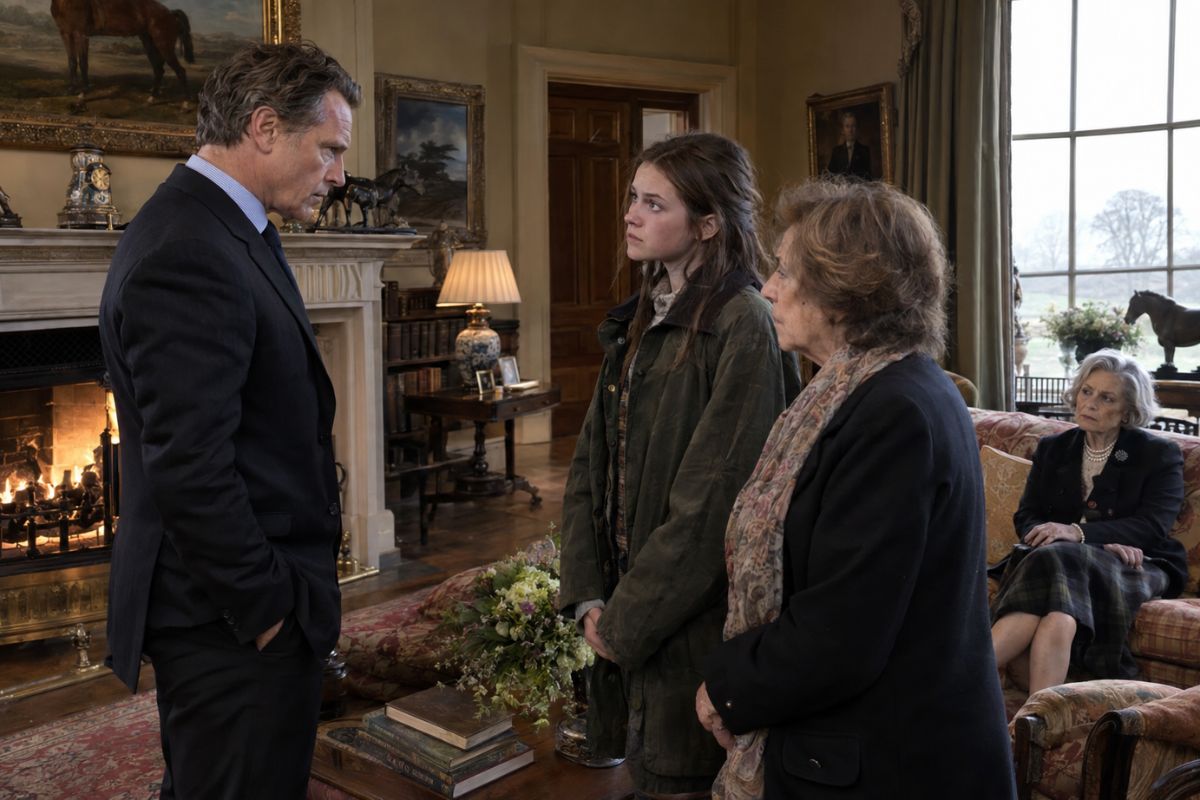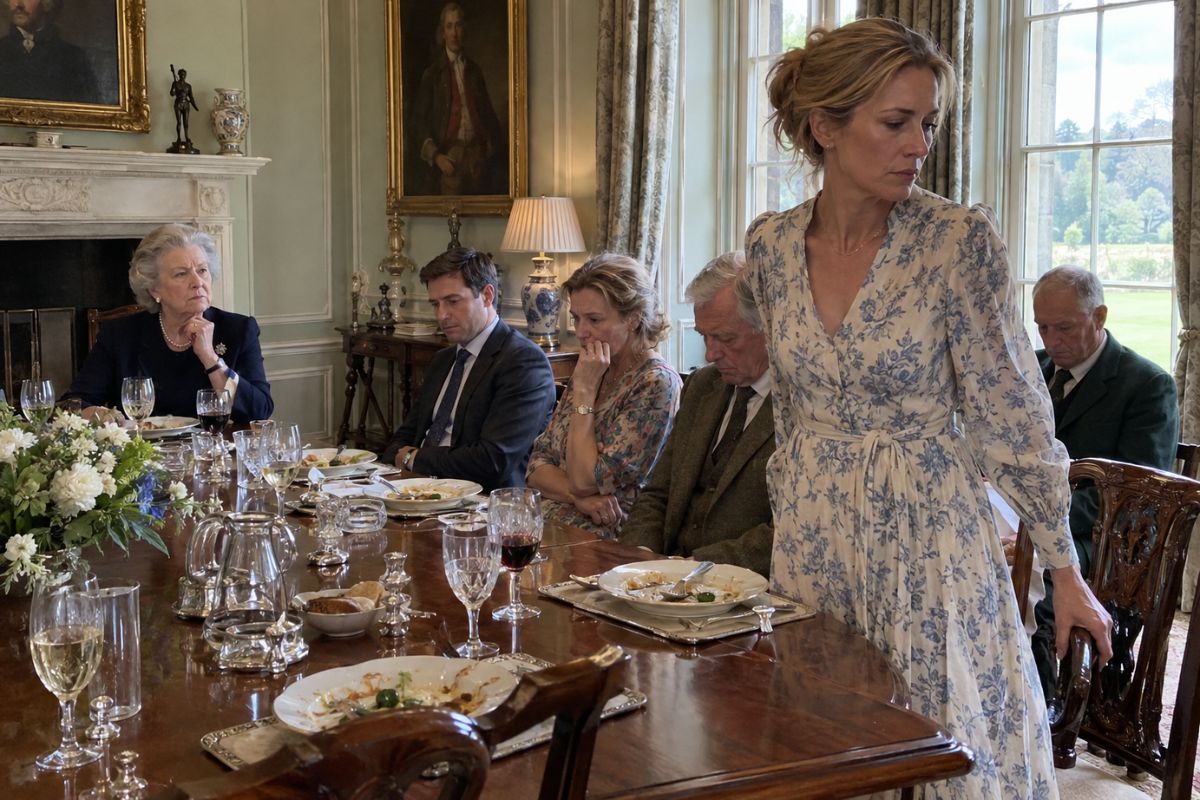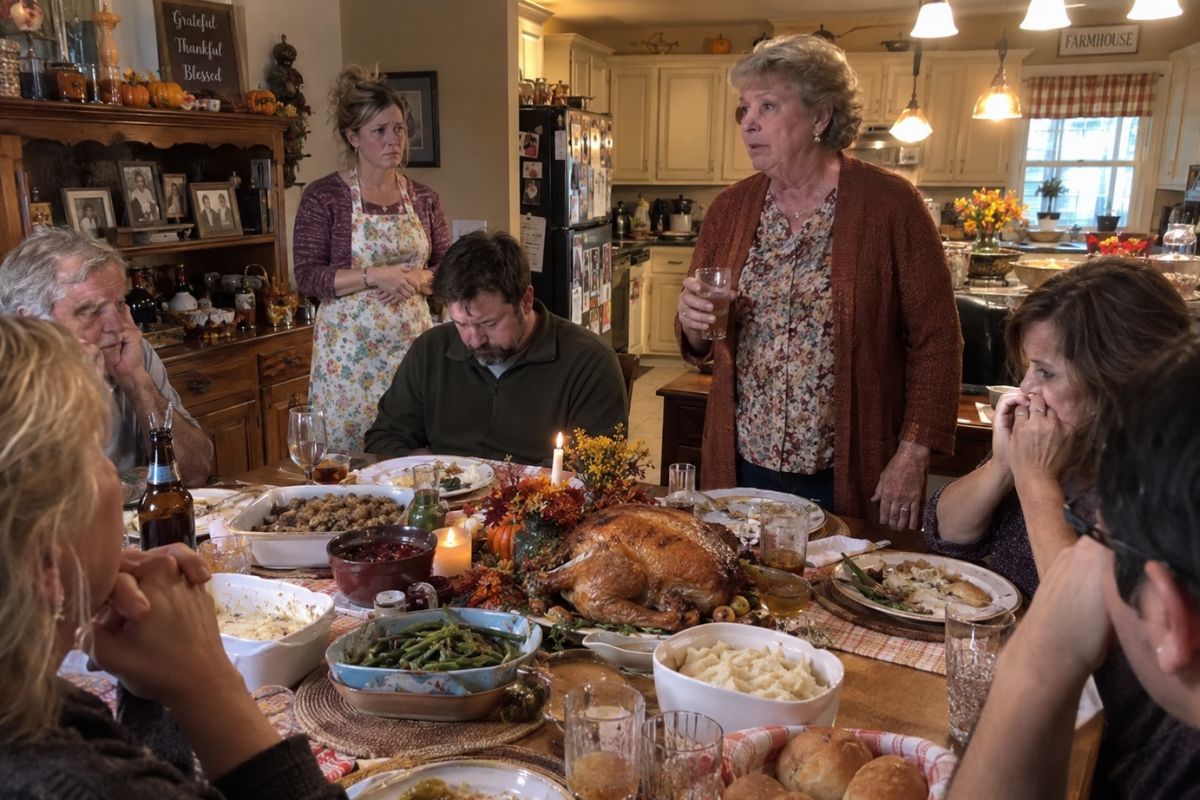
My Cousin Raised a Glass to Humiliate Me for Being a Single Mom at Her Engagement Dinner—Then Her Fiancé Walked Across the Room, Faced My Family, and Said the One Thing None of Them Could Laugh At
“I just hope I never end up like her.”
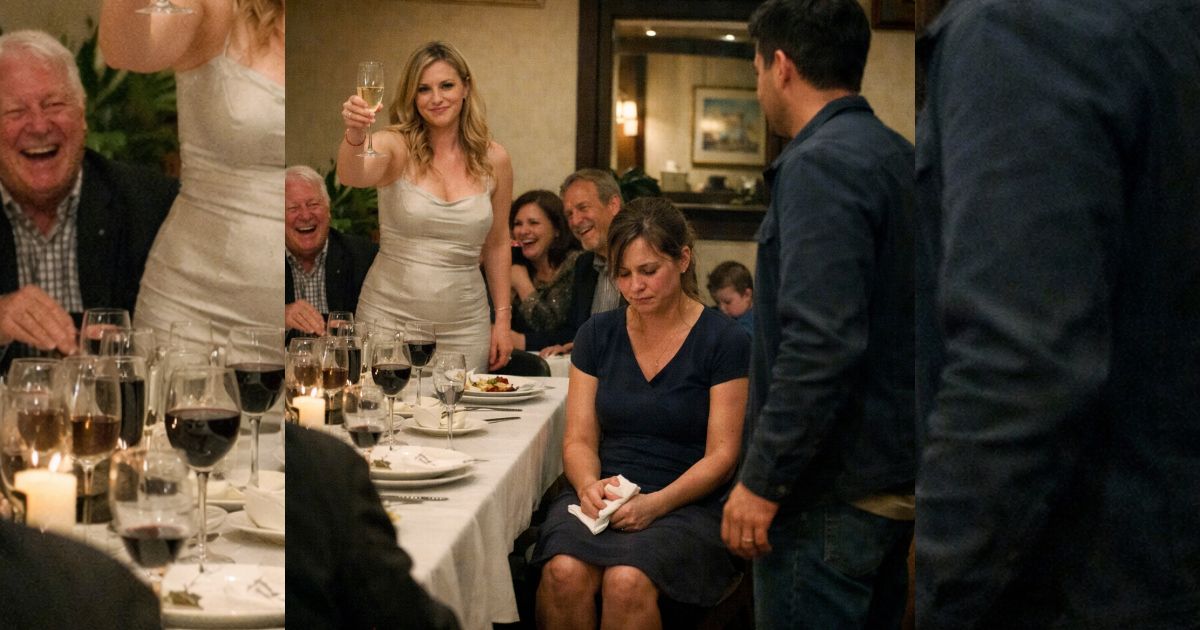
Tessa stood at the head of the table with a champagne flute in one hand and a smile sharp enough to cut paper.
She tilted her glass toward me without using my name.
“Single at thirty-two. One kid. Still trying to piece it all together.”
The room burst open.
Not polite laughter.
Not nervous little chuckles meant to smooth over a bad joke.
Real laughter. Loud laughter. Table-shaking laughter. The kind people give when they believe they are safe, when they are sure the person being mocked will sit there and take it.
My uncle Ray slapped the white tablecloth and laughed so hard he had to wipe his eyes.
“Well,” he said, “most men want a clean slate. That’s just the truth.”
My face went hot so fast it felt like someone had opened an oven door in front of me.
I kept my eyes on my plate.
A half-eaten piece of salmon.
A folded napkin under my hand.
The gold rim of a water glass I suddenly did not trust myself to lift.
Next to me, my mother let out a tiny laugh that she probably thought did not count.
It counted.
Every sound in that room counted.
Across the private dining room, my son Milo sat at the kids’ table with a paper place mat and a box of crayons, drawing a crooked rocket ship with orange flames.
He was close enough for me to see him.
Far enough, thank God, not to hear them.
Aunt Valerie leaned toward me, perfume and pity in one cloud.
“Oh, honey,” she whispered, “Tessa’s only teasing. You know how she gets when all eyes are on her.”
That was the problem.
I did know.
Tessa had always been at her meanest when people were watching.
I swallowed once, hard, and told myself the same thing I had been telling myself since I parked outside the restaurant.
One dinner.
One room.
One more night of smiling through it.
Then I would go home, wash my face, tuck Milo into bed, and put this family back where I kept them most days now.
At arm’s length.
Tessa kept going.
She laughed at her own joke first, because she loved to show people how to respond.
Then she leaned into Dylan and said something about how lucky she was to be marrying a man who appreciated stability.
Another wave of laughter.
A few people looked at me and then away so quickly it almost hurt more than if they had stared.
That was always how it worked in my family.
Nothing landed clean.
It came wrapped in a smile, floated in on a joke, disguised as concern, then left you standing there wondering if you were too sensitive.
I had spent years talking myself out of pain so they would not have to own it.
My fingers tightened around the napkin in my lap until it wrinkled into a hard little knot.
I was already half out of my chair in my mind.
I could see myself walking over to Milo, collecting his crayons, thanking no one, and leaving.
Then Dylan stood up.
He did not laugh.
He did not raise his voice.
He did not even speak right away.
He just pushed his chair back from the head table and walked the length of the room toward me.
The sound changed first.
Forks stopped.
Chairs stopped scraping.
Even the low music drifting in from the main dining room seemed to pull back.
Every face turned.
Tessa’s smile flickered.
Not fear at first.
Confusion.
Because in her world, people did not go off script.
Dylan stopped beside my chair.
Not behind me.
Not across from me.
Beside me.
Close enough that I could see the muscle moving in his jaw.
He looked down at me for one second, and there was no pity in his face.
Only steadiness.
Then he turned to the table.
“I think everybody here should know something,” he said.
The room went still in a way I had never heard before.
Not quiet.
Still.
The kind of silence that makes you aware of the air conditioner humming above you and the ice melting in a glass three seats away.
Tessa gave a short laugh, trying to pull the room back into her hands.
“Dylan,” she said lightly, “sit down. It was a joke.”
He never looked at her.
“No,” he said. “It wasn’t.”
A month earlier, when the invitation came, I knew I should have thrown it away.
It was thick cream cardstock with gold lettering and too much confidence.
Join us in celebrating the engagement of Tessa Rowan and Dylan Hart.
Saturday. Seven o’clock. Private room. River House Grill.
I stood in my kitchen staring at it while pasta water boiled over on the stove and a final notice from the electric company sat open under my elbow.
For a full minute, I just looked at Tessa’s name in that fancy looped font and thought, there it is.
Another event where I would be asked to show up cheerful, polished, forgiving, and small.
Another night where my job would be to make other people comfortable with the life they had already judged.
I tucked the invitation under a stack of unopened mail and told myself I was not going.
Then my mother called.
Not once.
Three times in one day.
On the third call, I finally answered with the phone balanced between my ear and shoulder while I packed Milo’s lunch for the next morning.
“It’s one evening, Sarah,” she said.
Her voice already had that worn-down sound it got whenever she wanted something from me and was hoping she would not have to ask directly.
“You’re family. People will talk if you don’t come.”
I almost laughed.
People talked if I came.
People talked if I stayed home.
People had been talking about me since the day I told them I was pregnant and not getting married.
“What exactly are they going to say?” I asked.
There was a pause.
Then, softly, “Please don’t make this harder than it needs to be.”
She did not have to finish the sentence.
I heard the rest of it anyway.
Don’t be difficult.
Don’t be touchy.
Don’t make your life the center of another room.
My mother had always had a gift for asking me to disappear and calling it maturity.
At first, after Milo was born, I thought she was just scared.
Later, I understood something harder.
Silence was the family language she trusted most.
I was thirty-two, raising a six-year-old in a two-bedroom apartment outside Columbus, working mornings at a dental office, doing freelance formatting and editing at night when Milo was asleep, and still somehow being treated like the reckless girl who had ruined her life in one bad year.
Never mind that I had not ruined it.
Never mind that I had built something honest out of almost nothing.
Never mind that my son was healthy, funny, kind, and the best decision I had ever made.
In my family, people loved a simple story.
And I was easier to understand as a cautionary tale than as a whole human being.
Tessa knew that.
She had known it for years.
When we were little, she was the pretty one people posed.
I was the useful one they sent to help clear plates.
At holidays, Tessa got told she lit up a room.
I got told I was such a good helper.
At sixteen, she got flowers before every school dance.
At sixteen, I got praise for being sensible.
There are compliments that build a child.
Then there are compliments that quietly teach her not to expect much.
By the time we were adults, Tessa had turned charm into a full-time skill.
She knew how to laugh just right.
How to touch someone’s arm when she wanted to seem warm.
How to ask a question that sounded interested but was really inventory.
Who had gained weight.
Who was struggling.
Who could be used as a little comparison ladder when she needed to feel taller.
Six months before the engagement dinner, she had done it at our cousin Leah’s baby shower.
I was standing near the punch bowl, trying to keep Milo from sticking extra strawberries in his pocket, when Tessa looked me up and down and said, loud enough for three women to hear, “Sarah is proof that diapers can become a lifestyle.”
Everybody laughed because it was pink frosting and tiny onesie decorations and nobody wanted to turn a baby shower into a confrontation.
So I smiled.
I always smiled first.
It kept other people from having to feel bad.
That night, after I tucked Milo into bed, I sat in the dark at my kitchen table and admitted something I had never said out loud before.
Every time I left my family, I felt smaller than when I arrived.
Still, the day before the engagement dinner, I pulled the invitation back out from under the bills.
I laid it flat on the table and stared until the letters blurred.
Then Milo wandered in wearing one sock, dragging his blanket.
“What’s that?” he asked.
“A dinner invitation.”
“Fancy?”
“Painfully.”
He climbed into the chair across from me, all elbows and sleepy eyes, and squinted at the envelope like he was inspecting treasure.
“Are we going?”
I should have said no.
Instead I heard my mother’s voice in my head and all the old training that came with it.
Keep the peace.
Be gracious.
Take the high road.
I told him yes.
He grinned.
“Then you should wear the silver heart necklace,” he said. “The one that looks like my little heart.”
That was the thing about children.
They handed you tenderness right when you were trying hardest to armor up.
The next afternoon, I pulled on the nicest dress I owned, a navy one from two years earlier that still fit if I did not breathe too deeply.
I borrowed heels from my neighbor Trina, who stood in my doorway with one hand on her hip and said, “You know you don’t owe anybody performance, right?”
“I know.”
“You going anyway?”
“Yes.”
She looked at me for a second, then nodded like she understood more than I had said.
“Then at least go in there remembering who you are before they tell you who you are.”
I laughed, but it stuck with me.
On the drive downtown, Milo kicked his sneakers lightly against the back of my seat and asked if fancy places always had cloth napkins.
“Usually.”
“Do they let kids have fries?”
“Probably not, but we’ll find out.”
“Do I have to call people ma’am and sir?”
“No. Just be polite and keep your hands to yourself.”
“Okay,” he said. “But if they have butter, I’m asking for extra.”
I smiled despite myself.
The city lights came up ahead.
The river.
The parking garages.
The polished restaurants with candles glowing behind big glass windows.
I parked around the block because valet was not in my budget and walked Milo in through the front doors, hand in hand.
The host checked our names and led us to a private room in back.
The first thing I noticed was the flowers.
Too many of them.
Tall arrangements in white and pale blush spilling out of gold vases like the room had been told to look expensive and was trying too hard.
The second thing I noticed was the volume.
Not the sound.
The energy.
That thick social brightness that always feels one inch away from cruelty.
Tessa floated across the room the second she saw me.
Her dress was cream silk, fitted and glossy.
Her smile was perfect from the front and dead from the eyes.
“Sarah,” she said, kissing the air near my cheek. “I’m so glad you made it.”
Her gaze dropped to Milo.
“And you brought your little date. Cute.”
“Milo wanted to come.”
“Of course he did.”
She said it sweetly, but there was something under it.
Something filed down and sharp.
Then she leaned closer and lowered her voice.
“You didn’t bring anyone else?”
“No.”
“Oh.”
Just that.
One little word that somehow managed to carry curiosity, judgment, and satisfaction all at once.
Before I could answer, she was already turning toward a couple by the bar.
Milo was directed to a children’s table near the wall with chicken tenders, fruit, and coloring pages.
I was seated near the far end of the long dining table between my mother and Aunt Valerie.
Not at the center.
Not near the front.
At the end, near the service door.
I noticed it right away.
At first I told myself it did not matter.
Then I noticed place cards.
Then the empty seat beside mine that had clearly never been intended for anyone important.
A little thing, maybe.
Except families like mine rarely hurt you in one large motion.
They did it in a hundred tiny placements.
My mother was already there, smoothing her napkin over and over.
She looked nice in a dark green dress and pearl earrings she only wore to weddings, funerals, and events where she wanted to appear as if nothing in her life had ever come untidy.
“You look nice,” she whispered when I sat down.
Nice.
That word again.
As if beauty would have been too much.
As if strength would have asked something of her.
“You too,” I said.
Aunt Valerie spent the first ten minutes showing me pictures of her miniature poodle in seasonal outfits.
Halloween pumpkin sweater.
Christmas bow tie.
Easter bunny ears.
It was the kind of conversation women have when they know a real one is waiting nearby and they do not want to touch it.
Across the room, Dylan stood near the bar with his younger brother.
He was taller than I remembered, broad-shouldered in a navy jacket, quiet in the way some men are quiet because they are listening and others are quiet because they are tired.
That night, he looked tired.
Every few minutes he checked his phone.
Not rudely.
Almost nervously.
Tessa worked the room like she was born to it.
Hand on this shoulder.
Laugh at that joke.
Tilt the ring toward the light.
Receive admiration like oxygen.
I watched her and had the strange thought that she did not seem happy.
She seemed busy being admired.
There is a difference.
Appetizers came.
Then salads.
Then the main course.
People talked over one another about school district rankings, kitchen renovations, spring break plans, promotions, someone’s daughter’s piano recital.
Safe subjects.
Upward subjects.
Subjects built for people who liked their lives to sound sorted.
I did my best.
I smiled when spoken to.
Answered questions.
Asked Milo from across the room if he was okay.
He held up a crayon-streaked hand and nodded with his mouth full of fries.
My mother leaned close once and said, “Just keep your head down tonight.”
I turned to look at her.
“Why would I need to do that?”
She pretended not to hear me and reached for her wine.
That was my answer.
The first time Dylan and I had ever really spoken was two years earlier.
Not at a family event.
Not over anything dramatic.
At a coffee shop near the old library downtown.
He had texted me after getting my number from my cousin Marcus.
I almost did not go because I thought it would be awkward.
Tessa and Dylan had only been dating a few months then, and he was still more rumor than person.
I knew he had worked in software.
I knew he had recently lost a job.
I knew Tessa liked telling that part like it was a charming hardship in their love story.
“He’s between things right now,” she had said once, with the kind of smile women use when they want credit for standing beside someone who is struggling, but only if the struggle remains aesthetically pleasing.
When I got to the coffee shop, Dylan was sitting by the window with a notebook open and a cup gone cold.
He looked embarrassed just to be there.
“Thanks for meeting me,” he said. “I heard you do resume work on the side.”
“I do.”
“I know this is random.”
“It’s fine.”
He slid a printed resume across the table.
One page.
Good experience.
No life in it.
No shape.
No story.
I asked him what kind of jobs he was applying for.
He answered in short sentences at first.
Then longer ones.
By the end of the hour, I knew more than I expected.
He had been laid off during a company restructuring.
He had spent months pretending he was okay because everyone around him kept talking like the right attitude could solve panic.
He had started drinking more than usual.
Not dangerous.
Not dramatic.
Just enough to numb the shame.
He had stopped returning calls.
Stopped answering texts.
Stopped believing he looked like a man worth hiring.
I remember looking at him across that table and thinking, Oh.
Not broken.
Just embarrassed.
That is a different kind of pain.
I told him the truth.
“You don’t need a better personality,” I said. “You need a clearer story.”
He laughed for the first time.
Then I took out a pen and started marking up the page.
We met twice more after that.
Once to rebuild the resume.
Once to practice interviews.
I sent him links.
Connected him with a woman I knew from contract work whose brother managed hiring at a logistics firm.
When his sister needed somebody to watch her little girl during one of his interviews, I said yes and picked up both kids after school and fed them grilled cheese in my kitchen while I answered emails from my second job.
I did not do any of it because I was special.
I did it because I know what it feels like when a person is drowning quietly and everyone around them is more interested in judging the shape of the water than helping them out of it.
At the time, I never once thought of it as something that would matter later.
Certainly not in a room like this.
Certainly not now.
Dessert plates had just been set down when Tessa stood.
She tapped her fork gently against her glass and waited for the room to settle.
She loved that moment.
The little hush before an audience turns fully toward her.
Her shoulders went back.
Her smile spread.
“Thank you all so much for being here,” she said. “I feel incredibly blessed tonight.”
There were murmurs of approval.
A few raised glasses.
She talked about love.
Family.
Finding your person.
How she had known Dylan was the one because he was patient enough to survive wedding planning.
More laughter.
Then she put one hand dramatically over her heart and said, “I just hope our marriage lasts.”
A fresh wave of light laughter.
She tilted her head.
“I’d hate to end up like some people.”
That was when her eyes shifted toward me.
Not all the way.
Just enough.
The room followed her gaze before most of them even realized they were doing it.
The smile never left her mouth.
“I mean,” she said, “single in your thirties with a child and still acting like life turned out exactly the way you planned.”
That line got them.
The room cracked open with it.
One person snorted.
Someone at the far end leaned onto the table laughing.
Uncle Ray slapped the linen.
“That’s what happens,” he said. “Men want peace. They don’t want baggage and complications.”
Even now, remembering it, what hits me hardest is not the words.
It is how easy everybody found them.
How fast.
How happy.
Cruelty lands differently when people have rehearsed it in their hearts long before they say it aloud.
I looked at my mother.
She smiled weakly and reached for her wine.
Not to agree, maybe.
But not to stop it either.
And silence in moments like that is just agreement wearing softer clothes.
I could feel every old humiliation rise at once.
Every holiday.
Every side comment.
Every question about whether Milo’s father was “in the picture.”
Every warning that a woman should think harder before making life complicated.
I had spent years carrying other people’s disappointment like it was proof I had done something wrong.
In that chair, under those lights, I realized I was tired.
Not hurt.
Not embarrassed.
Tired.
Tired of being translated into a lesson.
Tired of smiling through contempt.
Tired of making myself easy to laugh at so no one would have to feel ashamed of laughing.
Tessa kept talking.
Some joke about marriage.
Something about training Dylan to fold towels “the adult way.”
I barely heard it.
The blood in my ears was too loud.
I thought about Milo’s silver heart necklace warm against my collarbone.
I thought about the stack of bills on my table.
I thought about the lunches packed before dawn and the freelance work done after midnight and the way my son still ran into my arms every evening like I was the safest place in the world.
What, exactly, had they built that gave them the right to look down on that?
Then Dylan stood.
The silence that followed his words stretched so long it began to feel alive.
Tessa recovered first.
She gave a quick little laugh and lifted her glass again.
“Babe,” she said, “it was just a joke.”
He faced the table.
“That wasn’t a joke. That was humiliation.”
His voice was calm.
Almost too calm.
Which made every word land harder.
He looked at Tessa then, really looked at her.
“You don’t get to call something harmless after you’ve already made someone the target.”
Tessa’s face changed.
Not a lot.
Just enough.
Her smile held, but now it looked expensive.
Held together.
“You’re making this weird,” she said.
“No,” he said. “I’m making it honest.”
Nobody moved.
I could feel the room waiting to see which version of reality it was allowed to believe.
The shiny one.
Or the true one.
Dylan glanced at me once, then back to the table.
“Most of you don’t know this,” he said, “because Sarah never tells stories that make herself look good. But two years ago, when I lost my job and stopped acting like myself, she was one of the only people who treated me like a person and not a problem.”
Tessa stared at him.
Uncle Ray shifted in his chair.
My mother looked down so hard at her lap I thought she might disappear into it.
Dylan kept going.
“She helped me rewrite my resume. She sent me leads. She practiced interviews with me. She watched my niece one afternoon so I could make an appointment I was too embarrassed to tell anyone about. She checked in on me when most people around me were giving me advice instead of actual help.”
A tiny sound escaped Aunt Valerie.
Not quite a gasp.
More like recognition.
Dylan’s voice stayed level.
“You all sit here acting like her life is a warning label. Like she is what people should avoid becoming. But if half the people at this table had her work ethic, her patience, or her heart, maybe this family would know the difference between kindness and performance.”
Nobody laughed at that.
Tessa set her glass down too hard.
“Are you serious right now?”
“Yes.”
“This is my engagement dinner.”
“And you used it to insult someone who did nothing to you.”
“She’s not innocent,” Tessa said.
I almost laughed at the childishness of it.
Not because it was funny.
Because it was so painfully familiar.
When people like Tessa get called out, they reach for something vague.
She’s difficult.
She thinks she’s better.
She knows what she did.
No specifics.
Just haze.
Dylan did not let her hide in it.
“What did she do?” he asked.
Tessa blinked.
“What?”
“What did she do tonight?”
“That’s not the point.”
“No,” he said. “It is the point.”
He turned slowly, looking down the length of the table.
“I’d actually like to know. What did Sarah do tonight besides show up, sit where she was placed, be polite, and absorb a room full of people laughing at her life?”
The words hit like little bells in my chest.
Sit where she was placed.
It was such a small phrase.
And somehow it told the truth more clearly than anything else.
Aunt Valerie looked toward the place cards.
Then toward me.
Then down.
Dylan followed that glance.
His jaw tightened.
“I was wondering whether to say this here,” he said. “But maybe public cruelty deserves public honesty.”
Tessa’s face went white.
Not with shame.
With warning.
“Dylan.”
“No.”
He reached into the inside pocket of his jacket and pulled out a folded sheet of paper.
Not dramatically.
Almost sadly.
“I saw the seating chart this afternoon when the event coordinator emailed the final layout. Tessa had notes on it. So did Uncle Ray.”
I heard my own heartbeat.
Nobody moved.
Dylan unfolded the paper.
“You put Sarah at the far end of the table with the note, quote, ‘keep the mood polished and keep her out of the main photos.’”
The room did not gasp.
It sagged.
That is the only word for it.
Like the whole polished structure in there had just lost one of its beams.
Tessa looked from Dylan to the table and back again.
“That was not what I meant.”
He looked at Uncle Ray.
“You added, ‘Seat the kid nearby so she can stay busy.’”
My stomach dropped, not because I was shocked, but because seeing your humiliation in writing hits different.
A spoken insult can float.
A written one has intention.
My mother’s hand flew to her mouth.
Aunt Valerie stared openly now.
Uncle Ray gave a dismissive snort.
“Oh, for heaven’s sake. It was logistics.”
Dylan turned toward him fully.
“No. Logistics is where the desserts go. That was character.”
I wanted to vanish and stand taller at the same time.
That was the strange thing about truth.
It can expose you and free you in the exact same breath.
Tessa laughed once, brittle and thin.
“You are blowing this completely out of proportion.”
He held her gaze.
“Am I?”
She folded her arms.
“You know what, fine. Sarah always makes everything awkward. She comes in with that look like everybody owes her admiration because she had a hard time. I am tired of being judged by the one person in this family who thinks struggle makes her morally superior.”
I finally found my voice.
Low.
Steady.
“I have never once asked you to admire me.”
Every head turned.
I stood slowly, smoothing the front of my dress with hands that were suddenly calm.
“But you have spent years asking me to apologize for surviving in a way that doesn’t match your version of respectable.”
Tessa scoffed.
“Oh, please.”
“No,” I said. “Not this time.”
I looked around the table.
At my mother.
At Aunt Valerie.
At Uncle Ray.
At the cousins who had gone quiet.
“At some point,” I said, “you have to stop pretending these things are jokes. Jokes are funny for everyone in the room. This is just the family choosing the same target over and over because it keeps you from looking at yourselves.”
Nobody interrupted.
That had never happened before.
Usually I was cut off, softened, corrected.
Maybe the paper on the table changed something.
Maybe Dylan standing there changed something.
Maybe I had finally said it in a voice that made interruption look cheap.
Tessa’s eyes flashed.
“So now I’m the villain because I don’t romanticize bad choices?”
There it was.
The line beneath every line.
The story they had always preferred.
That my life had happened because I was careless.
That hardship was proof of failure.
That if I had just been smarter, prettier, softer, more chosen, none of this would have happened.
I looked at her and felt something surprising.
Not hatred.
Not even anger.
Recognition.
Tessa needed me beneath her.
Without that, she had to meet herself.
“My son is not a bad choice,” I said.
The room went even quieter.
“And the life I built to raise him isn’t a punchline.”
Dylan nodded once.
Then he took a breath that sounded like a decision arriving.
“I can’t do this,” he said.
At first no one understood what he meant.
Tessa frowned.
“What are you talking about?”
He set the folded seating chart on the table between the wine glasses and the candles.
“I can’t marry into this. I can’t marry someone who needs another woman diminished to feel elevated. And I can’t sit at a table like this for the rest of my life pretending I didn’t hear what I heard tonight.”
The words landed one by one.
Not loud.
Final.
Tessa stared at him like she had misheard.
“Are you ending our engagement? Here?”
His face did not change.
“I’m ending something that should never have gotten this far.”
My aunt actually whispered, “Oh my goodness,” under her breath.
Uncle Ray shoved his chair back.
“Now hold on.”
Dylan turned toward him.
“No. I’ve done enough holding on.”
He reached into his pocket again, pulled out the ring box, and set it down beside the folded paper.
No drama.
No flourish.
Just the quiet movement of a man putting down something he no longer trusted himself to carry.
Tessa’s mouth opened.
Closed.
Opened again.
“You are humiliating me.”
He looked at her for a long second, and when he spoke, his voice had lost all warmth.
“No. I’m refusing to join you.”
I think that was the moment the room truly changed.
Not when he defended me.
Not when he read the note.
When he named the thing underneath it all.
Because families like mine could survive a little tension.
They could survive a little shame.
What they could not survive well was a clean sentence.
A sentence so true it left nowhere to hide.
Milo looked up from the kids’ table then, sensing the shift.
I smiled at him quickly.
A real smile, somehow.
He smiled back and held up his rocket drawing.
Orange flames.
Blue body.
A sun with uneven rays.
I thought, That is my life.
Messy.
Bright.
Mine.
I reached for my purse.
“I think we’re going home,” I said.
No one told me to stay.
No one asked me to calm down.
No one rushed in with soothing language.
They were all too busy staring at the wreckage of their own arrangement.
I crossed the room to Milo and crouched beside him.
“You ready, baby?”
“Already?”
“Yep.”
“Did I do something wrong?”
The question hit me straight in the heart.
“No,” I said at once. “Not one thing. We’re just heading home.”
He nodded, accepted that completely, and started gathering crayons with the seriousness of a child performing an important task.
When he handed me the rocket drawing, I folded it carefully and slipped it into my purse like it was the most valuable thing in that room.
As we turned toward the door, I glanced back.
My mother was staring at the ring box.
Aunt Valerie was holding her napkin in both hands like she did not know what they were for anymore.
Uncle Ray looked furious in the way men do when the room stops orbiting them.
Tessa had not moved.
Her face was stiff and pale.
Dylan stood near my chair, one hand braced lightly against the table, not looking triumphant.
Just done.
He met my eyes once.
Gave the smallest nod.
Not an invitation.
Not a flirtation.
Just acknowledgement.
You were not wrong.
You were not imagining it.
You were seen.
I nodded back.
Then Milo slipped his hand into mine and we left.
The night outside felt cleaner than the room we had just exited.
The air by the river had a cool bite to it.
Cars moved past in a hush of headlights and reflections.
Milo skipped two steps ahead, then came back and pressed against my side as we walked to the garage.
“Mom?”
“Yeah?”
“Why did everybody get so quiet?”
I thought for a second.
How do you explain a family’s ugliness to a six-year-old without handing him any of it?
“Because somebody finally told the truth,” I said.
He considered that.
Then nodded as if it made perfect sense.
Children understand more than adults think.
They just do not always need the whole vocabulary.
On the drive home, he talked about rockets.
About whether astronauts get scared.
About how maybe the moon feels lonely from far away but nice up close.
I listened and answered when I could.
Every now and then I glanced at him in the rearview mirror and felt that deep, tired gratitude only parents know.
The kind that comes mixed with fear and awe and a hundred small sacrifices nobody applauds.
I had spent so many years defending my life that I had almost forgotten I was also allowed to love it.
By the time we got home, Milo was half asleep.
I carried him from the car even though he was getting too big for that.
His cheek fell warm against my shoulder.
At the apartment, I changed him into pajamas without waking him fully and tucked him into bed with his blanket bunched under his chin.
He blinked up at me.
“I love you, Mom.”
“I love you too.”
He was asleep before I reached the doorway.
I went back to the living room, kicked off the borrowed heels, and sat on the couch in my navy dress with my purse beside me and the room finally, blessedly, quiet.
Then my phone buzzed.
One message.
From my mother.
I’m sorry.
Just that.
No explanation.
No defense.
No “but.”
I stared at the words for a long time.
If you had asked me that morning what I wanted most from my mother, I would have said protection.
Years ago, I would have said approval.
But sitting there in the dark, makeup half worn off, feet aching, chest still humming from everything that had happened, I realized I did not want either of those things anymore.
What I wanted was truth.
And that text, small as it was, came closer than anything she had given me in years.
I did not answer right away.
The next morning my phone started buzzing before seven.
First Aunt Valerie.
Then my cousin Marcus.
Then my mother again.
Then two cousins I had not heard from since Christmas.
I let them all ring while I packed Milo’s lunch and signed a permission slip for school.
He wanted dinosaur-shaped crackers.
I only had the plain kind.
He accepted that with the weary dignity of a man much older than six.
When he finally climbed out of the car at school and turned back to wave, I sat in the parking lot and checked my phone.
Twenty-three missed calls.
Eleven texts.
One email.
The email was from Dylan.
Not just to me.
To the whole family.
The subject line read: Last Night.
It was short.
Clear.
No performance.
He thanked everyone who had welcomed him over the past year.
He said he would not be moving forward with the wedding.
He said the conversation at dinner had confirmed concerns he had been trying too long to explain away.
Then came the line that made me sit back in the driver’s seat and close my eyes.
I will not build a life inside a family culture that confuses humiliation with humor and silence with character.
There were no insults in the email.
No scorched-earth details.
Just one attachment.
A PDF labeled Dinner Notes.
I opened it.
The first page was the seating chart.
There I was at the far end.
Near the service door.
Milo at the children’s table with a note about keeping him “happy and occupied.”
Beside my own place card note was the sentence Dylan had read aloud.
Keep her out of the main photos.
The second page was worse.
A thread of planning notes from a shared vendor document.
Tessa reminding someone that she wanted “good energy only” at the head table.
Uncle Ray writing, Let’s not make the night about Sarah’s choices.
And then, lower down, my mother.
A single line.
Just please don’t let there be any awkwardness with her.
I stared at that sentence so long the letters blurred.
Not because it was the cruelest thing there.
Because it was exactly her.
Soft language doing hard work.
I shut my eyes.
For one second, shame tried to rise again.
That old instinct.
To protect her.
To excuse her.
To say she did not mean it the way it sounded.
Then another thought came, cleaner.
It sounded exactly the way it sounded.
A text from Aunt Valerie came through while I was still sitting there.
I cannot believe this. I knew Tessa could be catty, but I did not know it was planned.
Planned.
That was the word that changed the shape of the thing.
Cruelty after a few drinks is one story.
Cruelty arranged before the candles were lit is another.
My mother called again.
This time I answered.
For a second neither of us spoke.
Then she said, “Can I come by after work?”
I looked out across the school parking lot, where minivans were pulling away and a crossing guard was laughing with a teacher.
“Why?”
“Because I need to talk to you in person.”
I let silence sit there.
She had earned it.
“Okay,” I said at last. “After six.”
She came at six-thirty carrying a paper grocery bag and looking ten years older than she had the night before.
No pearls.
No careful makeup.
Just jeans, a cardigan, and the face of a woman who had finally run out of distance.
Milo was in his room building a fort out of couch cushions and clip-on blankets.
I had intentionally started that project before she arrived.
He deserved a good evening.
I deserved a conversation without small ears between us.
My mother set the grocery bag on the counter.
Inside was soup, bread, strawberries, and one of those little grocery store bouquets wrapped in clear plastic.
The flowers almost made me laugh.
A peace offering from the land of women who do not know how to say what they mean without carrying produce.
“You didn’t have to bring anything,” I said.
“I know.”
I waited.
She looked around my kitchen the way she always did, taking in the magnet alphabet on the fridge, the stack of school forms, the clean dishes drying on a towel, the freelance papers spread at one end of the table.
For years I had mistaken that look for judgment.
That night it looked more like reckoning.
“I was wrong,” she said.
The words came out rough.
Unused.
“I should have stopped it.”
“Yes,” I said.
She flinched just slightly.
Not because I was cruel.
Because agreement can hurt when you have lived on excuses.
She pulled out a chair and sat.
I stayed standing.
Some part of me was not ready to make this comfortable.
“I read the document,” she said. “The attachment.”
“So did I.”
“I didn’t know Tessa planned it like that.”
I folded my arms.
“But you knew enough to ask them not to let there be awkwardness with me.”
Her eyes filled.
“I know.”
I waited again.
This time she kept going.
“I have spent years telling myself that if I could keep things smooth, people would be kinder. That if nobody got too emotional, too honest, too direct, maybe we could all stay a family.”
I said nothing.
“Sarah,” she whispered, “I was wrong.”
The kitchen felt very small then.
The refrigerator hummed.
A cartoon played faintly in Milo’s room.
Outside, somebody started a car and then drove off.
My mother took a long breath and opened her purse.
From it she pulled a worn manila envelope.
The edges were soft with age.
She placed it on the table between us.
“There’s something I should have told you years ago.”
My chest tightened.
I hated the sentence before she even finished it.
Inside the envelope were copies of old documents.
Money order stubs.
A lease.
A handwritten grocery list.
And one letter folded into thirds.
The letter was from my grandmother to my mother, dated thirty-three years earlier.
My hands shook a little as I opened it.
Elaine, it said in my grandmother’s careful slanted handwriting, you do not have to let them shame you into gratitude. Raising a child while a man figures himself out is not failure. It is labor. It is courage. Do not let this family turn your silence into proof they were right.
I looked up.
My mother stared at the table.
“When your father left for that first year,” she said quietly, “he told everyone it was for work. It wasn’t. He panicked. We were behind on rent. I was pregnant. He disappeared to stay with a friend in Kentucky and sent money when he felt guilty enough to remember. I was alone for nearly eleven months.”
I sat very still.
All my life, the story had been that my parents had always been solid.
Modest, yes.
Young, yes.
But stable.
The kind of marriage people pointed to when they wanted to talk about commitment.
My mother laughed once, bitterly.
“Your uncle Ray said I should be careful not to make him feel trapped. Your aunt told me men come back faster when you act grateful. My own mother was the only person who told me I wasn’t the embarrassing part.”
I looked back down at the letter.
The words blurred.
“You never told me.”
“I know.”
“Why?”
Her eyes met mine then, red-rimmed and direct.
“Because he did come back. Because everybody agreed to pretend the leaving part didn’t happen. Because the family likes neat stories, and I was too relieved to refuse one. And then when you got pregnant and they started in on you, I…” She pressed her lips together. “I slipped into the same fear. I thought if I could keep you quiet, maybe they would spare you the worst of it.”
I let that sit.
It explained something.
It did not erase it.
She seemed to know the difference.
“I didn’t protect you,” she said. “I trained you to endure.”
The truth of it was so exact I had to grip the back of the chair.
For years I had thought my mother’s silence came from weakness.
Maybe part of it did.
But deeper than that, it came from terror repackaged as wisdom.
She had mistaken shrinking for survival.
Then she taught it to me like love.
I sat down slowly.
For the first time since she arrived, we were eye level.
“I needed you,” I said.
“I know.”
“I needed you to say one sentence. Just one. ‘Don’t speak to my daughter that way.’ That’s all.”
Tears ran down her face.
“I know.”
There are apologies that ask to be forgiven right away.
Hers did not.
Hers just sat there, uncovered and shaking.
It was the first honest thing between us in a very long time.
I looked at the old letter again.
My grandmother had been gone five years.
I suddenly missed her with an ache so sharp it felt current.
She had been the only one in the family who looked at Milo and saw joy before consequence.
The only one who ever told me, “You are building a life, honey. Let people with easier stories call it something else.”
I slid the letter back into the envelope.
“I’m not doing this anymore,” I said.
My mother nodded quickly.
“I know.”
“I’m not coming to events where I’m expected to be quiet about disrespect.”
Another nod.
“I’m not pretending comments are jokes.”
“Yes.”
“And I’m not teaching Milo that family gets a special pass to be cruel.”
At that, she covered her mouth and cried harder.
Not loudly.
Just deeply.
The kind of crying that comes when a sentence names the very thing you are most afraid you have done.
I softened, but only a little.
Boundaries are not anger.
Sometimes they are just grief with a backbone.
“I want you in our lives,” I said. “But not like before.”
She lowered her hand.
“What does that mean?”
“It means if you want a relationship with me, it has to be honest. And it has to be protective, not just pleasant.”
She nodded.
“I can do that.”
“You haven’t yet.”
Another flinch.
“I know. But I want to try.”
From the living room came the crash of couch cushions and Milo’s delighted voice yelling, “Fort emergency!”
My mother laughed through tears.
That sound, more than anything, made the room feel human again.
I got up and warmed the soup.
She sliced the bread.
We moved around my little kitchen carefully, like strangers learning the same room after a storm.
She stayed for forty minutes.
Long enough to help Milo tape paper stars to the inside of his blanket fort.
Long enough for him to show her the rocket drawing from the night before.
“Grandma,” he said proudly, “this is the ship me and Mom are gonna take if the moon ever needs help.”
She looked at the picture, then at me.
Something in her face changed.
Maybe she finally saw what I had been trying to tell everyone for years.
I was not barely getting by.
I was raising wonder.
After she left, I sat at the table with the manila envelope beside me and did not cry.
I thought I would.
Instead I felt strangely clear.
Like the floor under my life had been cleaned of somebody else’s furniture.
Two days later, Tessa texted.
I knew it was her before I opened it because only Tessa could make a phone buzz feel accusatory.
I hope you’re happy, it said. He embarrassed me in front of everyone and then sent that email like some kind of saint. You always have to be the tragic center of attention.
I read it twice.
Then once more, just to make sure it was as hollow as it sounded.
There was no apology in it.
Not even a fake one.
Just blame wearing mascara.
I typed three different responses.
Deleted all of them.
In the end I sent one line.
I was never the one putting on a show.
Then I blocked her.
Not dramatically.
Not with trembling hands.
Just with the same feeling you get when you finally throw away a shirt that has scratched your skin every time you wear it.
The family fallout rolled on for a week.
Aunt Valerie called twice to say she had always thought Tessa could be “a touch much,” which was her way of dressing up years of cruelty in a cardigan.
Marcus texted to say Dylan had moved out the morning after the dinner.
Uncle Ray sent a message to the family group chat calling the whole thing “an unfortunate misunderstanding.”
No one really answered him.
For the first time maybe ever, his version of events did not become the official one by default.
My mother came by again that Sunday with cinnamon rolls and no agenda.
She helped Milo color a cardboard solar system.
When he ran to the bathroom, she looked at me and said, “I told your uncle if he ever speaks about you like that again in front of me, I’ll leave.”
I searched her face for the old softness that meant she was going to back down later.
It was not there.
“He said I was overreacting,” she added.
“Of course he did.”
“I told him maybe underreacting is what got us here.”
I stared at her.
Then, despite myself, I smiled.
It was small.
Careful.
But it was real.
She noticed.
So did I.
A week after the dinner, Dylan emailed me privately.
The subject line simply said: Thank You.
I almost did not open it.
Not because I was afraid of what was inside.
Because I did not want anybody, even a decent man, turning that night into a story where I needed to be saved.
But when I opened it, his message was exactly what I needed it to be.
No romance.
No heavy sentiment.
Just honesty.
He said he was sorry for how long he had been slow to recognize what was right in front of him.
He said the document had rattled him before the dinner, but hearing the room laugh had made something click into place.
He thanked me for helping him two years earlier.
He said my steadiness at a low point in his life had shown him what integrity looked like in everyday clothes.
Then he wrote one line I saved in a folder I still keep.
You did not need defending because you were weak. You deserved truth because you were right.
I read that sentence three times.
Then I closed the laptop and went into Milo’s room, where he was making a city out of blocks and old cereal boxes.
“Mom,” he said, not looking up, “can astronauts have kids?”
“I’m pretty sure they can.”
“Good. Because if I go to the moon one day, I want you to visit.”
I sat on the floor beside his cardboard tower.
“Deal.”
He handed me a block.
I added it to the wall.
The thing about healing is that it rarely looks cinematic from the inside.
It looks like ordinary afternoons.
Soup on the stove.
Laundry in two baskets because you forgot to switch it over.
A blocked number.
A boundary held.
A mother learning to speak without smoothing.
A child laughing in the next room while you realize you are not bracing for the next family event because you no longer plan to attend one that costs you yourself.
A month later, there was a cousin’s graduation cookout.
My mother called to ask if I was going.
The old me would have heard the question as pressure.
The new one heard it as an actual question.
“No,” I said. “Milo has soccer.”
There was a pause.
Then she said, “Okay. Want me to come watch his game instead?”
I sat very still with the phone in my hand.
“Yes,” I said.
She came.
She brought orange slices and folding chairs.
She clapped too hard when Milo kicked the ball in the wrong direction and still somehow looked proud.
When another grandmother on the sidelines asked if he was her grandson, my mother said, “He is. And his mother is the strongest person I know.”
I turned to look at her.
She did not say it for me to hear.
She said it because it was true and another adult had asked a simple question and this time she chose the full answer.
That mattered.
It mattered more than the text.
More than the flowers.
More than the soup.
Repairs are made of repeated things.
Not speeches.
The story of that dinner got around, of course.
Families are gossip engines with casserole dishes.
Some people said Dylan overreacted.
Some said Tessa had shown her true colors.
Some said it was a shame such a beautiful event got ruined.
That word again.
Ruined.
As if the real tragedy was that the linen and candles did not survive the truth.
The older I get, the more suspicious I am of any system that values smoothness over honesty.
What exactly are we preserving when we ask the harmed person to stay gracious so the cruel person can remain comfortable?
I used to think dignity meant enduring quietly.
Now I think dignity is much simpler.
It is telling the truth without dressing it up for people who already benefited from your silence.
A few months after the dinner, I found the silver heart necklace in the bathroom drawer while looking for a missing earring.
I held it in my palm and thought about the way Milo had chosen it.
The way I had worn it into that room like a private prayer.
The way it had rested against my skin while everybody laughed.
Then while Dylan spoke.
Then while I walked out.
I put it on.
Not because it had become symbolic.
Because it had always been.
The heart of my life was never sitting at that table.
It was waiting for me across the room with crayon on his fingers.
For a long time, I thought what happened at that dinner changed me because a man stood up and said the right thing.
That is not quite true.
What changed me was hearing the truth out loud and realizing I did not have to beg anyone to say it ever again.
Dylan did something brave.
I will always be grateful for that.
But the deeper change was mine.
I stopped mistaking endurance for love.
I stopped confusing family access with family loyalty.
I stopped translating insults into misunderstandings just because the people delivering them shared my last name.
And maybe most importantly, I stopped telling myself I should be grateful to sit in rooms where my humanity was negotiable.
Tessa and I have not spoken since.
I hear things here and there.
She moved to Charlotte for a job.
She tells the story differently, depending on the audience.
In one version, Dylan was unstable.
In another, I manipulated him.
In another, it was all stress and miscommunication.
I no longer care which version she is performing.
People like Tessa do not lose sleep because the truth exists.
They lose sleep because it exists without their control.
As for Uncle Ray, he still says blunt things and mistakes them for wisdom.
That probably will not change.
But now when he starts in, my mother leaves the room.
Sometimes Aunt Valerie does too.
Maybe that sounds small.
It is not.
Culture in families shifts one refusal at a time.
This winter, Milo came home from school with a worksheet titled My Family Hero.
He sat at the table chewing the end of his pencil and asked if heroes had to wear capes.
“Nope.”
“Do they have to go to space?”
“Also no.”
He thought about that.
Then he wrote with his tongue peeking out in concentration.
When he was done, he slid the paper over to me.
My hero is my mom because she works a lot and still makes fun pancakes and she tells the truth even when it’s hard.
I read it twice.
Then once more.
Not because I did not understand it.
Because sometimes being seen clearly by your child heals parts of you adults kept misnaming for years.
That paper is on my refrigerator now, held up by a magnet shaped like a little red truck.
Every time I look at it, I think about that engagement dinner.
About the laughter.
About the folded sheet of paper.
About my mother’s old envelope and my grandmother’s letter.
About the moment I realized that what my family called embarrassment was often just a woman refusing to disappear on command.
If you had looked at me that night in the restaurant, you might have thought the important thing was the public defense.
The speech.
The broken engagement.
The drama people love to retell.
But that is not the part that stayed with me.
The part that stayed was much quieter.
It was the walk to the parking garage with Milo’s hand in mine.
It was the air hitting my face after hours of trying not to react.
It was the feeling of my shoulders dropping as if my body had finally gotten word that the performance was over.
It was understanding, maybe for the first time, that I was allowed to leave any room that required my humiliation to keep itself entertained.
There are women everywhere living smaller than they need to.
Women who have become so fluent in swallowing hurt that they call it maturity.
Women who mistake being tolerated for being loved.
Women who think if they can just stay kind enough, useful enough, quiet enough, someone will finally stop punishing them for the life they had to build with the tools they actually had.
I know those women because I was one.
Maybe part of me always will be.
But not the part that leads.
Not anymore.
Now, when I picture that table, I do not see myself as the punchline.
I see a tired woman in a navy dress, wearing a cheap silver necklace her son picked out, sitting very still while a room tried to make her smaller.
And then I see her stand.
Not because the room handed her dignity.
Because she finally stopped asking for permission to keep it.
I was never the ruined story they needed me to be.
I was a mother packing lunches before sunrise.
A woman paying bills with split shifts and side work.
A person who made room for someone else’s struggle even while carrying my own.
A daughter raised by silence who finally learned a better language.
A human being who did not owe anybody a prettier version of the truth.
And if there is one thing I hope Milo remembers when he is grown, it is not that his mother was mocked at a fancy dinner.
It is this.
We left.
We did not beg to be understood.
We did not stay to negotiate our worth.
We took the truth and went home with it.
That is the story.
Not the laughter.
Not the ring box.
Not the ruined centerpiece or the whispered aftermath.
A mother.
A son.
A hand held tight in a parking garage under city lights.
And the moment a life stopped shrinking to fit a room it was never meant to survive.
Thank you so much for reading this story!
I’d really love to hear your comments and thoughts about this story — your feedback is truly valuable and helps us a lot.
Please leave a comment and share this Facebook post to support the author. Every reaction and review makes a big difference!
This story is a work of fiction created for entertainment and inspirational purposes. While it may draw on real-world themes, all characters, names, and events are imagined. Any resemblance to actual people or situations is purely coincidenta