He never spoke about the war.
Not to his wife. Not to his kids.
But when Emma opened the tackle box, she found the Silver Star.
And a dog tag.
And a letter that started: “I never told you what happened in Quảng Trị…”
Part 1 – The Tackle Box
Minnesota, Present Day — Summer
Frank Delaney had lived by Lake Minnetonka for nearly fifty years.
He knew its waters like the wrinkles on his knuckles—deep and crooked, steady and silent. At 82, silence suited him just fine. The lake didn’t ask questions. It didn’t pry. It didn’t dig into the things he’d chosen to bury so deep, even he couldn’t always find them anymore.
Most mornings he fished alone from the rickety dock behind his cabin. He didn’t always bait the hook. Sometimes he just sat with the line in the water, letting the breeze press into his skin like an old friend’s hand. Today was one of those mornings. Late July. Muggy. Air heavy with the smell of pine needles and algae. The kind of morning that sticks.
“Grandpa?” a voice called behind him.
Frank squinted. He didn’t turn.
“I thought you were gonna help me clean the shed today.”
Emma Delaney was nineteen, full of summer energy and bad music. She’d driven up from the Cities to “help him organize” the way adult grandkids do when they’re worried you might start forgetting names. Or forgetting to eat.
“You said it was too hot,” Frank replied, flicking his wrist. The bobber danced.
“I said you’d say it’s too hot,” Emma said, brushing aside a swarm of gnats. “But I brought gloves. And water. And moral support.”
Frank didn’t answer. He didn’t want to clean the shed. The shed was full of ghosts.
Still, fifteen minutes later, she had him inside it.
Dust bloomed from the floorboards as they moved old crates and tarps. The kind of dust that clings to memories. There were oil lamps, a cracked thermos from his logging days, fishing poles with splintered handles. On a high shelf, half-covered in cobwebs, sat a green tackle box, rust gnawing at the hinges.
“What’s this?” Emma asked, reaching up.
“Just leave that,” Frank said too fast, too sharp.
But she’d already pulled it down.
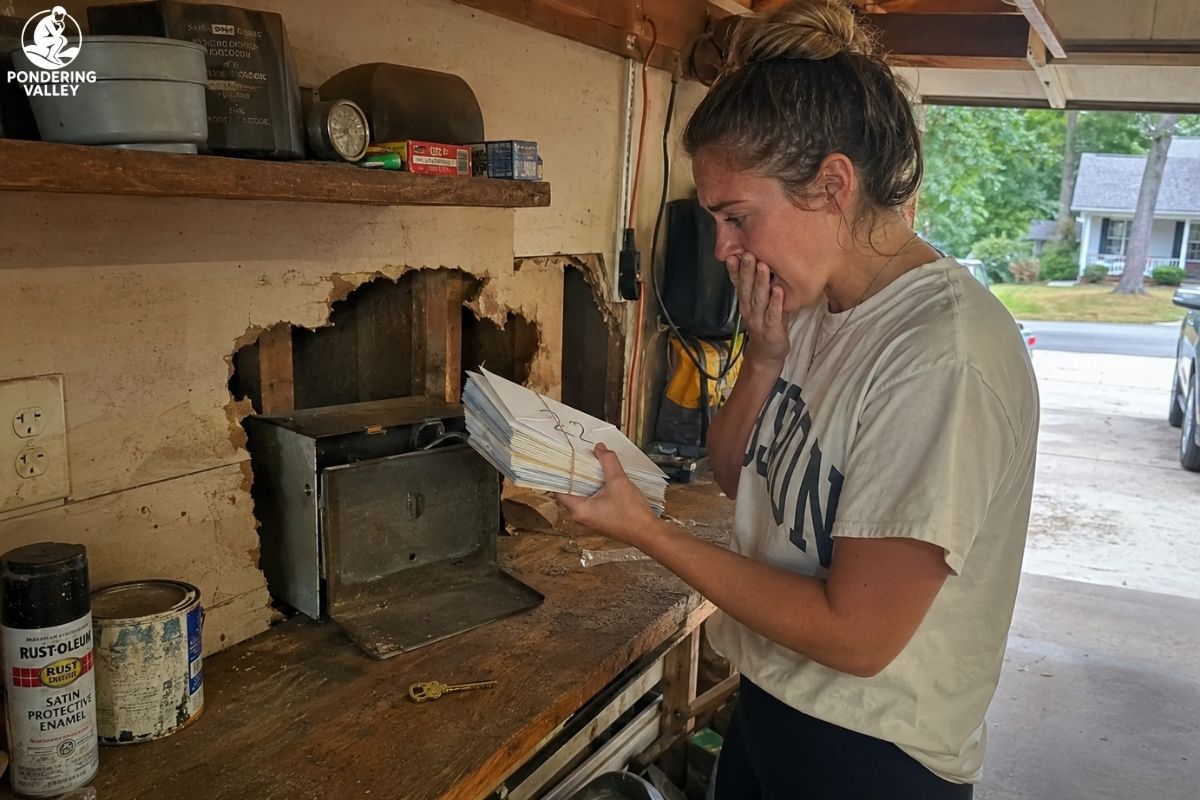
It wasn’t locked. Just stuck from age. The metal squealed as she lifted the lid.
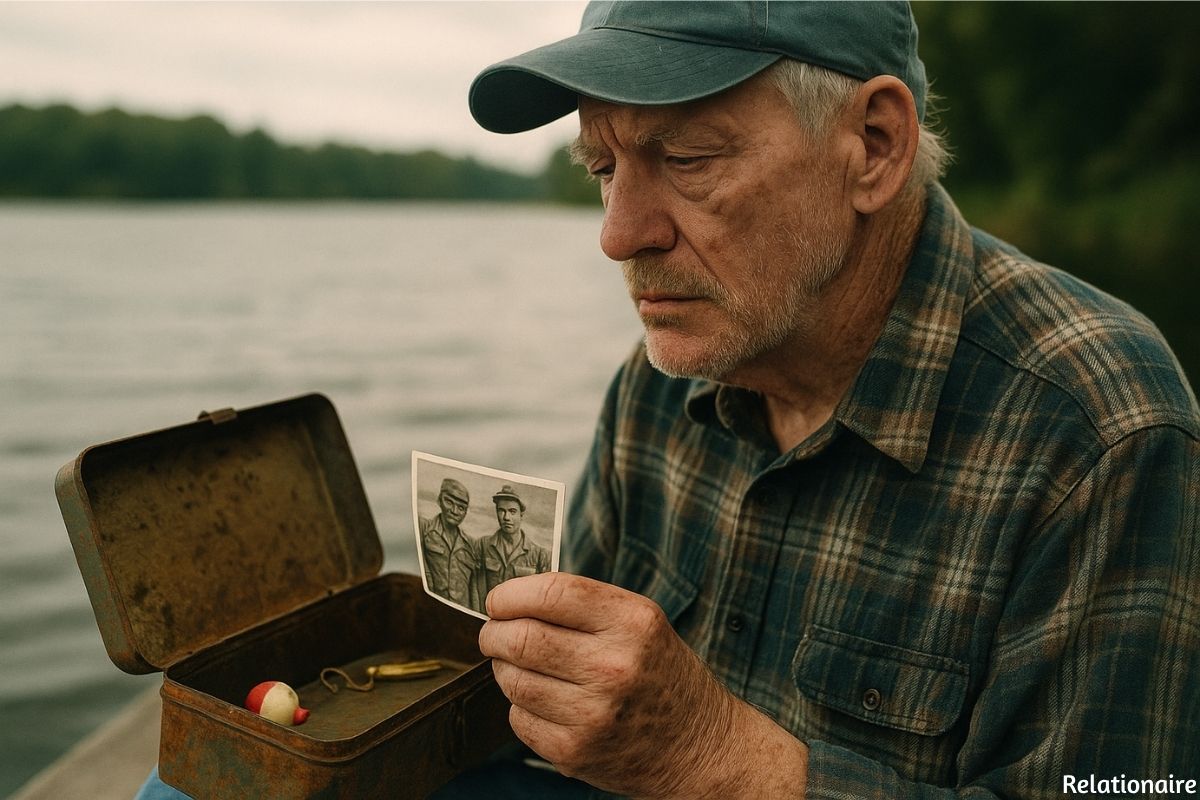
Inside: yellowed gauze, hooks still crusted with lake water, an old Zippo lighter, and beneath it all—something that didn’t belong.
A ribbon.
A medal.
A star.
She picked it up carefully.
“Grandpa… this is a Silver Star.”
Frank didn’t move. His hand tightened around the cane he didn’t always need.
Emma looked up. “I didn’t know you got one. No one ever said…”
“I never did.”
“That’s your name on the back.”
She turned it in her palm. Her voice was gentler now. “Franklin E. Delaney. Vietnam.”
Frank took a breath. It caught halfway.
And then she found the dog tag.
It wasn’t his.
“Do you know a… Trần Văn Dũng?” she asked, sounding it out.
Frank sat down hard on the wooden bench.
Emma held up the last thing from the box: a folded, half-written letter. The paper was creased and thin, the ink smudged in places like someone had gripped it too tight too many times.
Emma didn’t read it out loud. Not yet.
“Who was he?” she asked softly.
Frank rubbed his thumb along the grain of the bench. He stared at the dust in the sunlight, swirling in the air like ghosts dancing between them.
“He saved my life,” he said.
Emma waited. She didn’t push. That’s why Frank liked her. She asked—but she didn’t dig.
He looked at the dog tag in her hand. That small piece of metal had rattled around in that box for nearly fifty years. He hadn’t meant for her to find it. But maybe he had. Maybe that’s why he never threw it away.
“I promised I’d find his family,” Frank said, voice rough. “I promised. But when I got home, I didn’t… I couldn’t…”
Emma sat beside him. The shed was quiet except for the creak of wood and the buzz of a far-off boat motor.
“Do you want to?” she asked.
Frank didn’t answer right away.
“I don’t know if they’re still out there,” he said.
“Then let’s find out.”
He looked at her. Really looked. And for the first time in a long while, Frank felt something stir beneath the surface. Not guilt. Not regret. Something smaller. Something like possibility.
Emma stood and brushed off her knees.
“Tomorrow,” she said. “We’ll start tomorrow. But tonight? You’re telling me the whole story. No skipping.”
She smiled, just like her mother used to.
Frank looked at the tackle box again.
The letter sat half-open, like a door someone had forgotten to close.
He nodded once.
“Alright,” he said. “But it don’t start with me.”
Part 2 – Quảng Trị, 1971
Frank hadn’t thought about the tin roof in decades. But as the words came out of his mouth, he could hear it again—
that sharp metallic staccato of monsoon rain pounding against rusted shelter.
That night.
That smell.
That promise.
It was August 18, 1971. Somewhere outside Quảng Trị City. They’d been stuck in a blown-out French farmhouse for two days, waiting for a chopper that never came.
Private First Class Franklin Delaney, 28, Minnesota-born, was holed up with two others from his unit. One was Corporal Rick Sanchez from Corpus Christi, who’d caught shrapnel in his thigh the night before. The other… was Dũng.
Trần Văn Dũng wasn’t American. He wasn’t even officially part of the unit. He was ARVN—Army of the Republic of Vietnam. Barely 20. Quiet. Sharp-eyed. Fluent in two languages, but spoke only when necessary.
Frank liked him immediately.
Dũng didn’t talk much, but when he did, he said things that mattered. Like that night—when the radio was dead, Sanchez was moaning through clenched teeth, and Frank was sure they wouldn’t make it till daylight. That’s when Dũng lit a cigarette, passed it to Frank, and said:
“Don’t think about the storm. Think about what you’ll do if you live.”
Frank stared at the ember between them, glowing against the dark.
“And if we don’t?” he asked.
Dũng shrugged. “Then no more worrying.”
Frank half-laughed. “That’s the dumbest thing I ever heard.”
Dũng smiled—just barely. “It’s true.”
Lightning flashed, turning the wet walls ghost-white. Frank reached for his canteen. Empty.
Dũng noticed. He nudged his over. “Take it.”
Frank shook his head. “Split it.”
They passed the canteen back and forth, listening to the storm swallow everything beyond the broken shutters.
“Where you from?” Frank finally asked.
“Bình Định. Central coast.”
“You got family?”
Dũng nodded. “Mother. Two sisters. No father.”
There was a pause. Then:
“You?”
Frank blinked. “Me?”
“Back home.”
Frank’s jaw tightened. “Yeah. Wife. Son. Barely two when I left.”
He didn’t say more. Dũng didn’t press.
That’s how it was with them. Few words. No bullshit. Trust made in glances, not speeches.
The third night, the mortars came.
Sanchez was already unconscious from fever. Frank had been dozing when the first shell hit. It collapsed the south wall. Shrapnel tore through the beams. Everything went white.
Frank remembered the sound before the pain—
a high whine, then a crack like God splitting a tree.
Then—
Dũng screaming his name.
When Frank came to, he was outside, flat in the mud, with blood in his mouth and rain in his eyes. Dũng had dragged him—half-carried, half-dragged—from the wreckage. Sanchez didn’t make it.
Dũng took a hit to the leg during the pull. Didn’t say a word about it.
They limped for miles. Avoided roads. Ate dry crackers. Slept in shifts. When they finally saw the American convoy—Frank nearly wept.
Before the medics separated them, Dũng pressed something into Frank’s hand.
A small dog tag. Bent at the corner.
“Can’t carry it anymore,” Dũng said.
Frank stared at it. “What the hell am I supposed to do with this?”
“If I don’t go home,” Dũng said, “you do it for me.”
“What do I tell them?”
“Tell them I wasn’t afraid.”
Frank wanted to argue. Wanted to say Dũng would make it. That he’d be fine. But there was something in Dũng’s eyes—
like he already knew.
They didn’t see each other again.
Frank paused his story, hands resting on the kitchen table. Emma hadn’t moved since he started. She was holding the dog tag again, slowly rubbing her thumb over the etched letters.
“Did you ever try?” she asked.
Frank looked out the window. The lake was still, dark. A loon called in the distance.
“I wrote a letter. Twice. Never sent it.”
“Why not?”
“I don’t know where they are. I don’t know if they’d even want to hear from me. An old American stranger, dragging up ghosts.”
Emma shook her head. “You kept the tag. The letter. The medal. That’s not nothing.”
Frank stood, legs stiff. He opened the fridge, grabbed a beer, popped the cap with one practiced flick of the wrist.
“I tried once, back in ‘92. Called a Vietnamese embassy. Language barrier. No help. After that… I let it sit.”
Emma pulled out her phone.
“Now you’ve got me,” she said. “And Google. And I know a Vietnamese-American nonprofit in Minneapolis. I interviewed their founder for a project last semester. They might be able to help.”
Frank raised an eyebrow. “You planning to drag an old man across the world?”
She smiled. “Just to St. Paul. For now.”
Frank sat back down. He looked at the tag again. It had rusted at the edges, but the name was still clear. Trần Văn Dũng.
“He said to tell them he wasn’t afraid,” Frank said. “But I think he was. We all were.”
Emma reached across the table and placed her hand over his.
“You weren’t alone,” she said.
They sat in silence for a while. Not the kind that hurts—but the kind that heals.
Outside, the sky cracked open. Rain, soft and steady, drummed on the roof.
And for the first time in fifty years, Frank let it in.
Part 3 – Letters Never Sent
Frank didn’t sleep that night.
He sat by the kitchen window in his flannel pajama pants and a tattered U.S. Army sweatshirt, nursing the last inch of a beer that had long gone warm. The lake glimmered in the moonlight—quiet, indifferent.
On the table: the dog tag, the Silver Star, and the letter he never finished.
Emma had gone to bed hours ago, but not before scanning the tag, taking a photo of the letter, and promising, “I’ll see what I can find.”
Frank doubted she’d get far. People didn’t want to be found. Not after wars like that. Not after half a century.
Still, he stared at the letter.
The folds were deep. The ink had faded. He’d rewritten it three times. Never mailed it once.
November 4, 1971
To the Family of Trần Văn Dũng,
I hope this letter finds you.
My name is Franklin Delaney. I served with your son during the war…
That’s where it stopped.
A full page. Half-full heart.
He never knew what to say after that.
The next morning, Emma burst into the kitchen holding her phone like a trophy.
“I think I found someone,” she said, breathless.
Frank looked up slowly.
“Found who?”
“A woman named Linh Trần. She runs a cultural center in St. Paul. She’s second-generation Vietnamese-American, speaks fluent Vietnamese, and does genealogy work for refugee families. Her mom’s from Bình Định.”
Frank’s breath caught.
“Bình Định?”
Emma nodded. “She said she can help. She even said she’d take a look at the dog tag and see if she recognizes any of the engraving style—they changed formats in the early ’70s. It could narrow things down.”
Frank blinked, then looked down at his hands. Liver spots. Knotted knuckles. The hands of someone who had waited too long.
“I don’t even know what I’d say,” he muttered.
“Start with the truth,” Emma said.
Frank looked at her. “That I failed him?”
Emma shook her head. “That you remembered him.”
They drove into the city that afternoon. Emma at the wheel, Frank riding shotgun, holding a small tin box on his lap like it was made of glass.
The office was in a converted library on University Avenue. Warm, wood-paneled. Worn carpet. Posters of Vietnamese festivals on the walls. The air smelled faintly of incense and lemon tea.
Linh Trần met them with a firm handshake and kind eyes.
“You must be Mr. Delaney,” she said. “And you brought the box.”
Frank nodded. “You said your mother’s from Bình Định?”
“Yes. Tuy Phước District, outside Quy Nhơn.”
Frank swallowed. “That’s where he said he was from.”
Linh sat across from him and opened her notebook.
Emma placed the dog tag between them.
Linh picked it up gently.
“You said his name was Trần Văn Dũng?” she asked.
“Yes,” Frank said. “He gave me that the day we got separated. Told me to give it to his family if he didn’t make it.”
Linh ran a finger over the edges. “This engraving is pre-1972, definitely South Vietnamese military. You said this was August ’71?”
Frank nodded.
She jotted notes quickly.
“I’ll check it against our refugee registry. After the fall of Saigon, many ARVN families fled or were detained. Some changed their names. But I know how to look.”
She looked at Frank.
“Tell me everything you remember.”
He did.
For the second time in twenty-four hours, Frank Delaney pulled back the curtain on fifty years of silence.
He told her about the farmhouse. The night raids. The cigarette in the rain. The way Dũng had limped but never complained. The final walk through the jungle. The blood. The weight.
And the promise.
When he finished, Linh sat in silence for a moment. Then she smiled—not politely, but with the weight of something shared.
“My father never talked about the war either,” she said. “I had to learn it through photos. Through scars. Sometimes it’s the children who finish the story.”
Frank didn’t answer. He couldn’t. His chest ached.
Linh handed him a small paper cup of tea.
“Give me a week,” she said. “And keep that letter. You may need to finish it.”
That night, back at the cabin, Frank sat on the porch with a fresh sheet of paper.
Emma brought him a blanket. Said nothing. Just sat beside him.
Frank looked at the stars over Lake Minnetonka.
Clear. Quiet. Unjudging.
Then he picked up the pen.
July 20, 2025
Dear Family of Trần Văn Dũng,
I have carried this letter for fifty-four years.
I don’t know if you remember him the way I do, but I remember every word he said that night.
He saved my life. And I’m sorry it took me so long to send this.
If you’ll let me… I’d like to come see you.
He signed it:
Franklin Edward Delaney
Veteran, U.S. Army, 101st Airborne Division
He folded the letter.
Placed it in the tackle box.
And closed the lid.
For now.
Part 4 – A Name in the Dust
Four days later, the phone rang at 6:17 a.m.
Frank was already up. He didn’t sleep much these days—never had, not really. The mornings were when the memories came gentler, like the fog rolling across Lake Minnetonka before the sun burned it all away.
Emma came out of her room rubbing her eyes.
“You expecting a call?”
Frank nodded, already picking up the cordless. “Linh said she’d call early if she found something.”
He pressed the phone to his ear.
“Frank Delaney,” he said.
There was a pause on the other end, then Linh’s voice, low and steady:
“I think I found her.”
Frank sat down hard in the kitchen chair. His knee cracked, but he didn’t notice.
“Who?” he said, barely above a whisper.
“Her name is Trần Minh Lan. She lives in Garden Grove, California. Birth records suggest she had two older siblings—both male. One listed as ‘Dũng,’ born 1951. That lines up with your timeline.”
Frank gripped the table edge.
“She’s still alive?”
“She’s 76. Runs a small sewing shop with her daughter. I called the store. She answered. I asked if she had a brother named Dũng who fought with the ARVN. She got quiet. Then she asked, ‘Why are you asking me this after so many years?’”
Frank swallowed.
“She wants to talk to you,” Linh said.
Emma let out a small gasp. Her hand found Frank’s shoulder and rested there gently.
Frank closed his eyes.
After fifty-four years, someone remembered him.
Two days later, Frank was on a plane for the first time in nearly a decade.
Emma booked the tickets. She also packed his carry-on and put his pills in a labeled container like he was some frail old man. Frank grumbled, but didn’t stop her. Truth was, he was nervous.
Not about flying. About arriving.
They landed at John Wayne Airport under a pale sky. Frank could smell the salt in the air even from the jet bridge. California smelled different. Faster. Thinner. Less dirt under your nails.
A driver from the community center picked them up. Frank watched the palm trees slide past the windows like ghostly sentinels. All he could think was: What if she doesn’t look like him anymore? What if I don’t recognize the eyes?
The shop was a tiny corner unit off Westminster Boulevard, tucked between a Vietnamese grocery and a florist.
“Trần & Daughters Tailor Shop,” the sign read in gold hand-painted letters.
Emma helped Frank out of the car. He straightened his shoulders. Wore his only blazer. The Silver Star was in the inner pocket. The dog tag in the front.
He stepped inside.
A bell rang overhead.
Behind the counter stood a small woman in a pale lavender blouse. Her hair was pulled back in a low bun streaked with gray. She was hemming a navy blue jacket.
She looked up.
Frank froze.
Because it was him—in her eyes.
Not exactly. But enough. The shape. The weight. The quiet.
She stared for a moment, then set the jacket aside. Wiped her hands on a cloth.
“You’re him,” she said in a soft accent. “The American.”
Frank nodded.
“I’m Frank Delaney. I… I served with your brother.”
She walked forward slowly. Her fingers trembled.
“You remember him?”
Frank pulled the dog tag from his pocket and held it out, palm open.
She didn’t touch it.
She just stared.
Then, very quietly, she said, “We were told he died in the jungle. That no one could bring him back.”
Frank’s voice cracked.
“I tried. I swear to you, I tried. I kept that tag for decades. I couldn’t let it go.”
She looked at the tag for a long time, then finally took it.
Held it like a relic.
“I didn’t even have this much,” she said. “No photo. No remains. Just a name in the dust.”
Frank reached into his jacket and pulled out the letter. It shook in his hand.
“I never sent it,” he said. “Because I didn’t know if it would matter. But now I know it should have.”
Minh Lan looked down at the envelope. Her lips pressed into a thin line. Then she took it and nodded.
“It still does,” she said.
They sat in the back room over cups of strong coffee laced with condensed milk.
Frank told her everything. Not just the war, but the guilt. The years. The silence.
Emma sat to the side, quietly translating where needed, but mostly listening.
Minh Lan listened with both hands wrapped around the cup, nodding slowly, sometimes closing her eyes.
When Frank finished, she touched his hand.
“You were his friend,” she said. “That’s more than most could be in that time.”
“I wasn’t enough,” Frank whispered.
“But you came,” she said. “You came.”
Before they left, Minh Lan reached into a drawer behind the counter and pulled out a small, cloth-wrapped bundle. She handed it to Frank.
Inside was a black-and-white photo, frayed at the corners. Three children on a beach. A boy—maybe nine—stood with his arms crossed and a wide, defiant smile.
“That’s him,” she said.
Frank stared at the boy.
“God… he had that same look the night he pulled me out of that house.”
Lan smiled, then took the photo back.
“I’m glad someone remembers,” she said. “Because now I can too.”
That night, in the quiet of a motel room just off the freeway, Frank sat on the bed and looked out at the California lights.
Emma was already asleep in the next room.
In his lap: the photo. The dog tag, now resting in Lan’s hands. The tackle box, finally lighter.
He picked up the Silver Star and turned it over.
FRANKLIN E. DELANEY
The medal no one ever asked about.
Now he knew why he kept it.
Not for himself.
But for the one who didn’t get one.
Tomorrow, he’d leave it at a grave that never got built.
But tonight, he just looked at the stars again.
And whispered: “I didn’t forget you, Dũng. Not ever.”
Part 5 – The Star and the Shore
The beach was almost empty when they arrived.
It was early—just past sunrise—and the sky still wore its morning bruises: pale purples and low gold streaks across the water. Frank stood at the edge of the lot, cane in one hand, tackle box in the other, staring out toward the Pacific like it might speak.
Emma got out of the car and stretched. “You okay?”
Frank didn’t answer right away.
“Feels like the edge of something,” he finally said.
Emma stepped beside him. “Minh Lan said this is where the photo was taken?”
Frank nodded.
“She said her mother took it. They came here once—one single time—before the war really started. Said Dũng refused to smile. Said he didn’t want his picture taken. But then, right at the last second, he cracked.”
Emma smiled softly. “Sounds like someone I know.”
Frank smirked. “He was stubborn as hell. Always said Americans talked too much.”
They walked slowly down the path to the beach. The sand was still cool, soft underfoot. Frank hated how uneven it felt beneath his shoes, but Emma offered her arm, and he took it—begrudgingly.
They found a quiet spot near the dunes.
Frank opened the tackle box.
Inside: the letter, now read and returned.
A second, freshly written note—short, folded once.
And the Silver Star.
Emma didn’t say anything. She just sat a few feet back, giving him space.
Frank knelt, slowly, painfully, and dug a small hollow in the sand with his hand.
He placed the medal inside.
Then, on top, the note:
You didn’t get a medal, so I brought mine.
For the night you pulled me out of hell.
For the promise I kept too late.
For the friend you were, and the man I wasn’t yet.
I didn’t forget.
–Frank
He covered it back up.
The tide wouldn’t reach it. Not today. But the wind would scatter the sand. The sea would take what it wanted in time.
Frank sat back, letting the breeze comb through what was left of his hair.
“I used to wonder what it’d feel like,” he said aloud.
Emma looked at him.
“To finally give it back.”
She didn’t speak, just waited.
“But now I know,” he said. “It doesn’t go away. It just… shifts.”
He closed the tackle box. It was nearly empty now. Just a few old lures and a broken lighter.
They sat in silence, watching the sun burn higher over the water.
Seagulls wheeled. The ocean whispered.
Frank reached into his pocket and pulled out Dũng’s photo.
He didn’t bury it.
Instead, he folded it into his wallet—between a photo of his wife and a scribbled drawing his son had made at five.
“Someone needs to stay with me,” he said. “He always kept me going.”
Emma stood and offered her hand.
“I think he still is.”
Frank took it.
Let her help him up.
And together, they walked back up the beach, the wind at their backs and the past behind them—finally, gently, at peace.
Part 6 – The Return Home
The dock creaked under Frank’s boots just like it always had.
He stepped slowly, cane in hand, tackle box swinging light at his side—lighter than it had felt in fifty years. The lake shimmered in the afternoon sun. Dragonflies zipped low over the water, and somewhere in the reeds, a loon let out its low, haunting call.
Home.
It had only been ten days since California, but everything felt different. The air smelled sharper. The water looked bluer. Even the silence had changed—no longer something heavy, but something full.
Emma followed a few steps behind, holding a small cooler and two folding chairs. She had insisted on coming. Said she wanted to see what Grandpa looked like doing the one thing he never needed help with.
Frank set the box down at the edge of the dock and opened it.
No medal.
No letter.
No dog tag.
Just a red-and-white bobber.
Three lures.
And a spool of faded green line.
He smiled.
It felt right now. Like it had always meant to hold just this.
They cast lines just after four. Frank showed her the right way to loop the line through the eyelet—twice, not once—and how to let the bait drift near the lily pads where the big ones liked to hide.
Emma listened like she was five years old again, even though she’d never fished much growing up.
“Mom said you used to bring Dad out here,” she said.
Frank nodded. “Before he got busy being a grown-up. We’d sit out here until the sun dipped low. Sometimes we’d fish. Sometimes we’d just talk.”
She reeled in slowly. “He misses you, you know.”
Frank didn’t answer right away. His bobber twitched.
“Life has its seasons,” he said. “We had ours. Doesn’t mean it’s done.”
Emma smiled. “He’d come, if you asked.”
Frank watched the lake ripple out beneath their lines. “Maybe I will.”
Just after six, as the light began to stretch long over the treetops, a car pulled into the gravel drive.
Emma shaded her eyes. “Were you expecting someone?”
Frank shook his head slowly. “No.”
The car door opened.
And a man stepped out—early forties, tall, with the unmistakable slope of the Delaney shoulders.
“Dad?” Emma said, eyes wide.
Frank stared.
It was James. His son.
Hair more gray than brown now. Glasses. Hesitant, like someone standing at the edge of an old porch, unsure whether to knock.
Emma stood. “You didn’t tell me you called him.”
Frank hadn’t.
He simply waved James down to the dock.
When his son reached the end, Frank looked up at him for the first time in years.
They hadn’t spoken much since Nancy—Frank’s wife, James’s mother—passed. Grief had a way of loosening things, but also of letting them drift apart.
“I, uh…” James glanced at the lake, the tackle box, then back at his father. “Emma sent me a letter. Told me what you’ve been doing.”
Frank glanced at his granddaughter. She shrugged, unapologetic.
James cleared his throat. “Said you gave away your medal.”
Frank looked back down at the water.
“I didn’t need it anymore.”
James’s voice was softer now. “Wish I’d known that part of you before.”
Frank nodded. “Wish I’d told it.”
They stood quietly, years of silence settling into something simpler.
Then James sat down beside him.
“You bring a rod?” Frank asked.
James smiled. “I figured you’d have an extra.”
Frank reached into the tackle box and handed him one of the old rods, its cork handle worn smooth by time and use.
James took it.
Emma exhaled quietly, watching them cast side by side, their lines arching out in rhythm over the water.
Three Delaneys.
One lake.
No ghosts.
Just sky. And water. And the hush of forgiveness.
That night, Frank sat alone on the dock long after Emma and James had gone inside.
He watched the stars flicker on, one by one.
He thought of Dũng.
Of Minh Lan.
Of all the years the tackle box had been full—and of what it took to finally empty it.
He looked up at the sky and whispered into the dark:
“I kept the promise.”
Part 7 – Something Left Behind
The tackle box was old—Frank had said that a thousand times. But no one ever really looked at it closely. Not even him.
It sat on the counter now, drying out from the lake air, a soft ring of moisture staining the wood beneath it. Emma picked it up carefully. She’d always liked old things—things with weight, with stories. This box had held more than lures and medals. It had carried silence, grief, promises, and now… maybe something else.
She ran her fingers along the inside, checking the seams. The fabric lining had peeled back slightly in one corner. Something caught her nail—a tiny fold of yellowed paper wedged deep beneath the stitched edge.
She tugged gently.
It came loose with a soft snap, brittle from age.
She unfolded it slowly.
The handwriting wasn’t Frank’s.
It was blocky, careful. Vietnamese. Then below that, a translation in awkward English, like someone had taken time—maybe hours—to get the words right.
Her breath caught.
She read it again.
And again.
If you find this and I am not with you,
remember, I was not afraid to stay.
Tell my mother I wore her scarf until the end.
Tell my sisters I kept them close in my thoughts.
And tell the man with the blue eyes—
Thank you for pulling me from the rain.
I saw your fear, but you stood anyway.
That was enough. That was brave.
—Dũng
Emma stared at it, hands trembling slightly.
She didn’t know how it had gotten there. Maybe Dũng slipped it in before they were separated. Maybe Frank never saw it. Maybe he did and forgot.
She walked to the porch, letter in hand.
Frank was outside, just as she expected—seated in the old rocking chair, a light blanket over his legs, watching the lake darken into ink.
She handed it to him without a word.
Frank unfolded the paper.
The handwriting. The phrasing.
He hadn’t seen it before. He knew that instantly. He would’ve remembered this.
His hands began to shake.
Emma sat beside him. The wood creaked softly.
The silence stretched for a long time.
Finally, Frank spoke.
“He put this in the box?”
Emma nodded.
“He saw me,” Frank whispered.
He looked back down at the note, rereading the words over and over again.
“Tell the man with the blue eyes—thank you…”
Frank wiped his face, surprised to find his eyes wet.
“I didn’t think he knew,” he said. “That I was scared. That I was ready to leave him.”
Emma shook her head. “But you didn’t. You stayed.”
Frank looked out at the lake. The wind was picking up, the trees swaying, whispering things too old for language.
He held the note gently between his palms.
“I think this was always waiting for me,” he said.
Emma didn’t answer.
She just placed her hand on his.
That night, Frank placed the note inside a new envelope.
On the front, he wrote one word:
Lan.
He’d send it tomorrow—with a copy of the beach photo, and the story of what happened on the shore. Some things, he realized, needed to keep moving. Needed to pass through hands.
That letter didn’t belong to him anymore.
It belonged home.
Part 8 – The Photo Album
Emma sat cross-legged on the cabin floor, surrounded by shoeboxes.
Some were labeled—’72–’75, Montana Trip, James 1st Grade—but most were just dust and faded ink. She was scanning old photos into her laptop, building a digital archive for Frank’s birthday, though he didn’t know it yet.
He didn’t care for birthdays. Said they were for counting, and he was done keeping score.
She smiled to herself and picked up another envelope.
This one was plain. No label. Heavy with photos.
She slipped the stack into her lap and started flipping through.
Fishing trips.
Nancy in the garden.
James on a sled with his front tooth missing.
And then—
Her fingers froze.
There was a black-and-white photo she didn’t recognize.
Two men in uniform.
One was unmistakably younger Frank—long face, crooked grin, those same watchful eyes under a mess of hair.
The other stood beside him—shorter, darker-skinned, half-smiling. One hand rested lightly on Frank’s shoulder. His eyes were gentle, wary. Like he was caught off guard mid-thought.
Emma stared.
This had to be him.
Dũng.
She checked the back.
In faded pencil: Quảng Trị – Aug ’71
No one else had written that.
She stood quickly, photo in hand.
Frank was on the porch again, blanket across his knees, a cup of weak coffee in his hand.
Emma didn’t say a word. Just handed him the photo.
He took it slowly, adjusting his glasses.
When he saw it, the coffee cup trembled in his grip.
“My God,” he breathed. “Where did you—?”
“It was in the bottom of that envelope,” Emma said softly. “With the fishing photos.”
Frank brought the photo closer to his face.
“I don’t remember this,” he whispered. “I don’t remember anyone taking it.”
Emma knelt beside him. “But it’s real, right?”
He nodded slowly.
“That was the morning after the mortar. We were waiting for the medics. There must’ve been a Corpsman with a camera…”
He trailed off.
He looked again at Dũng’s face.
There was something in the way the young soldier stood—so close, so comfortable. Not just comrades. Not just wartime necessity. Something more human. Something real.
“He never wanted to be in pictures,” Frank said. “Said it made you look like you were already a ghost.”
Emma swallowed.
“He let this one happen,” she said.
Frank stared at the photo for a long time. Then, with trembling hands, he slipped it into the front pocket of his flannel shirt.
“I’ll send a copy to Lan,” he said. “She should have this.”
Emma nodded.
Then Frank leaned back in the rocking chair and closed his eyes.
“That’s the thing about memory,” he murmured. “You think you’ve forgotten. But it just hides. Like fish at the bottom of the lake. Quiet. Waiting.”
Emma sat beside him again.
For a long time, they didn’t say anything.
They just rocked in rhythm, while the past and the present sat together between them—finally, peacefully, side by side.
Part 9 – The Last Catch
The sky was still ink-dark when Frank stepped out onto the dock.
The lake was glass.
No wind. No birds. Not even the mosquitoes had stirred yet. That perfect moment—when the world holds its breath and forgets to make noise.
Frank inhaled slowly. His knees ached, his chest was tight, and his hands shook as he baited the line.
But he was up. And he was here.
That was enough.
He hadn’t told Emma. She was still asleep, curled under the old quilt inside, her car keys in the fruit bowl, her shoes by the door.
This one… this was just for him.
The boat groaned a little as he stepped in. He sat low, slow, and pushed off with the oar. No motor. He didn’t want the noise. Just the quiet hum of wood against water and the creak of old muscles doing their job one last time.
He rowed to his favorite spot, just past the reeds near the northwest bend.
The same place he and James used to drift as the sun went down.
The same place he’d taken Nancy once, before she was pregnant, before the war, before all of it.
He let the boat rock gently. Dropped the line. Watched the bobber.
He didn’t care if it moved.
The tackle box sat open at his feet. Just a few odds and ends now. Nothing heavy. Nothing unsaid.
In the bottom corner, he’d tucked the second copy of the photo—him and Dũng, side by side in that forgotten place.
He wasn’t sure why he brought it.
Maybe it was habit. Maybe it was company.
He touched the edge of the photo gently.
“I hope you found your peace first,” he said aloud. “I’m only catching up.”
The breeze picked up slightly. The lake rippled.
He closed his eyes.
He could still hear the laughter from that old barracks. Smell the smoke from Dũng’s last cigarette. Feel the steady pressure of his friend’s shoulder as they sat in the dark and waited for the night to pass.
“You saved me,” Frank whispered. “Now I’m finally trying to live like I was worth it.”
He sat there for a long time.
Let the sun climb.
Let the day begin.
At one point, the bobber dipped—just once.
A small pull. A flicker of life below.
Frank smiled.
Then reeled it in, slow and steady, just for the rhythm of it.
Nothing was on the hook.
And that was fine.
When he rowed back to shore, the light was golden and soft.
Emma was waiting at the dock, wrapped in a sweatshirt, her hair still messy from sleep.
“You snuck out,” she said.
Frank grinned. “I’m old, not dead.”
She helped him out of the boat, steadying his elbow.
“Catch anything?”
He looked at her, sunlight dancing on the water behind her.
He nodded.
“Yeah. I think I did.”
Later that morning, they sat in the cabin, sorting through the last of the keepsakes. Frank took the tackle box down from the counter and held it for a while. Then, gently, he closed the lid.
This time, it didn’t feel like an ending.
It felt like a gift.
Part 10 – Letters from the Lake
It was early autumn when Emma found the letter.
The leaves had just started to turn, yellow curling into orange at the edges. The lake was quiet again—tourists gone, loons silent. The mornings came cooler now, and the cabin creaked in the wind like it remembered something too.
Frank had passed two weeks earlier. Peacefully, in his sleep. No hospital bed. No machines. Just the sound of the lake through an open window and the photo of Dũng on the nightstand, facing the stars.
Emma stayed behind to clean, to grieve, to breathe.
The tackle box was still on the shelf, exactly where he’d left it.
She opened it gently.
Inside was a single envelope.
Her name written on the front in the slanted, patient scrawl she knew better than her own.
Emma
She sat at the table, held her breath, and unfolded the letter.
Dear Emma,
If you’re reading this, I’ve probably gone and done what old men do best—slipped away without a fuss. If I’m lucky, it happened out there on the dock, line in the water, sun on my face. If I wasn’t so lucky—well, I suppose you’ll forgive me anyway.
There’s not much to say that I haven’t already tried fumbling through these past few months, but I wanted to leave you something better than silence.
You helped me carry something I never thought I’d put down.
I didn’t know what the tackle box really was until you opened it. I thought it was just old gear, rust and regret. But it was more than that. It was a box full of weight I wasn’t strong enough to look at until you were beside me.
You gave me back my memory. My friend. My family.
You helped me keep a promise.
And somehow, along the way, you helped me remember who I was before the silence.
You asked me once if I thought Dũng knew how much he meant to me. I’ve come to believe he did. That photo told me everything I’d tried to forget. He saw me. He knew me. And maybe that’s what bravery really is—standing beside someone, even when the rain’s coming down.
I hope you carry that with you.
Don’t live like I did—waiting to speak until the silence is unbearable.
Tell your stories while the stars are still out. Say the names. Keep the photos. Open the boxes.
One day, someone will need them.
You already proved that to me.
With all my love,
Grandpa
P.S. I left one lure in the box. The red one. Use it. The big one always circled back to it. Same as I did.
Emma read the letter three times. The third time, her voice cracked. She folded it carefully and placed it back in the envelope.
Then she went out to the dock.
The water was calm. Early fog rising off the surface like breath.
She opened the tackle box. Pulled out the single red lure.
Smiled.
Hooked it to the old rod.
And cast her line.
A few minutes later, the bobber twitched.
Emma reeled in gently.
No fish.
Just ripples.
But she swore—just for a moment—she felt someone sitting beside her.
Not in the way that haunts.
In the way that stays.
The End
“Tell the man with the blue eyes—thank you.”