“Absolutely not.”
Sebastian Wren did not raise his voice.
He did not need to.
At forty-nine, the Duke of Wexford had spent most of his adult life learning how to make refusal sound final without becoming theatrical about it.
He stood behind the desk in the estate office at Wexford Hall, one hand resting beside an unopened letter.
Rain tapped against the tall windows.
Across from him, Martin Hale, the estate manager, remained silent.
Sebastian looked again at the name written across the bottom of the letter.
Clara Bennett.
Seventeen years old.
Daughter of Nicholas Wren.
His late brother.
“No,” Sebastian repeated.
Martin removed his glasses and folded them carefully.
“She and her grandmother are already at the gate.”
Sebastian stared at him.
“You allowed them through?”
“I allowed them into the gatehouse because it is raining hard enough to flood the north road.”
“That is not what I asked.”
“No.”
Martin had worked for the Wren family for twenty-eight years. He had learned when not to apologize.
Sebastian picked up the letter.
It was short.
No demand.
No lawyer.
No threat.
No mention of inheritance.
Only a statement that Clara’s mother, Emily Bennett, had died three years earlier, that Nicholas had been her father, and that Clara wished to visit Wexford Hall once.
There was one peculiar sentence near the end.
I would like to see the old stable, if it still exists.
Sebastian dropped the letter onto the desk.
“Nicholas never had a daughter.”
Martin said nothing.
“My brother was careless about many things,” Sebastian continued. “But if he had married, if he had fathered a child, someone would have known.”
“I imagine someone did.”
The words were mild.
That made them worse.
Sebastian looked toward the window.
Beyond the glass, the great lawns of Wexford Hall had become a gray-green blur beneath the rain.
People thought the place made its owner powerful.
They did not see the leaking roof over the west gallery.
They did not see the heating bills, the stonework estimates, the wages, the insurance, the land disputes, the emergency repairs, the letters from accountants using phrases such as structural deficit and unsustainable annual maintenance.
They saw the portraits.
The columns.
The title.
The house.
And they assumed abundance.
His brother Nicholas had hated that assumption.
Perhaps that was why the accusation in Clara Bennett’s letter angered Sebastian so much.
Nicholas had spent years rejecting everything Wexford represented.
Now, seven years after his death, a stranger had appeared carrying his name in everything but surname.
The office door opened.
Sebastian turned sharply.
His mother entered without knocking.
Helena Wren, Dowager Duchess of Wexford, was seventy-six and moved with the deliberate posture of a woman who had spent half a century refusing to let rooms intimidate her.
Her silver hair was pinned neatly.
She wore dark blue.
Her expression suggested Martin had already told her enough.
“Send them away,” Helena said.
Sebastian looked at her.
“I haven’t decided.”
“You said no.”
“That was before you entered the room.”
“You don’t need more information.”
Martin glanced toward the door.
Sebastian said, “Stay.”
His mother’s eyes hardened.
“This is a family matter.”
“Martin has spent more time keeping this family solvent than most of the family.”
Helena ignored that.
She came closer to the desk and looked at Clara’s letter.
“Nicholas had no legitimate child.”
Sebastian’s jaw tightened.
“That’s not what the letter claims.”
“It doesn’t matter what the letter claims.”
“Why?”
“Because people make claims against old families.”
Martin shifted slightly.
Helena saw it.
“Do you disagree?”
“I think,” Martin said, “that if she wanted money, she chose an unusual way to ask for it.”
Helena turned back to Sebastian.
“This is how it begins. A visit. A sentimental story. Then a photograph. Then a document. Then someone decides the press might enjoy it.”
Sebastian looked at her.
“The press?”
“Do not be naive.”
That irritated him enough to change his mind.
“Bring them to the morning room.”
Helena stared.
“Sebastian.”
“I will speak to them for ten minutes.”
“That is a mistake.”
“Then it will be my mistake.”
His mother’s face did not change much.
But Sebastian noticed something he would remember later.
She reached toward the letter.
Not to pick it up.
Only to touch the edge of the paper.
Then she withdrew her hand.
For one second, she looked frightened.
Clara Bennett did not look like Nicholas.
That was Sebastian’s first thought.
His second was that perhaps he had expected too much.
A face.
A gesture.
Some undeniable evidence that would settle the matter before anyone spoke.
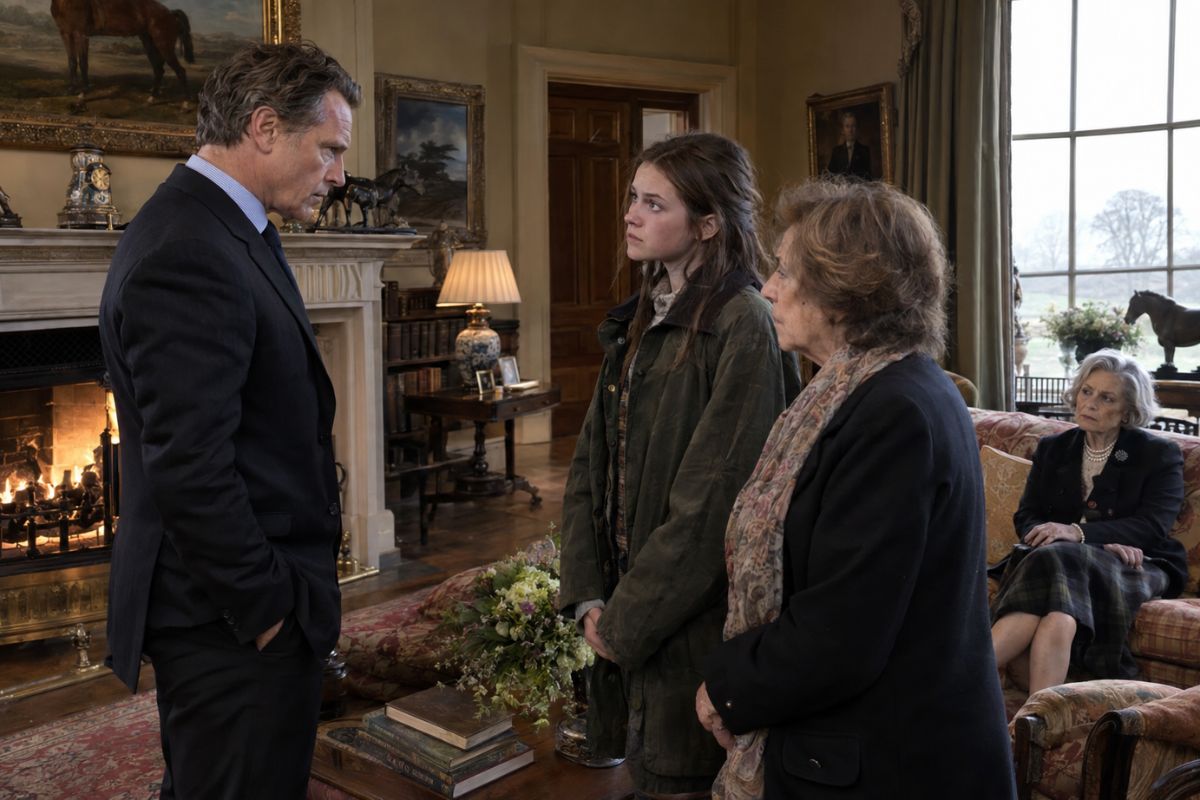
Instead he saw a thin seventeen-year-old girl wearing a rain-darkened green coat and practical black shoes.
Her brown hair had escaped whatever arrangement she had attempted that morning.
She held no expensive handbag.
No folder of legal papers.
Beside her sat a woman perhaps sixty-eight or seventy, small and upright, with the tired watchfulness of someone accustomed to protecting another person without making a display of it.
“My grandmother, Margaret Bennett,” Clara said.
Sebastian inclined his head.
“Miss Bennett.”
“Your Grace.”
She hesitated over the title.
Not nervously.
As though she had learned it for the occasion and had not yet decided whether it suited him.
Margaret smiled politely.
“Thank you for seeing us.”
Helena sat on the sofa near the fireplace.
She had insisted on attending.
Clara looked at her.
Sebastian saw the girl’s expression change.
Not recognition exactly.
Expectation.
“Dowager Duchess,” Clara said.
Helena’s fingers tightened around the handle of her teacup.
Sebastian noticed.
So did Clara.
No one commented.
Sebastian remained standing.
“You wrote that Nicholas Wren was your father.”
Clara nodded.
“Yes.”
“My brother died seven years ago.”
“I know.”
“You would have been ten.”
“Yes.”
“And yet no one here knew you existed.”
Clara looked toward Helena once more.
Then back to Sebastian.
“My father said that might be true.”
Sebastian felt a flare of anger.
“He spoke about us?”
“Sometimes.”
“In what terms?”
Margaret said softly, “Clara didn’t come here to defend her father’s opinion of the family.”
Sebastian looked at her.
“And why did she come?”
Clara answered.
“To see where he grew up.”
“That is all?”
“Yes.”
Sebastian almost laughed, though nothing was funny.
“You traveled several hours in this weather to see a stable?”
“Yes.”
“Why?”
“My father talked about it.”
“Nicholas talked about very little from this period of his life.”
“He talked to me.”
The answer was not insolent.
That made it land harder.
Sebastian studied her.
“Do you have evidence that he was your father?”
Margaret opened a worn leather bag.
Clara stopped her.
“No.”
Her grandmother looked surprised.
Clara kept her eyes on Sebastian.
“If he doesn’t believe me, showing him papers won’t make him want me here.”
Sebastian felt something unexpected.
Shame.
He resisted it.
Helena spoke first.
“That is probably best.”
Clara turned toward her.
For the first time, pain showed in her face.
Not because Helena doubted her.
Because Helena’s tone made it clear she preferred the girl gone regardless.
Clara stood.
Margaret slowly rose beside her.
Sebastian frowned.
“You are leaving?”
“You’ve answered the question.”
“I don’t recall you asking one.”
“I wanted to know whether I could see the stable.”
He had not actually answered that.
Before he could decide whether to correct himself, Helena said, “It would be better for everyone if you returned home.”
Margaret took Clara’s hand.
The girl nodded.
“All right.”
She crossed toward the door.
Then stopped.
Sebastian would later think that if she had kept walking, much of his life might have remained exactly as it had been.
Clara looked over her shoulder.
“Did my father ever finish restoring the red carriage?”
Sebastian did not move.
For several seconds, he heard only rain.
Helena set down her cup.
Too quickly.
Tea trembled against the rim.
Sebastian stared at Clara.
“What did you say?”
“The red carriage.”
Her voice had become uncertain.
“He said it was in pieces when he was young. He and his brother were helping their grandfather restore it.”
Sebastian’s mouth went dry.
Clara continued.
“He said the wheels never matched properly because one came from another carriage after the original cracked. He said your grandfather painted a thin black line around the doors even though nobody else could see why it mattered.”
Sebastian sat down.
No one outside the family should have known that.
There were no photographs of the carriage in the public rooms.
It had never been displayed.
It was not famous.
It was not valuable.
It had been a small, battered ceremonial carriage once used for village fairs and family celebrations, then abandoned in an outbuilding.
Sebastian and Nicholas had spent three summers with their grandfather stripping old paint, sanding wood, sorting brass fittings, and arguing about who got to hold which tool.
Then, shortly before Nicholas left Wexford, there had been a furious argument in the stable yard.
The next morning Sebastian found the carriage damaged.
One door split.
A wheel cracked.
Its frame tipped against the wall.
Their father said Nicholas had done it.
Sebastian never spoke to Nicholas about the carriage again.
He had never forgiven him.
“Who told you?” Sebastian asked.
Clara looked confused.
“My father.”
“Who told him you should ask me?”
“Nobody.”
“Did someone here contact you?”
“No.”
“Did Martin?”
“No.”
“Did you meet any former employees?”
“No.”
Her cheeks flushed.
“I don’t know what you’re trying to make this into.”
Sebastian looked at Helena.
His mother was staring into the fire.
“Mother?”
She did not answer.
“Did Nicholas ever tell you about Clara?”
Helena looked up.
“No.”
The answer came too quickly.
Clara’s face changed.
Not dramatically.
She simply stopped looking at Helena as though she hoped to find something there.
Sebastian saw it.
The girl picked up her bag.
“I should go.”
This time he stopped her.
“The stable is still there.”
Clara waited.
Sebastian heard himself say, “You may see it.”
Helena turned.
“Sebastian.”
He ignored her.
“Martin will take you.”
Clara nodded once.
“Thank you.”
When the door closed behind her and Margaret, Helena stood.
“You are encouraging this.”
Sebastian remained seated.
“She knew about the carriage.”
“Nicholas could have told dozens of people.”
“He didn’t.”
“You cannot know that.”
“I knew my brother.”
Helena’s expression sharpened.
“No. You knew the boy he was before he left.”
Sebastian looked at her.
Something in the sentence felt wrong.
Not the words.
The certainty.
“You said he never had a child.”
“He didn’t tell us he had one.”
“That is different.”
Helena reached for her gloves.
Sebastian watched her.
“Mother.”
She paused.
“Why were you frightened when Clara looked at you?”
Helena’s eyes met his.
“I wasn’t.”
Then she left.
The old stable stood beyond the carriage house, across a gravel courtyard slick with rain.
Sebastian had not entered it in almost five years.
There were newer facilities on the western side of the estate, and the old building had gradually become storage.
He found Clara near the far wall.
Martin had uncovered the carriage.
Sebastian stopped beneath the doorway.
Time had not improved it.
The small carriage sat on wooden blocks under a dust sheet pulled halfway back.
Its red paint had dulled to the color of dried brick.
One door remained removed.
The brass lantern fittings were wrapped in cloth.
One wheel was a different shade of wood from the others.
Clara walked slowly around it.
She did not touch anything.
Margaret stood several feet away.
Martin noticed Sebastian and moved aside.
Clara looked at the thin black line painted around the carriage door.
Her face tightened.
“He remembered it right.”
Sebastian said, “Yes.”
She turned.
“My father said his grandfather told him that if you bothered restoring something, you should restore the parts no one noticed too.”
Sebastian swallowed.
Their grandfather had said exactly that.
He had said it after Nicholas complained about painting the black trim.
If you’re only careful when people are watching, Nicky, you’re not careful. You’re performing.
Sebastian had forgotten the words until that moment.
Clara crouched beside one wheel.
“He said this one came from a dairy cart.”
Sebastian almost smiled.
“Not a dairy cart. A pony trap.”
“That may have been my mistake.”
“No. Nicholas used to call it the dairy wheel because Grandfather bought it from a farmer.”
Clara looked up.
For one fleeting instant, there was something familiar in her expression.
Not Nicholas’s face.
Nicholas’s attention.
The way he listened with his whole expression when something mattered.
Sebastian looked away.
“When did he tell you these stories?”
“All the time.”
“Why?”
“Because I liked horses.”
“That doesn’t explain the carriage.”
“No.”
She stood.
“He said it was the last thing at Wexford he ever regretted leaving unfinished.”
Sebastian’s body went still.
“He destroyed it.”
Clara shook her head.
“No.”
Sebastian stared at her.
“You weren’t there.”
“Neither was I. But he said he didn’t.”
Sebastian felt heat rise in his chest.
“My father found it damaged the morning after Nicholas threatened to leave.”
“My father said a storm knocked part of the loft framing loose.”
Sebastian laughed once.
Not with amusement.
“There was no storm.”
Margaret spoke quietly.
“There was, Mr. Wren.”
Sebastian turned.
She corrected herself.
“Your Grace.”
He barely heard the title.
“How would you know?”
“Because my husband worked on the estate then.”
The rain outside seemed suddenly louder.
“Your husband?”
“Samuel Bennett.”
Sebastian searched his memory.
A name appeared.
A tenant.
Maintenance work.
Three children in one of the south cottages.
He could not see the man’s face.
Margaret said, “Our family lived at Briar Cottage.”
Sebastian knew the cottage.
Or rather, he knew where it had once stood.
The building had been sold decades ago after several estate homes were closed.
Clara watched him.
“My mother grew up there.”
Sebastian looked back at the carriage.
Something small and sharp moved through his memory.
Nicholas at twenty-two.
Muddy boots.
A split lip after arguing with their father.
Shouting in the passage.
They’re not figures on paper, Seb.
Sebastian had forgotten the exact subject.
Or persuaded himself he had.
Martin moved toward an old cabinet at the rear of the stable.
“There may be records.”
Sebastian turned.
“What records?”
“Stable maintenance. Repairs. Equipment.”
“From thirty years ago?”
“If Mr. Parlow kept them.”
Edwin Parlow had been Wexford’s stablemaster for nearly forty years.
He had retired before Nicholas died and moved south to live with a daughter.
Martin opened one drawer.
Nothing.
Another.
A stack of feed invoices.
He crouched and pulled out a narrow wooden box.
Inside lay three leather-bound ledgers.
The oldest cracked when he opened it.
Dust rose from the pages.
Sebastian came closer.
The records were ordinary.
Shoeing.
Hay.
Harness repairs.
Veterinary bills.
Paint.
Timber.
Martin turned several pages.
Then stopped.
“Here.”
Sebastian leaned over.
A line had been written in faded blue ink.
Red carriage — frame secured. Wheel brace replaced.
Below it:
Cost settled privately — N.W.
Sebastian frowned.
“Keep going.”
Martin turned forward a year.
Another notation.
Red carriage maintenance. N.W. paid privately.
A year later:
N.W. — preservation payment received.
The same initials appeared again.
And again.
Nicholas Wren.
Every year.
On the same date.
October 14.
For nearly two decades.
Sebastian stared at the entries.
Clara had gone quiet.
Martin ran his finger down the page.
“The payments continued after he left.”
“How long?”
Martin turned pages.
“Until seven years ago.”
The year Nicholas died.
Sebastian felt something shift beneath the story he had carried for almost thirty years.
If Nicholas had destroyed the carriage in rage, why had he paid to preserve it?
If he hated Wexford, why had he quietly maintained the one object Sebastian believed he had ruined?
Clara looked at the ledger.
“He never told me that.”
Sebastian turned toward her.
“What did he tell you?”
She looked at the old carriage.
“That someday he wanted to fix one thing he had left behind.”
By evening, Clara and Margaret had not gone home.
The rain had washed out part of the road near the eastern bridge, and Martin persuaded them to stay in two guest rooms above the old library.
Helena objected.
Sebastian ignored her.
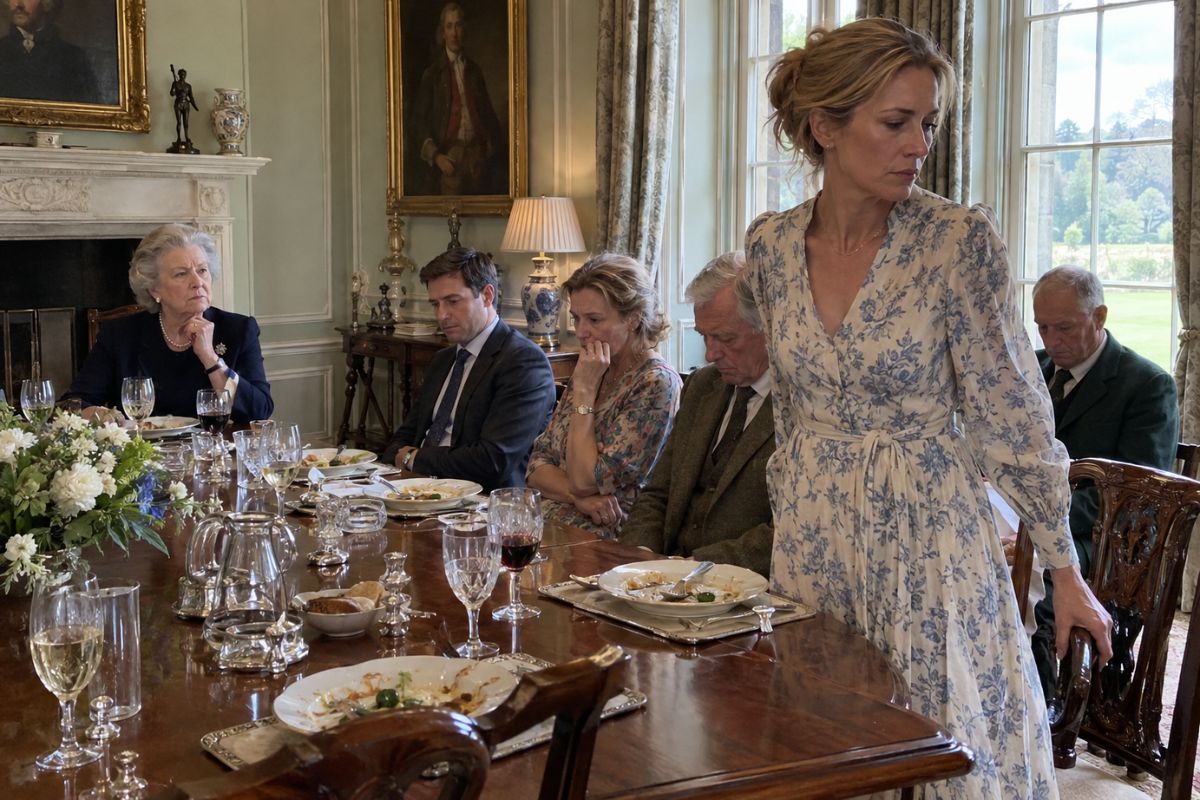
At dinner, no one mentioned Nicholas until dessert.
Then Helena placed her spoon down and said, “This has gone far enough.”
Clara looked at her.
Margaret became very still.
Sebastian said, “What has?”
“You know exactly what.”
“We found evidence Nicholas maintained the carriage.”
“That proves he maintained a carriage.”
“It proves one thing I believed about him was wrong.”
“Do not turn a stable account into absolution.”
Sebastian leaned back.
“No one said absolution.”
Helena looked toward Clara.
“What exactly do you hope to gain from being here?”
Margaret’s expression tightened.
“Helena.”
The use of her first name changed the room.
Helena stared at her.
Sebastian did too.
Margaret seemed to realize what she had done.
But she did not apologize.
“You remember me,” she said.
Helena’s face lost color.
Clara looked from one woman to the other.
Sebastian slowly set down his glass.
“Mother?”
Helena said, “Of course I remember Mrs. Bennett. Her family once lived on the estate.”
“Then why did you behave as though you had never seen them?”
“I didn’t.”
“You did.”
“I have met hundreds of tenants and employees over the years.”
Margaret shook her head.
“No. Not like this.”
Clara whispered, “Gran?”
Margaret reached beneath the collar of her blouse and drew out a small chain.
A narrow silver key hung from it.
She placed the key on the table.
Sebastian recognized the shape.
Not the lock.
The workmanship.
Old Wexford estate keys had long oval bows and flattened stems.
Helena pushed her chair back.
“Where did you get that?”
Margaret looked at her.
“From Nicholas.”
Clara stared at her grandmother.
“You said Dad left you only the letters.”
“He left this with your mother.”
Sebastian picked up the key.
“What does it open?”
Margaret looked toward Helena.
“I don’t know.”
Helena stood.
“Yes, you do.”
“No. Emily never used it.”
“You should have thrown it away.”
Clara’s voice changed.
“Why?”
Helena turned toward her.
For a moment, the Dowager Duchess looked old.
Not dignified.
Not formidable.
Simply tired.
“Because some things should remain finished.”
Clara looked at the carriage ledger lying on the sideboard.
“My father didn’t think they were finished.”
Helena left the table.
This time Sebastian followed.
He found his mother in the portrait gallery.
She stood beneath the painting of his father, Edmund Wren, the previous Duke of Wexford.
Edmund had been handsome in the severe way certain painters knew how to flatter.
Dark suit.
One hand on the back of a carved chair.
Eyes fixed beyond the viewer as if even paint could not persuade him to explain himself.
Sebastian stopped several feet away.
“What does the key open?”
Helena did not turn.
“I don’t know.”
“You recognized it.”
“I recognized the style.”
“You told Margaret to throw it away.”
Silence.
“Did you know Clara existed?”
Helena closed her eyes.
There it was.
Not confession.
Not yet.
But enough.
Sebastian felt as though someone had removed the floor beneath him one careful board at a time.
“How long?”
Helena turned.
“Sebastian—”
“How long?”
She looked at her husband’s portrait.
“Since shortly after she was born.”
Sebastian said nothing.
Helena took a slow breath.
“Nicholas wrote to me.”
“You lied this morning.”
“Yes.”
“You looked at that girl and lied.”
“I was trying to prevent exactly what is happening now.”
“What is happening now?”
“The reopening of every mistake that family ever made.”
Sebastian stared at her.
“She is your granddaughter.”
“I know.”
“Have you met her before?”
“No.”
“Have you seen photographs?”
Helena looked away.
That was answer enough.
“How many?”
“Several.”
“Who sent them?”
“Nicholas.”
Sebastian’s voice dropped.
“For how many years?”
“Not every year.”
“Mother.”
“Enough.”
He turned away and walked several steps before stopping.
His hands shook.
That angered him almost as much as the lie.
“You let me believe Nicholas died without a family.”
“I knew you despised him.”
“I was angry with him.”
“You called him selfish at his funeral.”
Sebastian flinched.
Helena continued.
“You said he had spent his life running from responsibility.”
“That was what Father told me.”
“And what you wanted to believe.”
Sebastian looked at her.
“Why?”
Helena’s face tightened.
“Because believing Nicholas was irresponsible made your life simpler.”
“What does that mean?”
“It meant you could stay.”
The words settled between them.
Sebastian frowned.
“Stay where?”
“At Wexford.”
“I inherited Wexford.”
“No. Long before that.”
She finally sat on the bench beneath the windows.
“You were always the dutiful son. Nicholas was the difficult one. Your father rewarded one role and punished the other.”
Sebastian’s throat tightened.
“You allowed that.”
“Yes.”
The honesty surprised him.
Helena looked at her clasped hands.
“And by the time I understood what it had cost both of you, I had become too practiced at silence.”
The next morning Sebastian began with the estate files.
Not the family papers.
The financial files.
Martin brought him boxes from archive storage.
Property reports.
Tenant lists.
Sale agreements.
Maintenance schedules.
Records from the final years of Edmund Wren’s management of the estate.
Sebastian searched for Briar Cottage.
He found it in less than an hour.
The cottage had belonged to a row of six estate homes near the southern boundary.
Thirty years earlier, all six had been designated for disposal.
The reason was written plainly:
Capital release for northern guest wing development and conference facilities.
Sebastian leaned back.
He remembered the plans.
His father had wanted to convert part of Wexford into a high-end corporate retreat.
The project failed before construction truly began.
Sebastian had always been told financial conditions changed.
He turned to the tenant records.
Four households accepted relocation.
Two resisted.
One was the Bennett family.
Samuel Bennett.
Margaret Bennett.
Children: Emily, Robert, Anne.
Sebastian closed his eyes.
Emily.
Clara’s mother.
He heard Nicholas again.
They’re not figures on paper, Seb.
He had been twenty-five.
Already preparing to take on greater estate responsibility.
Already trained to think in costs, holdings, repairs, obligations.
Nicholas had been twenty-two and furious about everything.
At least that was how Sebastian remembered him.
He searched correspondence.
There.
A typed memo from Edmund.
Tenant assistance beyond contractual obligation is neither financially prudent nor appropriate.
Below it, handwritten in blue ink:
N. has interfered repeatedly. Restrict his access to estate accounts.
Sebastian turned another page.
A transfer.
Not from the estate.
From a private account linked to Nicholas.
Payment to Samuel Bennett.
Another payment three months later.
Then one to a different former tenant.
Then another.
Small amounts.
Nothing extravagant.
But at twenty-two, Nicholas had not possessed much independent income.
Sebastian called Martin.
“Find everything you can on Nicholas’s accounts during the five years after he left.”
Martin stared at the paperwork.
“Why?”
“Because I think his debts may not have been what we were told.”
They were not.
Nicholas had borrowed money.
That part was true.
He had attempted two businesses.
Both struggled.
That was also true.
He had been late paying creditors.
True.
He had sold nearly everything valuable his grandfather had left him.
Also true.
What no one had told Sebastian was where part of the money went.
Nicholas had helped the Bennetts rent a home after leaving Wexford land.
He paid Samuel’s medical bills during a period when Samuel could not work.
He helped another former tenant purchase tools for a repair business.
He paid school fees for the daughter of a third family for two years.
The amounts were never enormous.
That somehow made them more painful.
Nicholas had not been playing hero with a fortune.
He had been trying to help people while barely keeping himself afloat.
“He was reckless,” Sebastian said that afternoon.
Martin stood across the desk.
“In some ways.”
“He borrowed beyond what he could comfortably repay.”
“Yes.”
“He started businesses without enough capital.”
“Yes.”
“He could have asked me.”
Martin hesitated.
“Would you have helped?”
Sebastian looked up.
The question offended him.
Then he remembered who he had been.
Twenty-eight.
Newly married.
Desperate for their father’s approval.
Convincing himself that Nicholas’s departure proved Nicholas was immature.
Would he have helped?
Or would he have reported the request to Edmund and lectured his brother about responsibility?
Sebastian rubbed his forehead.
“I don’t know.”
Martin nodded.
“That may be why he didn’t ask.”
Sebastian looked at the old estate manager.
“You liked him.”
“I sometimes wanted to lock him in a shed.”
Despite himself, Sebastian smiled.
Martin continued.
“He argued before he understood the whole problem. He promised things too quickly. He was hopeless with paperwork. He assumed good intentions could replace planning.”
“That sounds like Nicholas.”
“It does.”
“And yet?”
“And yet he noticed people your father saw as liabilities.”
Sebastian looked toward the window.
“And me?”
Martin did not answer immediately.
Finally he said, “You noticed what had to be preserved.”
Sebastian looked at him.
“That’s a diplomatic way of saying I noticed property.”
“No. You kept this estate functioning through years that might have destroyed it. Hundreds of acres remain working land because you made difficult decisions. Staff still have jobs. Tenants still have homes.”
“That doesn’t excuse what happened.”
“No.”
Martin paused.
“But learning Nicholas was better than you believed does not require deciding you were worthless.”
Sebastian looked back at the papers.
It was easier to condemn himself.
Condemnation required less repair than responsibility.
Clara spent that afternoon in the stable with Judith Crane, Wexford’s veterinary consultant, who had come to examine an elderly mare.
Sebastian watched from the doorway for several minutes before either noticed him.
Clara held the mare’s halter while Judith listened to its chest.
She asked intelligent questions.
Not performative questions.
Specific ones.
Judith answered seriously.
When they finished, Clara stroked the horse’s nose.
“You’re studying veterinary medicine?” Sebastian asked.
Clara turned.
“I’ve been accepted.”
“Where?”
She named a university.
Sebastian recognized it as competitive.
“When do you begin?”
“Next year.”
“You’re seventeen.”
“My birthday is in six weeks.”
He nodded.
Nicholas had been nineteen when he first announced he wanted to leave Wexford for good.
Their father laughed.
Sebastian had laughed too.
He suddenly hated the memory.
“May I walk with you?”
Clara looked surprised.
Then shrugged.
They crossed the courtyard toward the kitchen garden.
For a while neither spoke.
Finally Sebastian said, “I found records of payments your father made to your grandparents.”
Clara stopped.
“What?”
“After they left Wexford.”
Her expression sharpened.
“Why were they made to leave?”
He could have softened it.
He did not.
“My father planned to sell the cottages to finance a development project. Nicholas objected.”
Clara stared at him.
“My grandmother said they moved because the estate needed the houses.”
“That was the explanation they were given.”
“And the real one?”
“Money.”
She looked down.
Sebastian continued.
“Nicholas helped several families afterward.”
“I know.”
He frowned.
“He told you?”
“He said he spent years cleaning up after people who thought consequences belonged to somebody else.”
Sebastian almost laughed.
“That sounds like him.”
Clara looked at him.
“You keep saying things like that.”
“Like what?”
“Like you’re surprised he was the person you remember.”
Sebastian had no answer.
They resumed walking.
Near the greenhouse, Clara said, “He wasn’t perfect.”
Sebastian looked at her.
She kicked lightly at a pebble.
“He forgot birthdays unless I reminded him a week before. He burned almost everything he cooked. When he was worried about money, he pretended he wasn’t, which made my mother furious. He changed jobs too often.”
Sebastian smiled faintly.
“Yes.”
“He promised me a dog for three years before Mum finally told him he couldn’t keep promising animals we couldn’t afford.”
“That also sounds like him.”
Clara smiled for the first time.
It transformed her face.
There.
Nicholas.
Not in bone structure.
In mischief.
Then the smile disappeared.
“He got sick when I was nine.”
Sebastian had known Nicholas was ill.
He had learned too late how serious it was.
Their final conversation had been by telephone.
Eleven minutes.
Mostly silence disguised as politeness.
“He never told me about you,” Sebastian said.
“No.”
“Did he ever explain why?”
Clara looked toward the distant house.
“He said Wexford made people confuse belonging with ownership.”
Sebastian felt the words like a hand on his chest.
“What did he mean?”
“I don’t know.”
Then she looked directly at him.
“I think you do.”
That evening Margaret gave Sebastian a box.
Not Clara.
Sebastian.
They stood in the old library while the house settled into silence around them.
“You should have had this years ago,” Margaret said.
The box was ordinary brown cardboard.
Inside lay letters.
Dozens.
All from Nicholas.
Some addressed to Emily.
Some to Margaret.
Some never sent.
Margaret touched the top bundle.
“Emily kept everything.”
Sebastian picked up one envelope.
His own name was written across it.
Seb.
Only Nicholas had called him that.
“When was this written?”
“About eighteen years ago.”
“Why didn’t he send it?”
“He changed his mind.”
Sebastian looked at Margaret.
“Why give it to me now?”
“Because Clara came for the stable, not a war.”
He almost smiled.
“And you?”
“I came because seventeen years is long enough for grown people to hide behind dead men.”
She turned to leave.
Sebastian stopped her.
“Mrs. Bennett.”
She looked back.
“Did Nicholas marry Emily?”
“Yes.”
“When?”
“Eighteen years ago.”
“Why quietly?”
“Because Emily didn’t want her wedding turned into a family argument.”
“My brother could have told me.”
Margaret’s expression softened, but only slightly.
“So could your mother.”
Then she left.
Sebastian sat alone.
He opened the letter.
The first page began without greeting.
You will think I’ve lost my mind again.
He almost laughed.
Nicholas continued.
Emily says I shouldn’t begin letters defensively because it encourages people to disagree with me. She is probably right, which is irritating.
Sebastian closed his eyes.
For a moment his brother was twenty-seven again.
Alive somewhere beyond reach.
He kept reading.
Nicholas wrote about Emily.
About marriage.
About work.
About owing money.
About trying to build a life that did not require their father’s approval.
Then, halfway through the letter, the tone changed.
She is pregnant.
Sebastian stopped.
The words blurred.
He read on.
If the baby is a girl, Emily likes Clara. I pretended not to like it because I enjoy annoying her, but I do.
Sebastian covered his mouth.
Farther down:
I keep thinking about Wexford. Not the title. Not the portraits. The places we knew before Father taught us everything had a value beside it.
Then:
I don’t know whether I want my child to know that world.
Sebastian turned the page.
Maybe that sounds cruel.
But you know what happens there.
Everything becomes useful to the family eventually.
A marriage is useful.
A friendship is useful.
A piece of land is useful.
A child becomes an heir or an embarrassment or an alliance or a disappointment.
I want one person in my life to belong to herself before anyone tells her she belongs to Wexford.
Sebastian stopped reading.
He sat for a long time with the page in his hands.
Then he reached the final paragraph.
I still miss you.
That is the ridiculous part.
I am angry with you. I think you chose Father when you should have chosen what was right. You probably think I chose strangers over my own family.
Maybe we are both partly right.
But if I send this, you will tell Mother, Mother will tell Father, and the whole machine will start moving.
So I probably won’t send it.
You always did better with machines than I did.
I was better with broken things.
There was no signature.
Sebastian folded the letter along the old crease.
Then he unfolded it again because folding it felt too much like putting Nicholas away.
The key opened a desk.
Not a door.
Helena finally admitted it the next morning.
It belonged to a small writing desk that had once stood in Nicholas’s room.
After Nicholas left, Edmund ordered the room cleared.
Helena kept the desk.
It was now in storage above the east wing.
Sebastian, Clara, Helena, and Margaret stood in the dusty room while Martin searched among covered furniture.
“There,” Helena said.
The desk was walnut, narrow and scarred along one side.
Clara inserted the silver key.
For seventeen years, it had apparently traveled from Nicholas to Emily, then Margaret, then Wexford again.
The lock resisted.
Then opened.
The drawer contained almost nothing.
A photograph.
Two receipts.
And a folded sheet of paper.
Clara picked up the photograph first.
Nicholas stood beside Emily outside what looked like a registry office.
He was smiling.
Not the broad grin Sebastian remembered from boyhood.
Something quieter.
Emily held his arm.
She had Clara’s eyes.
On the back Nicholas had written:
The day we stopped asking permission.
Helena sat down.
Clara looked at her.
“You saw this.”
Helena nodded.
“How?”
“Nicholas sent me a copy.”
“When?”
“After you were born.”
Clara said nothing.
The absence of accusation made Helena flinch more than anger would have.
The Dowager Duchess opened her handbag.
From an inner pocket, she removed a small photograph protected inside a paper sleeve.
Clara at perhaps two years old.
Sebastian stared.
“You carry it?”
Helena looked at the child in the picture.
“For seventeen years.”
Clara’s voice was very quiet.
“Why?”
Helena’s mouth trembled once.
“I don’t know.”
“Yes, you do.”
Helena looked up.
Clara continued.
“You knew where I lived.”
“Yes.”
“You sent money.”
“Yes.”
“My grandmother told me last night.”
Sebastian turned toward Margaret.
Helena closed her eyes.
Clara asked, “Why didn’t you come?”
The room held its breath.
Helena finally answered.
“Cowardice.”
Sebastian had expected explanation.
Family pressure.
Marriage.
Fear of Edmund.
Reputation.
Instead his mother gave them one word.
It changed the shape of the moment.
Helena looked at Clara.
“Your grandfather could be very persuasive when he believed he was protecting Wexford.”
Sebastian stiffened.
Helena corrected herself.
“No. That is too kind.”
She folded her hands.
“He could make fear sound like duty.”
Clara remained still.
“When Nicholas told me about you, Edmund was still alive. Your father had already been gone from the estate for years. There had been arguments. Gossip. Money problems. People asked questions.”
“About what?”
“Why Nicholas had left. Why he had stopped using Wren professionally. Why he refused invitations.”
Clara looked at the photograph.
“So you hid us.”
“I told myself I was protecting everyone.”
“From what?”
Helena looked around the forgotten room.
“Embarrassment.”
The word sounded pathetic when spoken aloud.
She seemed to know it.
“After Edmund died,” Helena continued, “I could have come. I could have told Sebastian. I could have written to Nicholas and said I was sorry.”
“But you didn’t.”
“No.”
“Why?”
“Because every year that passed made the first lie heavier.”
Helena looked at Sebastian.
“And because by then, your uncle had made anger toward Nicholas part of how he understood his own life.”
Sebastian’s face heated.
Helena did not spare him.
“I was afraid of what the truth would do.”
Clara asked, “And what did silence do?”
Helena looked at her.
That question had no defense.
The paper inside the desk drawer was not a will.
It did not transfer land.
It did not reveal treasure.
It did not solve anything legally.
It was simply a list in Nicholas’s handwriting.
Names.
Six families.
The original tenants from the cottages.
Beside each name, notes.
Mr. Ellis — mechanic position secured.
Mrs. Cooper — deposit short by £240.
Bennett family — Samuel unable to work through winter.
Mrs. Dale — daughter finishing school.
At the bottom, Nicholas had written:
These were Father’s decisions. That doesn’t mean they have to become my excuses.
Sebastian read the line twice.
Clara read it once.
Then she folded the page.
“I want Grandma to have this.”
Sebastian nodded.
“Of course.”
Helena said, “There is something else.”
Everyone looked at her.
She spoke toward Sebastian.
“The carriage.”
His chest tightened.
“What about it?”
“Your father damaged it.”
Sebastian did not understand.
Helena continued.
“The storm had loosened part of the old loft structure. Nicholas warned him. Edmund refused to close the stable because a photographer was coming the next week and he didn’t want visible repairs.”
Sebastian remembered no photographer.
“He and Nicholas argued.”
Helena nodded.
“That evening Nicholas moved the carriage himself. He was trying to pull it away from the damaged section when Edmund came in. They argued again. Your father grabbed the side rail.”
She stopped.
“Part of the frame gave way. The carriage tipped. The wheel cracked.”
Sebastian stared.
“Father told me Nicholas smashed it.”
“I know.”
“You heard him?”
“Yes.”
“And you said nothing?”
“Yes.”
Sebastian stepped back.
The room seemed too small.
“Why?”
“Because Nicholas had already decided to leave.”
“That is not an answer.”
“Because Edmund told me if I contradicted him, he would make sure Nicholas left without a penny.”
“He did leave without a penny.”
“Not entirely. I persuaded Edmund to release a small account from your grandfather.”
Sebastian laughed bitterly.
“And that made it acceptable?”
“No.”
“Then why are you telling me this now?”
Helena looked toward Clara.
“Because I am seventy-six years old, and a seventeen-year-old girl traveled across England asking to see a stable because the rest of us were too frightened to tell the truth.”
No one spoke.
Sebastian looked at his mother and understood something he had resisted all his life.
Helena had not been powerless.
But neither had she been free.
She had made choices under pressure.
Bad choices.
Cowardly choices.
Choices she regretted.
Understanding did not erase responsibility.
It merely made punishment feel less satisfying than it had five minutes earlier.
That was the trouble with truth.
It complicated the comfort of blame.
Sebastian found Clara at the carriage that afternoon.
She sat on an overturned wooden crate, reading one of Nicholas’s letters.
He approached slowly.
“May I?”
She moved her coat from the crate beside her.
He sat.
For a while they looked at the carriage.
Sebastian said, “I owe you an apology.”
Clara kept reading.
“One?”
He almost smiled.
“Several.”
She folded the letter.
“Which one are we starting with?”
“For assuming you came for money.”
“All right.”
“For speaking about your father as though I knew his whole life.”
She looked at him.
“That one’s bigger.”
“Yes.”
“And?”
Sebastian rubbed his palms together.
“For letting my anger at him become more important than curiosity.”
Clara lowered her eyes.
“My father was angry at you too.”
“I know.”
“He wrote that you cared more about Wexford than about him.”
Sebastian looked toward the carriage.
“He may have been right.”
“He also wrote that you were the only person who ever came looking for him after he left.”
Sebastian turned sharply.
Clara handed him the letter.
He read.
Nicholas had written about the night Sebastian drove three hours to find him after he disappeared from a rented room and missed two payments.
Sebastian remembered it.
He had found Nicholas sleeping in a friend’s workshop.
They argued for twenty minutes.
Sebastian gave him money.
Nicholas threw it back.
Sebastian left furious.
He had remembered the humiliation.
Nicholas remembered that he came.
“He wrote,” Clara said, “‘Sebastian always thinks love needs a plan. But at least he makes one.’”
Sebastian laughed.
Then covered his eyes.
His shoulders moved once.
Clara looked away, giving him the privacy of pretending not to notice.
After a while Sebastian said, “Your father and I wasted years.”
“Yes.”
The directness almost hurt.
“He could have called.”
“So could you.”
“Yes.”
The answer came easier now.
Clara returned the letter to the envelope.
Sebastian said, “I would like to help with your university costs.”
She shook her head before he finished.
“It isn’t necessary.”
“It may become necessary.”
“I have scholarships.”
“They may not cover everything.”
“My grandmother and I have planned for it.”
“You shouldn’t have to refuse help because it comes from me.”
“I don’t.”
“Then why?”
She looked at him.
“Because if I take money now, you’ll wonder whether that is why I came.”
“I won’t.”
“You already did.”
Sebastian lowered his eyes.
She wasn’t cruel about it.
That made it worse.
He nodded.
“Fair.”
Then he said, “There are other ways I might—”
“No.”
“You don’t know what I was going to say.”
“You were going to offer me something.”
“Yes.”
“I didn’t come here to be improved.”
The words landed.
Sebastian looked at her carefully.
“What did you come for?”
Clara looked toward the old red carriage.
“To see whether he was telling the truth.”
“About the carriage?”
“About Wexford.”
Sebastian waited.
She continued.
“My father didn’t hate this place.”
That surprised him.
“He hated what people did in its name.”
She ran one finger along the edge of the letter.
“He talked about the lake. The stables. The kitchen garden. Your grandfather. You.”
Sebastian swallowed.
“He loved you.”
“I know.”
The sentence nearly broke him.
Not because it was sentimental.
Because it was past tense.
Three days later Sebastian called a family meeting.
Not a formal one.
No lawyers.
No press.
No ceremonial dining room.
Only the morning room, where Clara had first sat soaking wet and unwanted.
Helena was there.
So was Sebastian’s wife, Lydia, who had returned from London the previous evening after Sebastian finally told her what had happened.
Their son Matthew, twenty-four, joined them.
He was not next in line to the title by magic or sentiment; he was simply Sebastian’s only child and had grown up under the quiet assumption that Wexford would one day become his responsibility.
Martin attended at Sebastian’s request.
Margaret sat beside Clara.
Sebastian stood near the fireplace.
“I’ve asked everyone here because what happened to Nicholas stopped being private the moment our version of him became the family’s official memory.”
Helena lowered her eyes.
Matthew frowned.
“Official memory?”
Sebastian looked at his son.
“When you were growing up, what were you told about your uncle?”
“That he left after fighting with Grandfather.”
“What else?”
“That he was bad with money. That he didn’t want responsibility.”
“Did I ever tell you he helped families who were displaced from estate cottages?”
“No.”
“Did I tell you he married?”
Matthew looked at Clara.
“No.”
“Did I tell you he had a daughter?”
“No.”
Sebastian nodded.
“I couldn’t. I didn’t know.”
He looked toward Helena.
“But some of what I did know was wrong.”
Lydia said softly, “What are you going to do?”
Sebastian had spent the previous night asking himself that.
The easiest path was obvious.
Say nothing publicly.
Recognize Clara privately.
Repair the carriage.
Make an apology.
Allow the dead to remain complicated but discreet.
No scandal.
No headlines.
No damage to Edmund Wren’s reputation.
No questions from local historians about the cottage removals.
No awkward scrutiny of a family that depended partly on public goodwill for estate tourism and charitable fundraising.
Wexford’s finances were already fragile.
A reputational controversy could affect events, donations, partnerships, visitor revenue.
Martin had explained that plainly.
Sebastian had asked him one question.
“What would you do?”
Martin replied, “I would decide whether Wexford exists to protect a name or whether the name exists to make someone responsible for Wexford.”
That answer had annoyed him.
Mostly because he could not dismiss it.
Sebastian faced the room.
“I am going to correct the estate record.”
Helena looked up.
“How?”
“The public family archive contains an entry describing Nicholas as leaving after vandalizing estate property and refusing financial responsibility.”
Clara stared at him.
“There is actually a record saying that?”
“Yes.”
Helena whispered, “Edmund approved that wording.”
“I know.”
Sebastian continued.
“It will be amended.”
Matthew asked, “To say what?”
“The truth.”
Helena’s hands tightened.
“Sebastian, there will be consequences.”
“Yes.”
“Your father’s reputation—”
“My father’s reputation is not a person.”
The room went still.
Sebastian looked at her.
“He is dead. Nicholas is dead. We are the ones living with what they left.”
Helena said, “You may damage this estate.”
“I may.”
Clara shifted.
“You don’t have to do that for me.”
Sebastian turned to her.
“I am not doing it for you.”
She looked surprised.
He continued.
“I am doing it because I spent twenty-seven years repeating a lie about my brother.”
He paused.
“And because one day my son will inherit whatever remains of this place.”
Matthew looked at him.
“I would rather leave him an estate with one less comfortable story than one more dishonest tradition.”
No one applauded.
No one embraced.
Helena simply looked down at her hands.
After a long silence she said, “Then my part should be included.”
Sebastian frowned.
“What part?”
“That I knew about Clara.”
Clara looked at her.
Helena met her eyes.
“And that I chose not to acknowledge her.”
Sebastian said, “Mother, you don’t have to—”
“Yes.”
Her voice became firmer.
“If you intend to correct history, do not protect me by editing it.”
Clara studied her grandmother for a long moment.
Then she said, “Thank you.”
Helena looked almost startled.
It was not forgiveness.
But it was not nothing.
The correction caused exactly the kind of trouble Helena had predicted.
A regional newspaper asked questions.
A local heritage committee requested access to the revised archive.
Former tenant families contacted the estate.
Two people accused the Wrens of trying to polish an old scandal by confessing only after those responsible were dead.
One article called Nicholas “the forgotten conscience of Wexford.”
Sebastian hated the phrase.
Nicholas would have hated it more.
“He wasn’t a saint,” Sebastian told the reporter who asked for comment.
“What was he, then?”
Sebastian thought of burnt meals, unpaid bills, promises made too quickly, fury, generosity, pride.
“My brother.”
That was all he said.
Financial consequences followed too.
A planned corporate event was canceled.
A donor to the estate restoration fund withdrew support.
For three weeks, ticket sales to Wexford dipped.
Martin brought Sebastian the figures.
Sebastian examined them and said, “How bad?”
“Unpleasant.”
“Dangerous?”
“Not yet.”
“What will we sell?”
Martin raised an eyebrow.
“You’ve already decided something must be sold?”
“The roof won’t repair itself because I’ve become morally enlightened.”
Martin almost smiled.
They sold three paintings that had spent decades in storage.
Not the famous ones.
Not masterpieces.
Family pieces with value but little emotional meaning.
Helena protested one sale.
Sebastian asked if she had looked at the painting in the past twenty years.
She admitted she had not.
The proceeds paid for part of the west roof restoration and established a modest tenant emergency fund overseen separately from household spending.
Sebastian refused to name it after Nicholas.
Clara agreed.
“He would have hated that.”
Instead, the estate published a simple statement:
Wexford Hall acknowledges that past financial decisions caused hardship to several tenant families. Current stewardship will include transparent relocation and hardship procedures whenever estate housing changes are required.
It was not dramatic.
Sebastian liked that.
Repair, he was learning, rarely looked dramatic from the outside.
Clara planned to leave after a week.
On her final morning, Sebastian asked her to meet him in the library.
A folder lay on the table.
Clara looked suspicious.
“I told you I don’t want money.”
“It isn’t money.”
She did not sit.
Sebastian opened the folder.
Inside were copies of family records.
Nicholas’s birth certificate.
A photograph of him as a boy.
Their grandfather’s notes about the carriage restoration.
A copy of the corrected Wexford archive.
And a document confirming that Nicholas’s marriage to Emily and Clara’s relationship to him would be recorded in the private family history.
Clara touched the last page.
“Why?”
“Because you exist.”
“That isn’t usually enough for people like you.”
Sebastian winced.
“Probably not.”
Then he added, “I’m trying to improve the standard.”
Clara smiled slightly.
He took a breath.
“There is one other matter.”
She folded her arms.
“That sounds dangerous.”
“You are Nicholas’s daughter.”
“Yes.”
“If you ever wanted to use Wren—”
“No.”
The answer came so quickly Sebastian almost laughed.
“I expected that.”
“Then why ask?”
“Because I wanted you to know you would not be refused.”
She looked at him.
He continued.
“You could use the family name if it meant something to you.”
Clara looked down at the papers.
Then back up.
“I already have my father’s name.”
Sebastian frowned slightly.
“Bennett was your mother’s surname.”
“Yes.”
“And your father’s legal surname remained Wren.”
“On some documents.”
Sebastian waited.
Clara took a breath.
“He used Bennett professionally for years.”
“I know.”
“He said it was the first name he ever chose.”
Sebastian looked at her.
Clara’s expression softened.
“Bennett was the name he chose when he stopped needing yours.”
The sentence hurt.
Then, unexpectedly, it did not.
Not after the first moment.
Sebastian looked at the portrait above the fireplace.
Five generations of Wrens had believed names moved downward like property.
Father to son.
House to heir.
Title to successor.
But Nicholas had stepped outside that line.
Not cleanly.
Not without damage.
Still, he had chosen something.
Sebastian nodded.
“Then Bennett is a good name.”
Clara looked relieved.
“Thank you.”
He hesitated.
“I hope Wren can become one too.”
She did not answer.
But she did not refuse the possibility.
The red carriage took four months to restore.
Sebastian did not hire a prestigious outside firm.
Instead he asked Martin to locate two retired craftsmen who had worked with Edwin Parlow, the former stablemaster.
One was eighty-one.
The other seventy-four.
Both remembered Nicholas.
Both remembered the argument.
Both remembered that he had returned weeks after leaving Wexford, after dark, to ask what repairs the carriage would need.
“Your father wouldn’t let him on the grounds,” one of them told Sebastian.
“So how did he arrange the payments?”
“Through Mr. Parlow.”
Every October 14.
Sebastian finally discovered why that date mattered.
It had been their grandfather’s birthday.
The carriage was stripped carefully.
The cracked timber repaired.
The mismatched wheel stabilized rather than replaced.
Sebastian insisted they keep it.
“It was always wrong,” Martin said.
“No,” Sebastian replied. “It was always part of it.”
The old black trim around the doors was repainted.
Sebastian did some of that work himself.
Not much.
He lacked patience and skill.
He put paint where it did not belong.
The older craftsman watched him for ten minutes before saying, “Your brother was better.”
Sebastian laughed.
“Yes.”
On the inside of one panel, beneath several layers of paint, they found two scratched initials.
S.W.
N.W.
Sebastian stood looking at them until Martin quietly left the room.
Before the carriage was displayed, Sebastian called Clara.
She was preparing for university entrance exams.
“I want your opinion on something.”
“That sounds less dangerous than your other offers.”
“I am learning.”
He told her about the display plan.
The carriage would remain at Wexford in the restored stable.
No grand exhibition.
No expensive launch.
Just a small section explaining the restoration and the estate’s history.
“What would you like the plaque to say?”
There was a pause.
“I don’t want my father turned into a hero.”
“Neither do I.”
“He made mistakes.”
“Yes.”
“He hurt people too.”
“Yes.”
Another pause.
“He had a sentence.”
“What sentence?”
“He wrote it inside one of my books when I was little.”
Clara recited it.
Sebastian said nothing for several seconds.
“Would you allow us to use that?”
“Yes.”
When the plaque was installed, it was no larger than a sheet of paper.
It carried Nicholas Bennett Wren’s name.
His dates.
A brief note that he and his brother had helped restore the carriage as boys and that Nicholas later paid privately for its preservation.
Then one line in his own handwriting, reproduced from Clara’s book:
What we inherit matters less than what we decide to carry forward.
Sebastian stood before it on the morning the stable reopened.
Helena stood beside him.
“You know,” she said, “your father would have hated that sentence.”
Sebastian looked at her.
“Yes.”
Helena smiled faintly.
“That may be why I like it.”
Their relationship had changed in small, uncomfortable ways.
She apologized too often at first.
Sebastian became irritated.
Then guilty for being irritated.
Clara wrote to Helena once.
A short note.
Helena kept it in the same sleeve as the childhood photograph.
She had not been forgiven entirely.
But she had been permitted to begin.
That was enough.
Winter came early to Wexford.
By November the lawns silvered with frost most mornings, and the old stone corridors seemed to hold cold even after the heat came on.
Sebastian walked more.
He had spent years moving through Wexford as though every room contained a task.
Now certain places interrupted him.
The stable.
The south boundary where Briar Cottage had once stood.
The portrait gallery.
Nicholas’s old room, which remained mostly empty.
He found himself thinking less about what should be preserved and more about why.
Not everything old deserved rescue.
Not every tradition represented wisdom.
Not every family silence was dignity.
Some were simply fear that had survived long enough to acquire good manners.
Matthew noticed the change.
One Sunday evening he found Sebastian reviewing housing leases.
“Are we in trouble?”
“We are always in trouble.”
“That is reassuring.”
Sebastian handed him a report.
“We have four cottages needing major work over the next three years.”
Matthew skimmed the figures.
“We can’t afford all of this.”
“No.”
“So?”
“What do you think?”
Matthew stared at him.
“You’re asking me?”
“One day you may be responsible for this.”
“That isn’t the same as wanting it.”
Sebastian froze.
Years earlier he might have answered immediately.
Duty.
Family.
Inheritance.
Instead he said, “No. It isn’t.”
Matthew looked surprised.
Sebastian continued.
“If you ever decide you don’t want this life, tell me before resentment makes the decision for you.”
Matthew closed the report.
“Did Uncle Nicholas resent it?”
“Yes.”
“Do you?”
Sebastian considered the question.
“Sometimes.”
“And you stayed.”
“Yes.”
“Why?”
Sebastian looked around the office.
Because he was the elder son.
Because Edmund expected it.
Because leaving felt like failure.
Because he loved the land.
Because people depended on the estate.
Because he enjoyed solving problems.
Because somewhere beneath obligation, Wexford was home.
“All of those answers can be true at once,” he said.
Matthew smiled.
“That wasn’t an answer.”
“It is the best one I have.”
Clara returned in December.
She did not announce herself to Sebastian.
She came with Margaret for a weekend after finishing her exams.
Martin found Sebastian in the estate office.
“You may want to visit the stable.”
“Problem?”
“Not exactly.”
Sebastian crossed the courtyard.
Snow had begun falling in small, dry flakes.
The stable doors stood open.
Inside, the carriage gleamed under warm lamps.
Not brightly.
The restorers had resisted making it look new.
The wood still carried age.
The brass showed marks.
One wheel still looked different.
Clara stood in front of the plaque.
She wore the same green coat she had worn the first day.
Sebastian stopped in the doorway.
She turned.
“Hello.”
“Hello.”
“You restored the wrong wheel.”
“I kept the wrong wheel.”
She walked around the carriage.
“My father would approve.”
“He would complain about the paint first.”
“Yes.”
“And then approve.”
Clara smiled.
They stood together in silence.
Sebastian had imagined this moment more than once.
He had imagined giving her the carriage.
He had even asked Martin whether ownership could be transferred easily.
Then he realized he was doing it again.
Turning emotion into property.
Trying to repair grief by handing someone an object.
So he said nothing about ownership.
Clara touched the edge of the plaque.
“Grandma cried when she saw the photograph you sent.”
“I hope not because the restoration was bad.”
“She said my grandfather Samuel would never believe the Wexfords admitted they were wrong about anything.”
“That seems unfair.”
“It probably is.”
He smiled.
Clara looked up at the carriage.
“Can children climb into it?”
“Absolutely not.”
“Why?”
“It has just been restored.”
“There he is.”
Sebastian frowned.
“Who?”
“The duke.”
He laughed.
“Perhaps supervised children.”
“Better.”
She moved toward the scratched initials inside the panel.
Sebastian had placed a small clear covering over them.
Clara traced the air above N.W. without touching it.
“He was here.”
“Yes.”
“He really was.”
Sebastian understood what she meant.
Not whether Nicholas had physically lived at Wexford.
Whether the version Clara had known belonged to this place too.
Whether the stories had roots.
Whether her father had exaggerated or invented the tenderness in memories formed inside a family he later rejected.
“He was,” Sebastian said.
Clara looked at him.
“So were you.”
The words struck him strangely.
“I still am.”
“I mean before all this.”
She gestured around them.
“The title. The arguments. Whatever happened with your father.”
Sebastian looked at the initials.
Two boys.
S.W.
N.W.
Before either understood what the initials would require.
“Yes,” he said.
“We were.”
Helena joined them later.
She stopped several feet from Clara, uncertain whether she was welcome closer.
Clara noticed.
“Grandmother.”
Helena’s face changed.
Not with joy exactly.
With shock.
Clara immediately looked embarrassed.
“I mean—”
“You may call me Helena if you prefer.”
Clara studied her.
“No.”
Helena swallowed.
Clara continued.
“But I’m not promising anything more than grandmother.”
Helena nodded.
“That is more than I expected.”
They stood awkwardly.
Then Clara reached into her coat pocket and took out a photograph.
It showed Nicholas holding her as an infant.
His hair was longer than Sebastian remembered.
He looked exhausted.
And happy.
Clara handed it to Helena.
“I have another copy.”
Helena took it carefully.
“Thank you.”
“My father wrote something on the back.”
Helena turned it over.
Nicholas’s handwriting filled one line.
She has Mother’s stubborn chin. Don’t tell her.
Helena laughed.
A real laugh.
Then pressed the photograph briefly to her chest.
Sebastian looked away.
Some moments should not be observed too closely.
That night they ate in the small family dining room rather than the formal one.
Margaret told a story about Nicholas trying to repair a washing machine and flooding a kitchen.
Matthew told Clara that Nicholas once convinced Sebastian to climb onto the stable roof and then removed the ladder.
Sebastian objected.
“You were not there.”
“Grandmother told me.”
Helena looked innocent.
Lydia laughed.
Clara laughed harder.
For several minutes Nicholas was not a scandal, mistake, rebel, victim, or secret.
He was merely a missing person at the table.
That absence hurt more.
But it also felt cleaner.
After dinner Sebastian walked Clara back toward the guest rooms.
At the foot of the main staircase, she stopped.
“I leave tomorrow morning.”
“I know.”
“I may not be back for a while.”
“University.”
“If I get the grades.”
“You will.”
“You don’t know that.”
“No. But optimism is cheaper than tuition.”
She smiled.
Sebastian put his hands in his pockets.
There were a dozen things he wanted to say.
That he wished he had met her sooner.
That he was sorry he had not looked for Nicholas harder.
That he wanted some place in her life but did not know what right he had to ask.
That Wexford was open to her without obligation.
That she owed them nothing.
That he hoped one day she might choose them anyway.
Instead he said, “Travel safely.”
Clara looked almost disappointed.
Then she started upstairs.
Three steps up, she stopped.
Sebastian glanced at her.
She turned.
“Good night, Uncle Sebastian.”
He did not answer immediately.
He could not.
She watched him with a small, uncertain smile.
Finally he managed, “Good night, Clara.”
She continued upstairs.
Sebastian remained beneath the old Wren portraits after she disappeared around the landing.
Dukes.
Duchesses.
Heirs.
Generations of names painted in gold beneath solemn faces.
For most of his life, Sebastian had believed those titles carried the weight of Wexford.
Duty.
History.
Responsibility.
Inheritance.
He still believed some of that.
But standing alone beneath those portraits, he understood that the title he had spent decades protecting had never once made him feel what one ordinary word had just done.
Uncle.
And for the first time in his life, Sebastian Wren understood exactly which title he hoped he had earned.
Thank you so much for reading this story!
I’d really love to hear your comments and thoughts about this story — your feedback is truly valuable and helps us a lot.
Please leave a comment and share this Facebook post to support the author. Every reaction and review makes a big difference!
This story is a work of fiction created for entertainment and inspirational purposes. While it may draw on real-world themes, all characters, names, and events are imagined. Any resemblance to actual people or situations is purely coincidental.